
Needle Valve
A needle valve is a precision control valve designed to regulate the flow of liquids or gases with a high degree of accuracy. It features a long, tapered, needle-like stem that gradually moves in and out of a matching valve seat. By adjusting the position of the needle, the flow passage size can be finely controlled, allowing operators to precisely increase or decrease the flow rate within a pipeline or system.
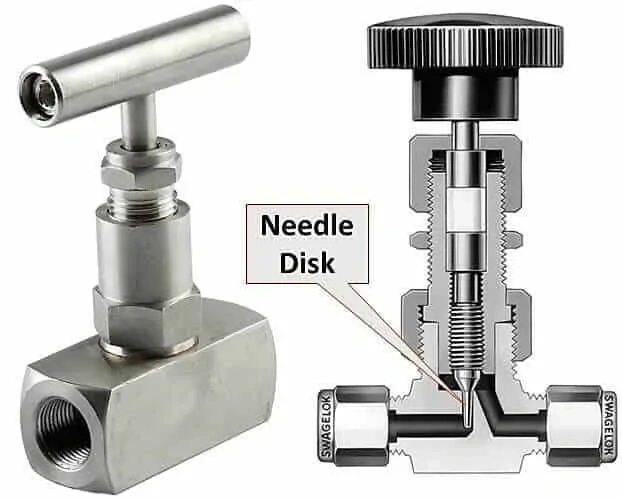
One of the key advantages of needle valves is their excellent flow control capability. The fine-threaded stem design enables extremely small adjustments, making them ideal for applications where precise regulation is critical, such as in chemical processing, laboratories, hydraulic systems, and pharmaceutical production. Even minor changes in stem position can significantly affect flow, providing operators with accurate and responsive control.
Needle valves are also known for their ability to withstand high-pressure conditions. Their robust construction allows them to operate safely in demanding environments where other valve types may fail. In addition, their compact and space-saving design makes them suitable for installations where equipment layout is limited or tightly arranged.
However, needle valves also have some limitations. Their small orifice size restricts the maximum flow capacity, making them unsuitable for applications requiring large-volume flow. They are also more susceptible to clogging or damage when the fluid contains particles or debris, as the narrow passage can easily become obstructed. Regular maintenance and clean fluid conditions are often necessary to ensure reliable performance.
Another consideration is cost. Due to their precision machining and high-pressure capability, needle valves are generally more expensive than simpler valve types. Despite this, their accuracy and reliability make them a preferred choice in systems where precise flow control is essential.