
In modern pipeline infrastructure, especially in large-scale water distribution networks, oil and gas transmission systems, and municipal utility projects, valves are often installed in locations that are difficult to access. Buried pipelines, underground chambers, and submerged systems require specialized valve designs that allow safe and efficient operation without direct access to the valve body. This is where extension stem gate valves play a crucial role.
An extension stem gate valve is specifically engineered to enable remote operation of a gate valve installed below ground or in otherwise inaccessible environments. By extending the valve stem or incorporating a stem extension assembly, operators can control the valve from the surface using a handwheel, T-key, or actuator. This design significantly improves operational safety, reduces maintenance complexity, and enhances system reliability.
As infrastructure projects expand in scale and complexity, extension stem gate valves have become indispensable components in ensuring efficient flow control, easy accessibility, and long-term durability in buried pipeline systems.
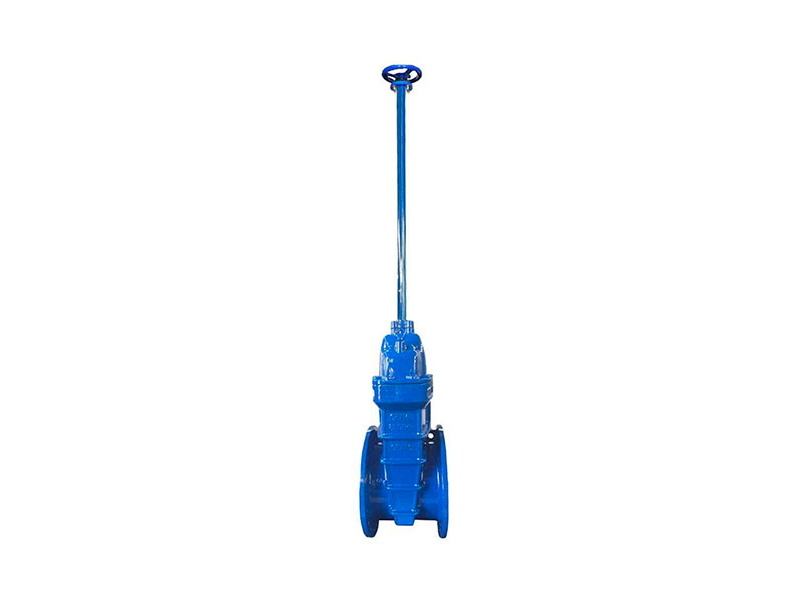
An extension stem gate valve is essentially a conventional gate valve equipped with an elongated stem or extension rod that connects the valve's internal mechanism to an external operating device. This extension allows the valve to be installed underground or submerged while maintaining control access at ground level or above.
The primary function of this valve is to provide full shut-off capability in a pipeline while enabling remote operation. Like standard gate valves, it operates by raising or lowering a gate (or wedge) to either allow or block fluid flow.
These valves are commonly used in applications where space constraints, environmental conditions, or safety considerations prevent direct access to the valve body. By relocating the operating mechanism above ground, extension stem gate valves offer a practical solution for buried service conditions.
The working principle of an extension stem gate valve is based on the traditional gate valve mechanism combined with an extended transmission system.
When the operator turns the handwheel or activates the actuator at the surface level, the rotational motion is transmitted through the extension stem to the main valve stem. This motion causes the gate inside the valve body to move vertically.
- Open Position: The gate is lifted completely out of the flow path, allowing fluid to pass through with minimal resistance.
- Closed Position: The gate is lowered into the flow path, sealing tightly against the valve seat to stop fluid flow completely.
The extension stem serves as a mechanical link between the operator and the valve. It must be precisely aligned and rigid enough to transmit torque efficiently over long distances without deformation or loss of control.
Many extension stem gate valves are equipped with position indicators at the surface level. These indicators provide visual confirmation of whether the valve is open, closed, or partially open, enhancing operational safety and accuracy.
Understanding the main components of an extension stem gate valve is essential for proper selection, installation, and maintenance.
The valve body is the primary pressure-retaining component. It houses the internal parts and connects directly to the pipeline. It is typically made from materials such as ductile iron, carbon steel, or stainless steel, depending on the application.
The bonnet is mounted on top of the valve body and encloses the stem and gate assembly. It provides protection and allows access for maintenance and inspection.
The gate is the internal element that moves up and down to control fluid flow. It is designed to provide tight shut-off when fully closed and minimal obstruction when fully open.
The stem connects the gate to the extension mechanism. It converts rotational motion into linear motion, enabling the gate to move vertically.
This is the defining feature of the valve. It extends from the main stem to the operating mechanism at ground level. It must be durable, corrosion-resistant, and capable of transmitting torque effectively.
The seat provides a sealing surface for the gate. Proper sealing ensures zero leakage when the valve is closed.
This includes the handwheel, T-key, gearbox, or actuator located above ground. It allows operators to control the valve without accessing the buried valve body.
An optional but highly useful component that shows the valve's open or closed status, improving operational visibility.
Material selection is critical for ensuring the durability and performance of extension stem gate valves, especially in underground or harsh environments.
- Ductile Iron: Widely used in water supply systems due to its strength and cost-effectiveness.
- Carbon Steel: Suitable for high-pressure and high-temperature applications.
- Stainless Steel: Offers excellent corrosion resistance for aggressive media and environments.
For buried applications, valves are often coated with epoxy or other protective layers to prevent corrosion. The extension stem may also be galvanized or coated to enhance durability.
Sealing components are typically made from elastomers or metal-to-metal contact surfaces, depending on the application requirements.
Extension stem gate valves can be categorized based on their design and application.
In this design, the stem moves upward as the valve opens. It provides a clear visual indication of valve position but requires more vertical space.
The stem remains stationary while the gate moves internally. This design is more compact and commonly used in buried installations.
Features a soft sealing surface, typically made of rubber, ensuring tight sealing and suitability for water systems.
Uses metal-to-metal sealing, suitable for high-temperature and abrasive applications.
Extension stem gate valves are widely used in industries where valves must be installed below ground or in inaccessible locations.
Municipal Water Supply Systems
Used in underground pipelines to control water distribution without requiring excavation for operation.
Wastewater and Sewage Systems
Enable reliable shut-off in buried pipelines handling wastewater and sewage.
Oil and Gas Industry
Used in pipeline networks where valves are installed underground for safety and environmental protection.
Fire Protection Systems
Installed in buried fire water lines to ensure quick and reliable operation during emergencies.
Irrigation Systems
Allow efficient control of water flow in agricultural applications with underground pipelines.
Power Plants
Used in cooling water systems and underground piping networks.
Extension stem gate valves offer several benefits that make them essential in modern infrastructure projects.
Remote Operation
Allows valves to be operated from ground level without accessing the buried valve body.
Improved Safety
Reduces the need for excavation or entry into confined spaces.
Durability
Designed to withstand harsh underground conditions.
Full Bore Flow
Provides minimal flow resistance when fully open.
Easy Monitoring
Position indicators enable quick assessment of valve status.
Proper installation is critical to ensure reliable performance.
Correct Alignment
Ensure the extension stem is aligned with the valve stem to prevent torque loss or mechanical stress.
Secure Mounting
The above-ground operating mechanism should be firmly secured to avoid movement during operation.
Protection Against Corrosion
Apply appropriate coatings and protective measures for underground components.
Proper Backfilling
Use suitable materials when burying the valve to avoid damage to the extension stem.
Accessibility
Ensure the operating mechanism is easily accessible for operation and maintenance.
Regular maintenance ensures long-term performance.
Check for signs of corrosion, bending, or wear.
Ensure smooth operation by lubricating moving parts.
Inspect seats and seals for wear or leakage.
Remove debris that may affect operation.
Periodically operate the valve to ensure proper functionality.
Difficulty in Operation
May be caused by misalignment or lack of lubrication.
Leakage
Often due to worn seals or damaged seats.
Corrosion
Can affect both the valve body and extension stem.
Inaccurate Position Indication
May result from damaged indicators or mechanical issues.
When selecting an extension stem gate valve, consider:
- Installation depth
- Operating conditions
- Material compatibility
- Pressure and temperature ratings
- Type of fluid
- Required operating mechanism
Proper selection ensures optimal performance and longevity.
With the advancement of infrastructure and smart city projects, extension stem gate valves are evolving to meet modern requirements. Innovations include improved corrosion-resistant materials, enhanced sealing technologies, and integration with monitoring systems.
Automation is also becoming more common, with electric and pneumatic actuators replacing manual operation in many applications.
Extension stem gate valves are vital components in underground and inaccessible pipeline systems. By enabling remote operation and maintaining reliable shut-off performance, they provide a practical and efficient solution for modern infrastructure challenges.
Their robust design, adaptability, and ease of operation make them indispensable in industries ranging from water supply to oil and gas. With proper installation, maintenance, and selection, these valves can deliver long-term reliability and operational efficiency.
As infrastructure continues to expand and evolve, extension stem gate valves will remain a key technology in ensuring safe, efficient, and accessible flow control systems.
