
In today's highly engineered industrial landscape, the demand for precision, reliability, and repeatability in fluid and gas control systems has reached unprecedented levels. Whether in oil and gas processing, chemical manufacturing, power generation, semiconductor production, or laboratory analysis, the ability to regulate flow with accuracy is essential for operational efficiency, product quality, and system safety.
Among the wide range of flow control devices used in modern industry, the needle valve stands out as one of the most precise and dependable solutions for low-flow regulation. Designed specifically for fine adjustment rather than rapid shut-off, needle valves play a critical role in systems where even the smallest change in flow can significantly influence performance outcomes.
Unlike general-purpose valves, needle valves are engineered for gradual and highly controlled modulation. Their unique geometry and mechanical structure allow operators to make extremely fine adjustments, making them indispensable in instrumentation, calibration systems, and sensitive process environments.
As industries continue to move toward tighter process control, digital monitoring, and automation integration, needle valves are experiencing renewed importance in both traditional and emerging applications. This article provides a comprehensive and expanded industry overview of needle valves, including their design principles, internal structure, operational mechanisms, industrial applications, material technologies, performance characteristics, selection criteria, and future development trends.
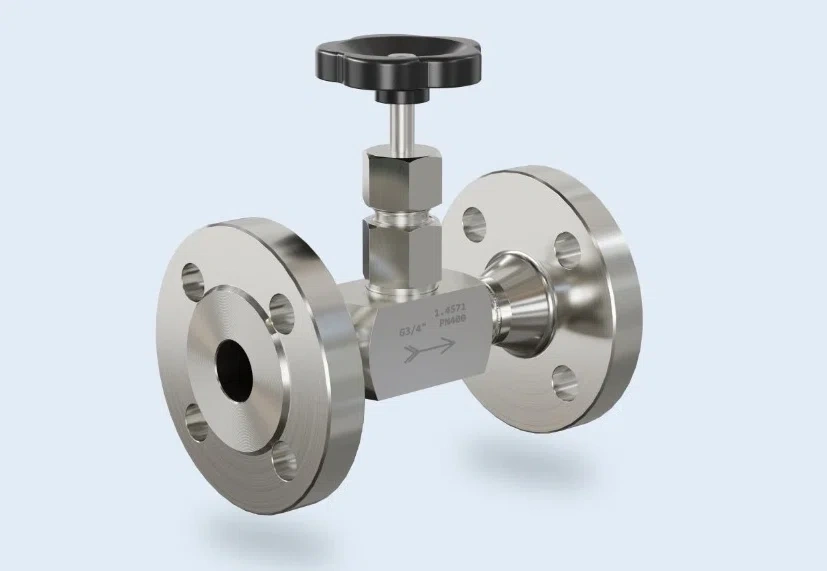
A needle valve is a precision flow regulation device designed to control the rate of liquid or gas flow through a piping system with exceptional accuracy. It is named after its defining internal component: a long, tapered, needle-shaped plunger that moves into and out of a conical seat to restrict or allow flow.
This tapered geometry allows for extremely fine control over the flow passage. As the needle gradually enters the seat, the opening becomes progressively smaller, enabling precise throttling rather than abrupt shut-off or opening.
A typical needle valve consists of several key components:
- Valve body: The main pressure-containing structure that houses internal flow passages
- Bonnet: The top assembly that encloses the stem mechanism and ensures sealing integrity
- Needle stem (plunger): A finely machined tapered rod responsible for flow regulation
- Seat: The precision-machined sealing interface that the needle engages
- Stem threads: Fine-threaded mechanism that converts rotational motion into linear movement
- Handwheel or actuator: The external control interface for manual or automated operation
Needle valves are commonly designed for small-diameter piping systems, typically ranging from 1/8 inch to 2 inches (approximately 2 mm to 12 mm), though customized designs exist for specialized industrial requirements.
They are most commonly used in systems where flow rates are low but require high accuracy, such as instrumentation lines, sampling systems, and gas regulation networks.
The performance of a needle valve is closely linked to its internal geometry and mechanical design. Unlike conventional valves, which rely on broad sealing surfaces, needle valves depend on precision tapering and controlled clearance.
The defining feature of a needle valve is the long, gradually tapered plunger. This design allows:
- Smooth transition between open and closed states
- Fine incremental flow adjustments
- Reduced risk of sudden pressure spikes
The taper angle is carefully engineered to achieve predictable flow characteristics over multiple turns of the handwheel.
Needle valves use a high-precision threaded stem, often with very fine pitch threads. This design converts small rotational movements into extremely small linear displacements.
As a result:
- One full turn of the handle produces minimal flow change
- Operators can precisely "dial in" desired flow rates
- System stability is maintained even during adjustments
The internal flow path of a needle valve is typically narrow and elongated. This design:
- Promotes laminar flow at low flow rates
- Minimizes turbulence
- Enhances measurement accuracy in instrumentation systems
The sealing interface between the needle and seat is critical. High-precision machining ensures:
- Tight shut-off capability
- Resistance to leakage under pressure
- Long service life even under frequent adjustments
Soft-seat or metal-to-metal sealing options may be used depending on application requirements.
The operating principle of a needle valve is based on controlled axial displacement of the tapered needle within the seat.
When the operator rotates the handwheel:
- Clockwise rotation typically lowers the needle into the seat, restricting flow
- Counterclockwise rotation raises the needle, increasing flow passage
Because of the fine threading and tapered design, movement is gradual and highly controllable.
Unlike fast-acting valves, needle valves provide continuous modulation:
- Small adjustments result in proportional flow changes
- Flow increases smoothly rather than abruptly
- System pressure remains stable during adjustment
This makes needle valves ideal for systems requiring steady-state operation.
Due to their restrictive design, needle valves typically produce:
- Higher pressure drop compared to full-bore valves
- Controlled energy dissipation across the orifice
- Stable downstream flow conditions
This pressure drop is often desirable in instrumentation and metering applications.
Needle valves are widely used across global industries due to their versatility and precision. Their applications span from heavy industrial systems to ultra-sensitive laboratory environments.
In upstream and downstream oil and gas operations, needle valves are used for:
- Instrument impulse lines
- Pressure gauge isolation
- Gas sampling systems
- Refinery process monitoring
- Control panel instrumentation
They are particularly important in hazardous environments where accurate flow regulation contributes to safety and process stability.
In thermal, nuclear, and renewable power plants, needle valves are used for:
- Boiler instrumentation lines
- Steam sampling systems
- Cooling water regulation
- Turbine monitoring systems
- Fuel gas control loops
Their reliability under high-pressure and high-temperature conditions makes them essential in critical energy infrastructure.
Chemical plants rely on needle valves for precise control of reactive and sensitive substances, including:
- Chemical dosing systems
- Reactor feed control
- Catalyst injection lines
- Laboratory-scale production systems
In pharmaceutical environments, needle valves help maintain strict process consistency and contamination control.
One of the most important uses of needle valves is in analytical instrumentation, such as:
- Gas chromatography systems
- Mass spectrometry sampling
- Calibration gas delivery systems
- Laboratory test benches
In these applications, even minor flow fluctuations can affect measurement accuracy, making precision control essential.
Needle valves are commonly integrated into motion control systems to regulate actuator behavior:
- Cylinder speed control
- Shock damping systems
- Airflow regulation in automation equipment
- Hydraulic pressure balancing
They provide smooth and adjustable motion control in industrial automation systems.
In combustion systems, needle valves regulate fuel delivery to ensure optimal performance:
- Burner fuel flow adjustment
- Engine fuel-air mixture control
- Industrial furnace regulation systems
Proper fuel regulation improves efficiency and reduces emissions.
In aerospace systems, needle valves are used for:
- Fuel system calibration
- Hydraulic control systems
- Oxygen supply regulation
- Test bench simulation systems
Their precision and reliability under extreme conditions make them suitable for mission-critical applications.
Material selection is a critical factor in needle valve performance, especially under demanding industrial conditions.
- Stainless steel (304, 316): Corrosion resistance and durability
- Carbon steel: High strength and cost efficiency
- Brass: Suitable for instrumentation and low-pressure systems
- Nickel alloys (Monel, Inconel): High resistance to corrosion and heat
- Duplex stainless steel: Enhanced strength and chemical resistance
Modern needle valve production may include:
- CNC precision machining
- Micro-thread cutting technology
- Surface polishing for low friction
- High-pressure testing
- Helium leak detection for critical systems
These processes ensure consistent quality and long service life.
Needle valves are available in multiple connection configurations to suit different industrial needs:
- NPT threaded connections
- BSP threaded connections
- Compression fittings
- Socket weld ends
- Flanged connections (special designs)
Installation flexibility allows integration into both new and existing systems.
Needle valves offer several key advantages that make them essential in precision flow systems:
- Exceptional flow control accuracy
- Stable and smooth modulation
- High repeatability in adjustment
- Excellent performance in low-flow applications
- Reliable sealing under pressure
- Compact design suitable for instrumentation panels
- Wide material compatibility
These characteristics make them a preferred choice in industries requiring fine control rather than high flow capacity.
Selecting the correct needle valve requires careful analysis of system conditions:
- Operating pressure and temperature range
- Fluid or gas composition
- Required flow accuracy
- Corrosion and chemical compatibility
- Connection type and installation space
- Regulatory and safety certifications
- Expected cycle frequency and durability requirements
Proper selection ensures optimal performance and long-term reliability.
The global needle valve market is evolving alongside broader industrial trends such as automation, digitalization, and sustainability. Several key developments are shaping the future of needle valve technology:
Increasing use of sensors and IoT-enabled monitoring systems is leading to:
- Smart flow regulation systems
- Real-time pressure feedback
- Remote adjustment capabilities
Industries such as semiconductors and pharmaceuticals are driving demand for:
- Ultra-clean valve systems
- High-purity gas compatibility
- Contamination-free flow control
New alloys and coatings are being developed to improve:
- Corrosion resistance
- Temperature tolerance
- Wear resistance under frequent adjustment
As systems become more compact, needle valves are being designed for:
- Micro-flow applications
- Compact instrumentation systems
- Portable analytical devices
Needle valves remain one of the most important components in modern fluid and gas control systems, offering unmatched precision, stability, and reliability. Their ability to regulate extremely low flow rates with fine accuracy makes them essential across industries ranging from oil and gas to laboratory science and aerospace engineering.
As industrial systems continue to advance toward higher precision and automation, the role of needle valves is expected to expand further. With ongoing improvements in materials, manufacturing techniques, and smart integration technologies, needle valves will continue to serve as a cornerstone of precise flow control in global industrial applications for decades to come.
