In modern industrial pipeline systems, reliable flow control and shut-off performance are essential for ensuring operational safety, efficiency, and system stability. Among the wide range of industrial valves available today, the wedge gate valve remains one of the most widely used and trusted solutions for full shut-off applications in liquid and gas transport systems.
A wedge gate valve is a linear motion valve designed to start or stop the flow of fluids in a pipeline. It derives its name from its uniquely designed wedge-shaped gate element, which moves vertically inside the valve body. This wedge-shaped disc presses tightly against the valve seats to create a strong sealing effect when the valve is closed.
Due to its robust structure, excellent sealing capability, and adaptability across multiple industries, the wedge gate valve is extensively used in water supply systems, wastewater treatment plants, petrochemical pipelines, power generation stations, heating networks, and general industrial fluid transport systems.
With increasing global demand for safe and efficient fluid handling systems, wedge gate valves continue to play a critical role in ensuring uninterrupted industrial operations.
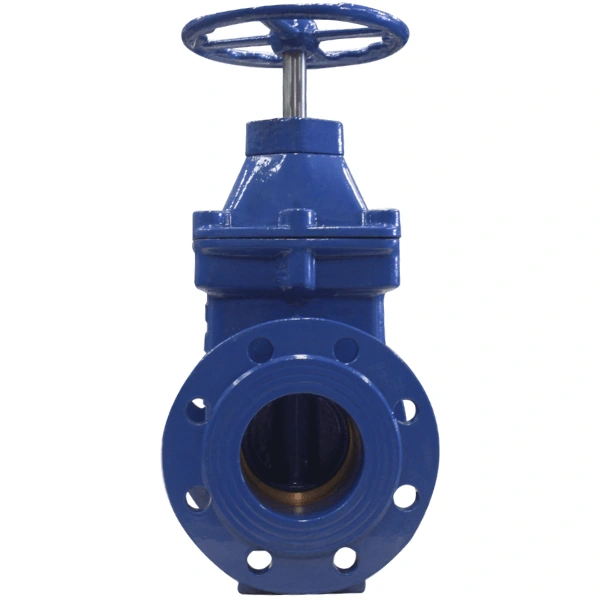
The wedge gate valve is engineered with a relatively simple yet highly effective structure. Its key components include the valve body, bonnet, wedge gate, stem, seat rings, and actuator or handwheel.
The valve body forms the main pressure-containing structure. It is typically manufactured using durable materials such as cast steel, carbon steel, stainless steel, or alloy steel. The body is designed to withstand high pressure and temperature conditions while maintaining structural integrity.
The wedge gate is the most critical part of the valve. It is shaped like a wedge and is responsible for blocking or allowing flow. Depending on design requirements, the wedge may be:
- Solid wedge
- Flexible wedge
- Split wedge (parallel or double-disc design)
Each type offers different performance advantages in terms of sealing efficiency, thermal expansion compensation, and resistance to deformation.
The seat is the surface against which the wedge presses to form a tight seal. Seats may be integral (machined into the body) or replaceable (welded or threaded inserts). The selection of seat material is crucial for ensuring leak-free performance under different working conditions.
The stem connects the actuator or handwheel to the wedge gate, transmitting motion to open or close the valve. It may be rising stem or non-rising stem type depending on installation requirements.
The bonnet covers the internal components and provides sealing to prevent leakage from the stem area. It also allows maintenance access to internal parts.
The working principle of a wedge gate valve is based on vertical linear motion of the wedge gate relative to the fluid flow path.
When the valve is in the open position, the wedge gate is fully lifted, allowing fluid to flow through the unobstructed passage. This design minimizes turbulence and pressure loss, making it highly efficient for pipeline systems that require smooth flow.
When the valve is closed, the wedge gate is lowered into the flow path. The wedge shape forces tight contact between the gate and seat surfaces. As the stem continues to apply downward force, a strong sealing pressure is created, effectively blocking fluid flow.
This mechanical wedging action ensures:
- Tight shut-off capability
- Minimal leakage risk
- Reliable performance under high pressure
Unlike many throttling valves, wedge gate valves are designed primarily for fully open or fully closed operation, rather than flow regulation.
Wedge gate valves are available in several configurations depending on application needs and operating conditions.
This is the simplest design, featuring a single solid gate. It provides strong sealing performance but may be affected by thermal expansion or misalignment in extreme conditions.
A flexible wedge includes a slight cut or groove, allowing the gate to flex under pressure. This improves sealing performance and reduces the risk of sticking caused by temperature fluctuations.
This design consists of two separate discs that adjust independently. It provides excellent sealing even when the valve seats are slightly misaligned, making it suitable for high-temperature and high-pressure applications.
In this design, the stem rises as the valve opens, providing a visible indication of valve position. It is widely used in industrial plants where visual monitoring is important.
Here, the stem does not move vertically outside the valve body. Instead, it rotates internally. This design is suitable for underground or compact installations.
Material selection plays a crucial role in determining valve performance, durability, and resistance to corrosion and wear.
Common materials include:
- Carbon Steel (e.g., ASTM A216 WCB) – suitable for general industrial applications
- Stainless Steel (CF8, CF8M) – ideal for corrosive environments
- Alloy Steel (e.g., WC6, WC9) – used in high-temperature steam systems
- Ductile Iron – widely used in water distribution systems
- Bronze and Brass – used in low-pressure applications
Advanced coatings and hard-facing materials are often applied to seat surfaces to enhance wear resistance and extend service life.
Wedge gate valves are widely preferred in industrial applications due to their unique combination of performance characteristics.
The wedge design ensures a tight mechanical seal between the gate and seat. When closed, fluid pressure further enhances sealing force, reducing leakage risks even under high pressure.
When fully open, the wedge gate retracts completely from the flow path. This results in minimal pressure drop and allows fluids to pass through with very little resistance, improving system efficiency.
Wedge gate valves can handle flow in both directions, making them suitable for complex pipeline systems where flow direction may vary.
Manufactured using robust materials, wedge gate valves can withstand harsh environments, including high temperatures, corrosive fluids, and high-pressure conditions.
With proper installation and maintenance, wedge gate valves offer long-term operational stability and reduced replacement frequency.
Wedge gate valves are used in a wide range of industries due to their versatility and reliability.
They are widely used in municipal water systems for isolating pipeline sections and controlling flow in distribution networks.
In wastewater systems, wedge gate valves handle sludge, raw sewage, and treated effluent with high reliability.
These valves are used in upstream, midstream, and downstream operations for crude oil, natural gas, and refined products.
In thermal and nuclear power stations, wedge gate valves control steam, cooling water, and feedwater systems.
They are suitable for transporting non-corrosive and moderately corrosive chemicals, depending on material selection.
District heating networks rely on wedge gate valves for isolating and controlling hot water or steam flow.
Compared to globe valves and ball valves, wedge gate valves offer distinct advantages and limitations:
- Compared to globe valves: lower pressure drop but less suitable for throttling
- Compared to ball valves: slower operation but better for large diameter pipelines
- Compared to butterfly valves: higher sealing performance but larger size and slower actuation
This makes wedge gate valves ideal for applications where tight shut-off and minimal flow resistance are more important than speed of operation.
Proper installation is critical for ensuring long-term performance.
Key guidelines include:
- Ensure correct alignment with pipeline flanges
- Avoid installing under mechanical stress
- Install in recommended flow direction (if applicable)
- Provide sufficient space for stem operation
- Perform pressure testing before commissioning
Improper installation may lead to leakage, stem damage, or reduced sealing efficiency.
Although wedge gate valves are durable, regular maintenance improves reliability.
Maintenance Practices:
- Periodic lubrication of stem threads
- Inspection of seat and wedge surfaces
- Checking for corrosion or scaling
- Tightening of bonnet bolts if necessary
Common Issues:
- Leakage due to worn seat surfaces
- Stem sticking caused by debris or corrosion
- Difficulty in operation due to lack of lubrication
Preventive maintenance significantly reduces downtime and extends service life.
The wedge gate valve industry continues to evolve with advancements in materials science and automation technologies.
Modern systems increasingly incorporate sensors and IoT-based monitoring for real-time valve status tracking.
New alloys and coatings are being developed to improve corrosion resistance and durability in extreme environments.
Low-torque designs are being introduced to reduce energy consumption in large-scale valve operation systems.
Electric and pneumatic actuators are becoming standard in industrial applications to improve precision and remote control capabilities.
The wedge gate valve remains one of the most essential components in modern pipeline engineering. Its robust design, excellent sealing performance, and adaptability across industries make it a reliable solution for a wide range of fluid control applications.
From water distribution systems to high-pressure industrial pipelines, wedge gate valves continue to deliver consistent performance, durability, and operational safety. As industrial systems advance toward greater automation and efficiency, the wedge gate valve is expected to remain a core element in global fluid control infrastructure.
With ongoing innovations in materials, design optimization, and smart monitoring technologies, the future of wedge gate valves is set to become even more efficient, reliable, and intelligent—supporting the evolving needs of modern industry.