
In modern industrial systems, flow control equipment is essential for ensuring efficiency, safety, and environmental protection. Butterfly valves are widely used due to their compact structure, lightweight design, low operating torque, and effective flow regulation. As industrial requirements have become more demanding, traditional butterfly valves have evolved into advanced high performance butterfly valves (HPBVs), also known as double offset or double eccentric designs, capable of handling higher pressures, temperatures, and corrosive media.
HPBVs are engineered for superior sealing, reduced wear, extended service life, and reliable performance in critical applications. They are widely applied in oil and gas, petrochemical, chemical processing, power generation, marine, water treatment, mining, pulp and paper, and food industries. By combining the advantages of conventional butterfly valves with performance levels closer to gate and ball valves, HPBVs deliver efficient, durable, and cost-effective flow control solutions for modern industrial systems.
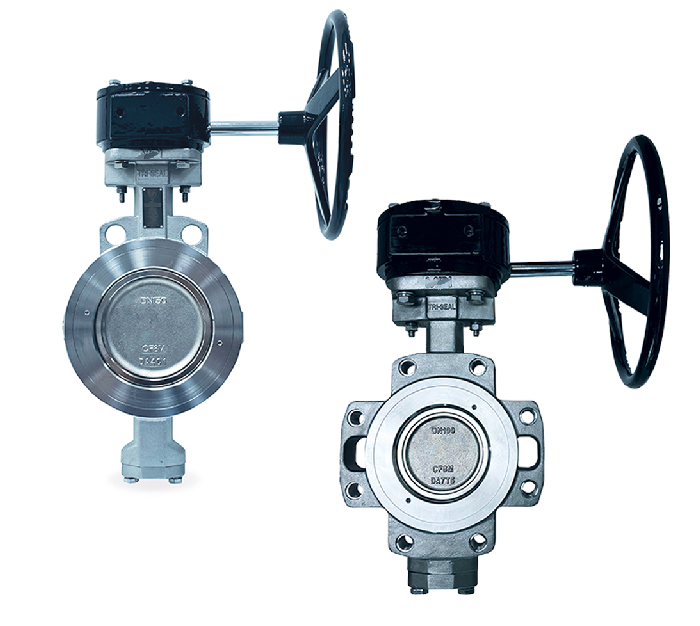
A butterfly valve is a quarter-turn rotary motion valve that controls fluid flow through the rotation of a disc mounted on a shaft. When the disc rotates parallel to the flow direction, the valve is fully open. When rotated perpendicular to the flow, the valve closes and blocks media movement.
High performance butterfly valves are an advanced form of butterfly valve designed to operate under higher pressure and temperature conditions than conventional resilient-seated butterfly valves. They are particularly suitable for applications requiring tight shutoff, throttling control, and long operational life.
The key difference between standard butterfly valves and high performance butterfly valves lies in their offset design. Traditional butterfly valves typically feature a concentric arrangement where the shaft passes through the center of the disc and seat. In high performance butterfly valves, the shaft is intentionally offset from the centerline of the seat and disc. This design minimizes friction during operation and significantly improves sealing performance.
High performance butterfly valves are commonly available in:
- Double offset (double eccentric) designs
- Triple offset (triple eccentric) designs
These valves are capable of handling:
- High-pressure systems
- Elevated temperatures
- Corrosive chemicals
- Abrasive slurries
- Steam applications
- Cryogenic services
- Vacuum conditions
Their versatility makes them suitable for both isolation and throttling applications.
The butterfly valve has undergone significant technological advancement over the decades. Early butterfly valves were mainly used in low-pressure water systems because their concentric seat design limited sealing reliability and caused excessive seat wear.
As industrial systems became more complex, engineers sought valve designs capable of higher performance without sacrificing the economic and operational benefits of butterfly valves. The introduction of offset geometry transformed butterfly valve technology.
The first major advancement was the double offset butterfly valve, which reduced disc-to-seat contact during operation. This innovation dramatically improved service life and enabled use in higher pressure applications.
The next breakthrough was the triple offset butterfly valve. By introducing a third offset angle to the sealing geometry, engineers eliminated friction entirely between the seat and sealing surfaces during operation. This allowed for metal-to-metal sealing and zero-leakage performance.
Today, high performance butterfly valves represent one of the most efficient and widely adopted valve technologies for critical industrial applications.
The valve body serves as the pressure-retaining component of the butterfly valve. High performance butterfly valves are manufactured using robust materials capable of withstanding demanding process conditions.
Common body styles include:
- Wafer type
- Lug type
- Double flanged type
Wafer-style valves are lightweight and economical, while lug and flanged designs provide enhanced strength and easier maintenance.
Body materials commonly include:
- Carbon steel
- Stainless steel
- Duplex stainless steel
- Super duplex stainless steel
- Aluminum bronze
- Titanium
- Nickel alloys
The material selection depends on temperature, pressure, corrosion resistance, and media compatibility requirements.
The disc is the primary flow-controlling element of the valve. In high performance butterfly valves, the disc is carefully engineered to minimize turbulence and pressure drop.
Disc designs may include:
- Streamlined profiles
- Aerofoil configurations
- Polished surfaces
- Hardened sealing edges
Disc materials are selected to withstand corrosion, erosion, and thermal stress.
Common materials include:
- CF8M stainless steel
- Duplex stainless steel
- Hastelloy
- Monel
- Titanium alloys
The shaft transfers torque from the actuator or handle to the disc. High performance butterfly valves typically use heavy-duty shafts designed for strength and reliability.
Shaft materials often include:
- 17-4PH stainless steel
- Duplex stainless steel
- Inconel
- Monel
Advanced shaft retention systems improve operational safety and reduce maintenance requirements.
The seat is one of the most critical components in determining sealing performance.
High performance butterfly valves may use:
- Soft seats
- Reinforced PTFE seats
- RTFE seats
- Metal seats
- Laminated graphite seats
Soft-seated valves provide bubble-tight shutoff and excellent chemical resistance. Metal-seated valves are ideal for high-temperature and severe service applications.
The double offset design incorporates two offsets:
- The shaft is offset from the centerline of the pipe.
- The shaft is offset from the centerline of the seat.
This geometry allows the disc to move away from the seat immediately during opening, reducing friction and seat wear.
Benefits of double offset valves include:
- Lower operating torque
- Longer seat life
- Improved sealing
- Better throttling performance
- Reduced maintenance
Double offset butterfly valves are widely used in:
- HVAC systems
- Oil and gas facilities
- Chemical plants
- Marine applications
- Water treatment systems
Triple offset butterfly valves introduce a third geometric offset in the sealing surface design. This creates a cone-shaped sealing geometry that eliminates rubbing between the seat and disc.
The triple offset design offers several advantages:
- Zero leakage capability
- Metal-to-metal sealing
- Fire-safe performance
- High-temperature resistance
- Longer service life
- Bidirectional sealing
Triple offset butterfly valves are particularly suitable for:
- Steam systems
- Refinery applications
- LNG terminals
- Power generation plants
- Offshore platforms
Because there is virtually no friction during operation, triple offset valves can withstand frequent cycling in severe conditions.
High performance butterfly valves operate using quarter-turn rotational motion. When the actuator rotates the shaft, the disc changes position relative to the flow path.
Operational positions include:
- Fully open
- Partially open for throttling
- Fully closed
The offset design ensures smooth movement with minimal seat wear.
During throttling applications, the disc position can be precisely adjusted to regulate flow rates. This capability makes high performance butterfly valves suitable for control applications in addition to isolation service.
Material selection is critical to valve reliability and operational longevity.
Carbon steel valves are commonly used for general industrial applications involving non-corrosive media.
Advantages include:
- High strength
- Cost effectiveness
- Good machinability
Stainless steel offers excellent corrosion resistance and is widely used in chemical processing and food industries.
Common grades include:
- ASTM A351 CF8
- ASTM A351 CF8M
- ASTM A890 4A
- ASTM A890 5A
Duplex materials provide superior resistance to:
- Chloride corrosion
- Pitting
- Stress corrosion cracking
These materials are ideal for seawater and offshore applications.
Aluminum bronze valves are highly resistant to seawater corrosion and marine biofouling.
- Applications include:
- Shipbuilding
- Desalination plants
- Offshore platforms
Titanium offers exceptional corrosion resistance in highly aggressive environments.
These valves are often used in:
- Chemical processing
- Chlorine handling
- Offshore industries
High Pressure Capability
High performance butterfly valves are engineered to handle pressure classes ranging from ANSI Class 150 to Class 2500.
Their reinforced body and seat designs allow reliable operation under severe pressure conditions.
High Temperature Resistance
Metal-seated high performance butterfly valves can operate at temperatures exceeding 800°F (427°C), depending on materials and design.
Applications include:
- Steam systems
- Thermal oil systems
- Furnace applications
Excellent Sealing Performance
Advanced seat designs provide:
- Bubble-tight shutoff
- Zero leakage
- Bidirectional sealing
This minimizes product loss and improves environmental safety.
Low Pressure Drop
Butterfly valves provide a nearly straight-through flow path, resulting in:
- Reduced turbulence
- Lower energy consumption
- Improved system efficiency
Long Service Life
Reduced seat friction significantly extends operational lifespan and minimizes maintenance requirements.
High performance butterfly valves must comply with international standards to ensure safety and performance.
Common standards include:
- API 609
- API 598
- ASME B16.34
- ASME B16.5
- MSS SP-68
- ISO 5211
- EN 593
- BS 5155
Testing and certification may include:
- Hydrostatic testing
- Fugitive emission testing
- Fire-safe testing
- Cryogenic testing
- Pressure cycle testing
Compliance ensures the valves can operate safely in demanding industrial environments.
High performance butterfly valves can be operated manually or automatically.
Manual Operation
Manual actuation methods include:
- Lever handles
- Gear operators
These are suitable for smaller valve sizes and less frequent operation.
Pneumatic Actuation
Pneumatic actuators use compressed air for fast and reliable valve operation.
Advantages include:
- Rapid response
- Explosion-proof suitability
- High reliability
Electric Actuation
Electric actuators provide automated control through electrical signals.
Features include:
- Remote operation
- Position control
- Integration with automation systems
Hydraulic Actuation
Hydraulic actuators generate high torque and are suitable for large valves and high-pressure applications.
In oil and gas facilities, high performance butterfly valves are used for:
- Pipeline isolation
- Tank farms
- Offshore platforms
- Refineries
- Gas processing plants
Their compact design and reliable sealing make them ideal for space-constrained installations.
Chemical plants require valves capable of handling aggressive fluids and corrosive chemicals.
High performance butterfly valves provide:
- Chemical resistance
- Reliable shutoff
- Safe operation
Power plants use these valves in:
- Steam systems
- Cooling water systems
- Condensate lines
- Flue gas systems
Triple offset designs are especially suitable for high-temperature steam applications.
Water treatment facilities benefit from the lightweight and low-maintenance characteristics of butterfly valves.
Applications include:
- Filtration systems
- Pump stations
- Distribution pipelines
- Sludge handling
Marine environments require exceptional corrosion resistance.
High performance butterfly valves are widely used in:
- Ballast systems
- Seawater cooling systems
- Firefighting systems
- Desalination plants
In heating and cooling systems, butterfly valves regulate chilled water and air handling processes efficiently.
Their low torque requirements reduce actuator energy consumption.
Mining operations use high performance butterfly valves for:
- Slurry transport
- Water supply
- Tailings systems
- Abrasive media handling
Durable materials help withstand harsh operating conditions.
Compact and Lightweight
Compared to gate and ball valves, butterfly valves require less installation space and structural support.
Lower Installation Costs
Their lightweight construction reduces transportation and installation expenses.
Quick Operation
Quarter-turn operation enables rapid opening and closing.
Reduced Maintenance
Offset designs reduce wear and extend service intervals.
Energy Efficiency
Lower pressure drop reduces pumping energy requirements.
Excellent Flow Control
These valves offer precise throttling capabilities for process control applications.
Versatility
High performance butterfly valves can handle:
- Liquids
- Gases
- Steam
- Slurries
- Corrosive media
Despite their many advantages, high performance butterfly valves also have certain limitations.
Potential Cavitation
Improper throttling conditions may cause cavitation in some applications.
Disc Obstruction
Even when fully open, the disc remains partially in the flow path.
This may not be suitable for certain pigging applications.
Specialized Material Costs
Exotic alloys and advanced seat materials can increase valve cost.
Proper installation is essential for reliable valve performance.
Key considerations include:
- Correct alignment
- Proper flange spacing
- Torque specifications
- Actuator calibration
- Flow direction verification
Improper installation may result in leakage, seat damage, or operational issues.
Routine maintenance improves reliability and service life.
Recommended maintenance practices include:
- Periodic inspection
- Seal replacement
- Lubrication
- Fastener checks
- Actuator testing
Predictive maintenance technologies now allow operators to monitor valve condition in real time.
Modern high performance butterfly valves continue to evolve with advancements in engineering and automation.
Recent innovations include:
- Smart valve diagnostics
- Digital positioners
- IoT integration
- Low-emission sealing systems
- Advanced composite materials
- Improved fire-safe designs
Automation and intelligent monitoring systems are helping industries improve efficiency and reduce downtime.
Environmental protection is becoming increasingly important in industrial operations.
High performance butterfly valves contribute to sustainability through:
- Reduced leakage
- Lower emissions
- Improved energy efficiency
- Longer operational life
- Reduced maintenance waste
Fugitive emission control is especially important in chemical and petrochemical industries where environmental regulations are becoming stricter.
High performance butterfly valves have become one of the most important valve technologies in modern industrial systems. Their advanced offset designs, superior sealing capabilities, compact structure, and excellent flow control performance make them highly suitable for a broad range of demanding applications.
Compared with conventional butterfly valves, high performance designs offer greater durability, reduced wear, lower operating torque, and improved reliability under high-pressure and high-temperature conditions. Whether used in oil and gas processing, chemical plants, marine systems, power generation facilities, or water treatment infrastructure, these valves provide dependable performance and operational efficiency.
As industries continue to pursue automation, environmental sustainability, and energy efficiency, the role of high performance butterfly valves will continue to expand. With ongoing advancements in materials, sealing technologies, and intelligent monitoring systems, these valves are expected to remain a critical component in industrial flow control for many years to come.
