Industrial flow control systems are the backbone of modern infrastructure, enabling safe and efficient transportation of fluids such as oil, gas, steam, water, and chemical media across vast networks of pipelines and processing facilities. Within this ecosystem, valves play a decisive role in ensuring operational safety, process stability, and environmental compliance.
Among all valve types used in heavy-duty service, the Cast Steel Gate Valve continues to be one of the most widely used and technically important isolation devices in global industry. Its robust structure, reliable sealing capability, and suitability for high-pressure and high-temperature environments make it indispensable in sectors such as oil & gas, petrochemical processing, power generation, metallurgy, and water treatment.
Over the past decades, cast steel gate valves have undergone substantial engineering transformation. Originally designed for simple on/off flow isolation, modern versions now incorporate advanced sealing technologies, emission control systems, precision casting techniques, and smart monitoring capabilities. These developments reflect the broader industrial shift toward safer, more efficient, and environmentally responsible equipment.
This extended industry report explores the design principles, engineering evolution, manufacturing technologies, installation practices, operational behavior, failure mechanisms, and global market trends associated with cast steel gate valves in detail.
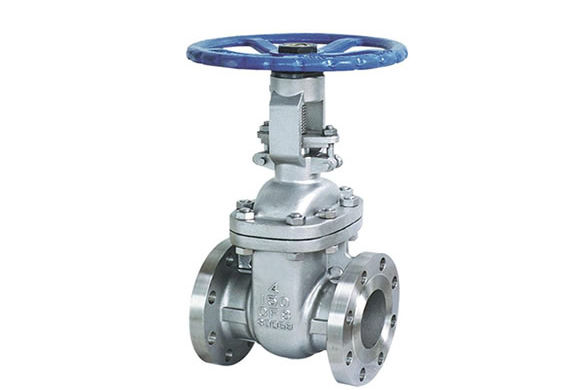
A cast steel gate valve is a linear motion valve that controls fluid flow by raising or lowering a gate (wedge or parallel disc) inside the valve body. The gate moves perpendicular to the flow direction, creating either a fully open or fully closed passage.
Unlike control valves that regulate flow continuously, gate valves are designed for isolation service. Their main function is to provide:
- Full flow when open
- Tight shutoff when closed
- Minimal pressure drop during operation
A typical cast steel gate valve consists of:
- Valve body (cast steel construction)
- Bonnet (bolted or pressure seal design)
- Gate (solid, flexible, or split wedge)
- Seat rings (metal or soft seated)
- Stem (rising or non-rising type)
- Packing system (fugitive emission control)
- Handwheel or actuator assembly
Each component is engineered to withstand mechanical stress, thermal expansion, and corrosive media exposure over long service cycles.
Gate valves have been used in industrial systems for over a century. Early designs were simple and primarily focused on mechanical isolation without consideration for emission control or lifecycle efficiency.
As industrial processes became more complex, especially in petrochemical refining and high-pressure steam systems, demand increased for more reliable sealing systems and stronger materials. This led to the widespread adoption of cast steel bodies, replacing earlier cast iron designs due to their superior strength and durability.
Key historical milestones include:
- Transition from cast iron to carbon and alloy steel bodies
- Introduction of flexible wedge designs to improve sealing
- Development of pressure seal bonnet systems for high-pressure service
- Adoption of low-emission packing systems in response to environmental regulations
- Integration of digital monitoring and actuator automation in modern systems
Today, cast steel gate valves represent a mature but continuously evolving technology platform.
The operating principle is based on linear motion. When the valve is actuated, the stem moves the gate vertically:
- Upward movement → valve opens
- Downward movement → valve closes
This simple motion system minimizes mechanical complexity and enhances operational reliability.
Gate valves are engineered for binary operation:
- Fully open: The gate is completely retracted from the flow path, creating a straight-through channel with minimal turbulence.
- Fully closed: The gate presses tightly against the seat rings, blocking all fluid passage.
This design ensures:
- Extremely low pressure drop when open
- High sealing integrity when closed
- Reduced energy loss in pipeline systems
A critical operational rule is that gate valves should not be used for flow regulation. Partial opening can cause:
- Flow turbulence and vibration
- Erosion of sealing surfaces
- Gate seat damage
- Reduced service life
For throttling applications, globe valves or control valves are preferred.
One of the most important advancements in modern gate valve engineering is the reduction of fugitive emissions.
Modern industrial standards require valves to limit leakage of volatile organic compounds (VOCs), often targeting levels below 100 ppm. This is critical in:
- Refinery systems
- Chemical plants
- Gas transmission pipelines
- Environmental compliance zones
The stem packing system is a primary leakage point in traditional designs. Modern solutions include:
- Flexible graphite packing rings
- Live-loaded packing assemblies
- Anti-extrusion components
- Low-friction surface coatings
These features maintain constant sealing pressure even under thermal cycling and vibration.
The bonnet joint is another critical sealing area. Improvements include:
- Spiral wound gaskets with graphite or PTFE fillers
- Pressure seal bonnet designs for high-pressure systems
- Precision-machined gasket surfaces
- Optimized bolt load distribution
Modern valves undergo:
- Static leakage tests
- Thermal cycle testing
- Pressure endurance testing
- Fugitive emission certification testing
These ensure consistent performance under real-world operating conditions.
Common materials include:
- ASTM A216 WCB (carbon steel)
- ASTM A216 WCC (improved carbon steel)
- ASTM A217 WC6 / WC9 (chrome-moly alloy steel)
- Stainless steel grades for corrosive environments
Each material is selected based on:
- Temperature range
- Pressure class
- Corrosion resistance requirements
- Fluid type compatibility
The casting process includes:
- Mold design and preparation
- Molten steel pouring
- Controlled cooling to prevent internal stress
- Heat treatment for mechanical stability
- Non-destructive testing (NDT)
Defect-free casting is essential to ensure structural integrity under high-pressure conditions.
Heat treatment processes improve:
- Tensile strength
- Hardness balance
- Stress relief
- Dimensional stability
Common treatments include normalizing, quenching, and tempering.
- Solid wedge: Simple and strong, suitable for general service
- Flexible wedge: Better sealing under thermal expansion
- Split wedge: Used for improved alignment and sealing consistency
- Rising stem: Visual position indication, easier maintenance
- Non-rising stem: Compact installation, suitable for limited space
- Bolted bonnet: Standard industrial design
- Welded bonnet: Enhanced leak prevention
- Pressure seal bonnet: High-pressure applications above Class 900
Cast steel gate valves are designed according to international standards such as:
- API 600 (steel gate valves)
- ASME B16.34 (valve pressure-temperature ratings)
- API 598 (testing and inspection)
Pressure classes include:
- Class 150
- Class 300
- Class 600
- Class 900
- Class 1500
- Class 2500
Higher pressure classes require reinforced body structures, improved sealing systems, and advanced metallurgy.
- Material inspection
- Casting and rough machining
- Precision CNC machining
- Assembly of internal components
- Surface finishing and coating
- Pressure testing and inspection
Each valve undergoes:
- Hydrostatic shell testing
- Seat leakage testing
- Dimensional inspection
- Torque testing
- Cycle life testing
- Radiographic testing (RT)
- Ultrasonic testing (UT)
- Magnetic particle inspection (MPI)
These ensure internal structural integrity without damaging components.
Proper installation is critical to valve performance and longevity.
- Inspect internal cavity for debris
- Verify pressure class and model specification
- Ensure sealing surfaces are clean
- Align pipeline flanges properly
- Tighten bolts in a cross pattern
- Avoid pipe stress on valve body
- Ensure correct flow direction
For automated systems:
- Follow wiring diagrams precisely
- Ensure torque calibration is correct
- Test full open/close cycles before commissioning
- Inspect stem packing leakage
- Lubricate stem threads
- Check actuator performance
- Monitor torque changes
- Replace gaskets periodically
- Inspect seat wear
- Test sealing performance under pressure
- Clean internal components during shutdowns
- Stem packing leakage
- Seat erosion
- Gate misalignment
- Corrosion damage
- Thermal fatigue cracking
Early detection significantly reduces downtime and repair costs.
- Gate valve: isolation, low pressure drop
- Globe valve: flow regulation, higher pressure drop
- Gate valve: better for high temperature
- Ball valve: faster operation, better sealing in some cases
- Gate valve: suitable for high-pressure systems
- Butterfly valve: compact and lightweight, but less suitable for extreme pressure
Oil & Gas Industry
- Pipeline isolation
- Refinery process control
- Offshore drilling systems
Power Generation
- Steam line isolation
- Boiler systems
- Cooling water circuits
Petrochemical Industry
- Reactor feed lines
- Chemical transfer systems
- High-temperature fluid handling
Water Infrastructure
- Municipal water distribution
- Pump station isolation
- Wastewater treatment systems
Modern valve systems are increasingly integrated with digital technologies:
- IoT-based monitoring systems
- Predictive maintenance analytics
- Smart actuator feedback systems
- Remote operation capabilities
These technologies improve reliability and reduce unplanned downtime.
The global demand for cast steel gate valves is driven by:
- Expansion of oil & gas infrastructure
- Growth in chemical processing industries
- Increased focus on emission control regulations
- Modernization of aging pipeline systems
Emerging markets in Asia, the Middle East, and Africa are contributing significantly to demand growth.
When selecting cast steel gate valves, engineers and procurement specialists consider:
- Pressure and temperature rating
- Material compatibility
- Emission certification requirements
- Actuation method
- Lifecycle cost analysis
- Maintenance accessibility
The Cast Steel Gate Valve remains a critical component in global industrial infrastructure. Its evolution from a simple mechanical isolation device into a highly engineered, emission-controlled, and digitally compatible system reflects the broader transformation of industrial technology.
With continuous advancements in materials science, manufacturing precision, sealing technology, and smart monitoring integration, cast steel gate valves are expected to remain essential in high-pressure and high-temperature applications for decades to come.
As industries move toward stricter environmental standards and higher efficiency expectations, these valves will continue to play a central role in ensuring safe, reliable, and sustainable fluid control systems worldwide.