
In modern industrial pipeline systems, valve reliability is essential for ensuring safe operation, environmental protection, production efficiency, and long-term asset integrity. Industries such as oil and gas, petrochemical processing, LNG transportation, power generation, refining, and chemical manufacturing often operate under severe conditions including high pressure, high temperature, abrasive media, corrosive fluids, and frequent cycling. Under these harsh environments, conventional valve designs may suffer from seat wear, leakage, unstable torque, and reduced service life.
To overcome these challenges, engineers increasingly adopt severe-service isolation valves designed for reliable shutoff and long-term durability. Among these solutions, the Orbit Rising Stem Ball Valve (orbit valve) has become a trusted option for critical isolation applications.
Unlike traditional quarter-turn ball valves, it uses a lift-and-turn mechanism where the ball lifts away from the seat before rotation, eliminating seat rubbing and reducing wear. After rotation, the ball wedges into the closed position, ensuring tight bubble-proof sealing.
This design delivers low operating torque, stable performance, reduced maintenance, and extended service life. It is widely used in gas transmission, compressor stations, emergency shutdown systems, LNG facilities, offshore platforms, and other demanding applications.
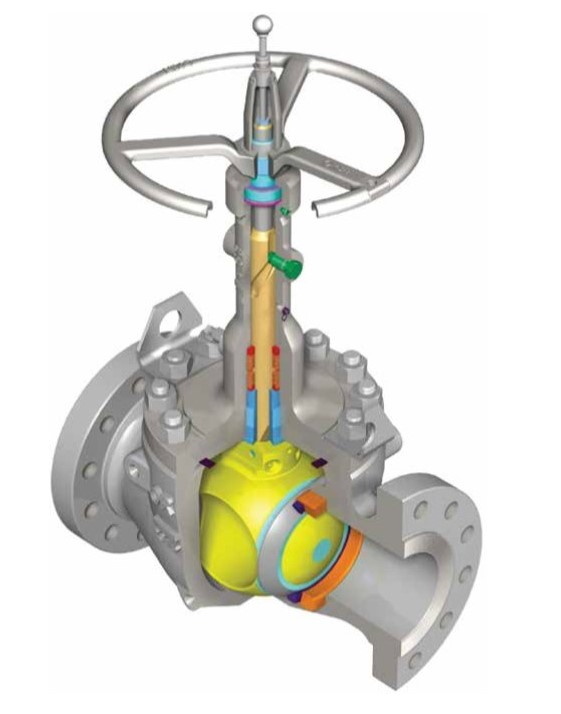
An orbit rising stem ball valve is a specialized quarter-turn isolation valve designed to provide zero-leakage shutoff without seat abrasion during operation. It combines the advantages of a ball valve with a mechanically guided lifting stem system that separates rotational movement from seating contact.
The valve operates through a two-step motion:
- The stem lifts the ball away from the seat.
- The ball rotates without touching the seat surfaces.
During closing, the reverse process occurs:
- The ball rotates into alignment with the flow path.
- The stem forces the ball downward into the seat, creating a tight mechanical seal.
Because the ball does not rotate against the seat during opening and closing, friction and wear are greatly reduced. This makes orbit valves especially suitable for severe service applications requiring frequent operation and dependable shutoff.
The design is particularly valued in applications involving:
- High pressure
- High temperature
- Abrasive media
- Dry gas service
- Cryogenic systems
- Emergency shutdown duty
- Critical block isolation
The orbit valve concept was developed to overcome the limitations of conventional ball valve sealing systems. Traditional floating and trunnion-mounted ball valves often experience seat damage caused by rotational friction between the ball and seat surfaces during repeated cycling.
In severe operating environments, this friction can lead to:
- Seat wear
- Leakage
- Increased operating torque
- Reduced valve lifespan
- Maintenance downtime
Engineers sought a solution that could provide:
- Bubble-tight shutoff
- Reduced seat wear
- Stable torque performance
- Longer operational life
The orbit rising stem mechanism successfully addressed these issues by eliminating seat rubbing during rotation. Over time, improvements in machining technology, metallurgy, sealing materials, and actuator integration further enhanced orbit valve performance, making them highly reliable for mission-critical services.
Orbit rising stem ball valves consist of several precision-engineered components that work together to provide reliable isolation performance.
The valve body forms the primary pressure-retaining structure. It houses the ball, seats, stem assembly, and internal sealing components.
Valve bodies are manufactured using:
- Forged steel
- Cast steel
- Stainless steel
- Duplex stainless steel
- Alloy steel
- Special corrosion-resistant alloys
Common end connections include:
- Flanged ends
- Butt weld ends
- RTJ connections
- Hub connections
The body design must withstand severe pressure and temperature conditions while maintaining structural integrity.
The ball serves as the main shutoff element inside the valve. Unlike conventional ball valves, the orbit valve ball lifts away from the seat before rotation occurs.
The ball typically contains:
- Precision-machined sealing surfaces
- Port openings for flow passage
- Hardened or coated surfaces for wear resistance
Special coatings such as tungsten carbide or chromium carbide may be applied to improve durability.
The rising stem is one of the defining features of the orbit valve.
During operation, the stem performs two functions:
- Linear lifting motion
- Controlled rotational movement
The stem mechanism lifts the ball away from the seat before rotation begins. This eliminates friction between sealing surfaces during operation.
The rising stem also provides a clear visual indication of valve position.
The seat assembly creates the sealing interface between the ball and valve body.
Orbit valve seats are designed to provide:
- Bubble-tight shutoff
- Bidirectional sealing
- Fire-safe performance
- Low wear characteristics
Seat materials vary according to service conditions and may include:
- PTFE
- Reinforced polymers
- Metal seats
- Soft seats
- Composite sealing materials
Stem seals prevent external leakage around the stem assembly.
Modern orbit valves often use:
- Graphite packing
- PTFE packing
- Low-emission sealing systems
- Fire-safe stem seals
These systems help meet environmental regulations and improve operational safety.
The drive mechanism controls the lifting and rotational motion of the stem.
Orbit valves may be operated using:
- Manual gear operators
- Pneumatic actuators
- Electric actuators
- Hydraulic actuators
Automated systems are commonly used in emergency shutdown and remote pipeline operations.
The operating sequence of an orbit rising stem ball valve differs significantly from that of conventional ball valves.
When the valve begins opening:
- The stem first lifts upward.
- The lifting motion disengages the ball from the seat.
- Once separated, the ball rotates freely without seat contact.
- The flow port aligns with the pipeline.
- Fluid flows through the valve.
Because the ball rotates without touching the seat, friction is minimized.
During closing:
- The ball rotates back toward the closed position.
- Rotation occurs without seat contact.
- The stem then moves downward.
- The ball wedges tightly against the seat.
- Bubble-tight shutoff is achieved.
This wedging action provides highly reliable sealing performance even under demanding conditions.
Orbit valves provide several advanced performance characteristics.
Non-Rubbing Operation
The most important feature is the elimination of seat rubbing during operation.
This design:
- Reduces wear
- Extends service life
- Improves shutoff reliability
- Lowers operating torque
Bubble-Tight Shutoff
Orbit valves are designed to achieve zero leakage in critical isolation applications.
The wedging action between the ball and seat creates highly dependable sealing performance.
Low Operating Torque
Because friction is minimized, operating torque remains relatively stable throughout the valve’s service life.
This reduces actuator size requirements and improves automation reliability.
Long Service Life
Reduced wear allows orbit valves to maintain sealing performance over extended operating cycles.
This is particularly important in frequently cycled applications.
Fire-Safe Design
Many orbit valves are designed and tested according to fire-safe standards such as:
- API 607
- API 6FA
- ISO 10497
Fire-safe construction improves plant safety in hazardous environments.
Bidirectional Sealing
Orbit valves often provide bidirectional shutoff capability, allowing reliable sealing in either flow direction.
Orbit rising stem ball valves offer several important advantages compared to traditional ball valve designs.
Reduced Seat Wear
Conventional ball valves rotate directly against the seat, causing friction and wear.
Orbit valves eliminate this issue through lift-and-turn operation.
Improved Shutoff Reliability
The wedging sealing action produces more consistent sealing performance over time.
Better Performance in Dry Gas Service
Dry gas applications often accelerate seat wear in conventional valves.
Orbit valves perform exceptionally well because of reduced friction.
Lower Maintenance Costs
Extended seat life and stable operation reduce maintenance frequency and downtime.
Enhanced Safety
Reliable sealing performance reduces the risk of fugitive emissions and leakage.
Material selection depends on pressure, temperature, corrosion resistance, and media compatibility requirements.
Carbon Steel
Carbon steel is commonly used for general industrial applications.
Typical grades include:
- ASTM A216 WCB
- ASTM A105
Stainless Steel
Stainless steel provides improved corrosion resistance.
Common grades include:
- ASTM A351 CF8
- ASTM A351 CF8M
- ASTM A182 F316
Alloy Steel
Alloy steels are used for high-temperature and high-pressure applications.
Examples include:
- ASTM A182 F11
- ASTM A182 F22
- ASTM A217 WC6
Duplex Stainless Steel
Duplex materials offer high strength and superior resistance to chloride corrosion.
Typical grades include:
- ASTM A890 4A
- ASTM A890 5A
Special Alloys
Extreme service environments may require:
- Inconel
- Monel
- Hastelloy
- Titanium
Orbit valves are widely used in severe-service industries.
Gas transmission systems require highly reliable isolation valves with minimal leakage.
Orbit valves are ideal for:
- Compressor stations
- Meter isolation
- Pipeline block valves
- Gas storage facilities
Cryogenic orbit valves are used in LNG plants and low-temperature gas systems.
Special materials and extended bonnets help maintain sealing integrity at extremely low temperatures.
Frequent cycling and dry gas conditions make orbit valves highly suitable for molecular sieve switching systems.
Orbit valves are commonly used in emergency shutdown applications requiring rapid and dependable isolation.
Petrochemical plants use orbit valves for critical hydrocarbon isolation applications.
Refineries utilize orbit valves in:
- Hydrogen service
- High-pressure gas systems
- Flare systems
- Process isolation duty
Offshore oil and gas operations require corrosion-resistant and highly reliable valve solutions.
Orbit valves help minimize maintenance in difficult operating environments.
Several orbit valve configurations are available for different applications.
Soft-Seated Orbit Valves
Soft-seated designs provide excellent bubble-tight sealing for clean media applications.
Metal-Seated Orbit Valves
Metal-seated valves offer improved durability for abrasive, high-temperature, and severe-service conditions.
Cryogenic Orbit Valves
Cryogenic versions include extended bonnets and specialized sealing systems for low-temperature service.
Automated Orbit Valves
Actuated orbit valves provide remote operation and integration with industrial automation systems.
Modern industrial regulations require valves to meet stringent environmental and safety standards.
Orbit valves are often designed with:
- Fire-safe sealing systems
- Anti-static devices
- Low-emission packing
- Blowout-proof stems
These features improve plant safety and environmental compliance.
Proper installation is essential for optimal performance.
Pipeline Alignment
Misalignment can place stress on the valve body and affect operation.
Actuator Sizing
Automated orbit valves require properly sized actuators to ensure reliable operation.
Orientation
Valve orientation should follow manufacturer recommendations.
Pressure Testing
System pressure testing should be conducted after installation to verify sealing integrity.
Orbit valves generally require less maintenance than conventional ball valves, but regular inspection remains important.
Inspection Procedures
Routine inspections should include:
- Stem condition
- Seat integrity
- Packing leakage
- Actuator operation
- Corrosion monitoring
Lubrication
Moving components may require periodic lubrication depending on operating conditions.
Packing Replacement
Packing systems should be replaced if leakage develops.
Seat Maintenance
Seat surfaces should be inspected for wear or damage during shutdown periods.
Although orbit valves offer exceptional reliability, certain challenges may arise.
Orbit valves are generally more expensive than conventional ball valves.
However, lower maintenance costs and longer service life often offset the higher purchase price.
Precision machining requirements increase manufacturing complexity.
Advanced CNC machining and quality control systems help ensure reliability.
Highly abrasive or corrosive media may still cause wear over time.
Special coatings and upgraded materials improve durability.
The future of orbit valve technology is closely linked to industrial automation, digitalization, and environmental sustainability.
Smart Valve Monitoring
Modern orbit valves increasingly incorporate smart diagnostic systems capable of monitoring:
- Valve position
- Operating torque
- Cycle count
- Seal condition
- Predictive maintenance indicators
Advanced Materials
New alloy developments and coating technologies continue improving corrosion and wear resistance.
Hydrogen Service Applications
As hydrogen energy infrastructure expands, orbit valves are gaining importance in hydrogen transportation and storage systems.
Fugitive Emission Reduction
Environmental regulations are driving the development of ultra-low emission sealing systems.
Automation Integration
Orbit valves are becoming more integrated with Industry 4.0 process automation systems and remote monitoring platforms.
The orbit rising stem ball valve represents one of the most advanced and reliable severe-service isolation valve technologies available in modern industry. Its unique lift-and-turn operating mechanism eliminates seat rubbing during operation, significantly reducing wear and maintaining dependable bubble-tight shutoff performance throughout extended service life.
Compared to conventional ball valves, orbit valves offer superior sealing reliability, lower operating torque, improved durability, and reduced maintenance requirements. These advantages make them particularly suitable for critical isolation applications in industries such as natural gas transmission, LNG processing, petrochemical production, refining, offshore platforms, and emergency shutdown systems.
As industrial systems continue evolving toward greater automation, stricter environmental regulations, and higher operational reliability standards, orbit rising stem ball valves will remain an essential solution for severe-service flow isolation applications worldwide.
