In modern industrial systems, valves play a critical role in controlling the flow of liquids, gases, steam, and other process media. As industries continue to move toward automation, intelligent manufacturing, and remote operation, traditional manually operated valves are increasingly being replaced by automated valve systems. Among these advanced flow-control devices, electric gate valves have become one of the most widely used solutions for industrial pipeline automation.
Electric gate valves combine the reliable shut-off performance of traditional gate valves with the convenience and precision of electric actuators. They are capable of remote operation, automated process control, and integration with industrial control systems such as PLC, SCADA, and DCS platforms. Because of their durability, strong sealing performance, and suitability for large-diameter pipelines, electric gate valves are extensively used in power generation, oil and gas, petrochemical processing, water treatment, mining, HVAC systems, marine engineering, and municipal infrastructure projects.
With the rapid development of Industry 4.0 and intelligent industrial equipment, electric gate valves are evolving from simple on/off devices into smart control components equipped with digital monitoring, diagnostic functions, and energy-efficient technologies. Their ability to operate safely in harsh environments while reducing labor costs and improving operational efficiency makes them indispensable in modern industrial facilities.
This article explores the structure, working principles, types, advantages, applications, maintenance requirements, and future trends of electric gate valves in detail.
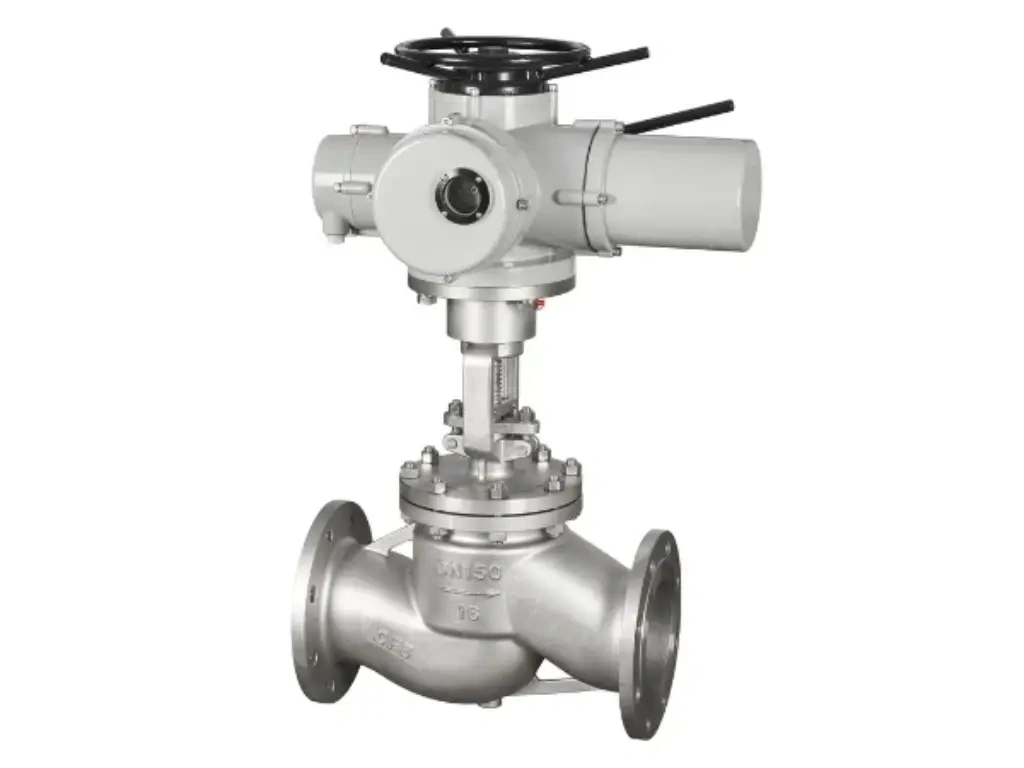
An electric gate valve is an automated valve consisting of two major components:
- A gate valve body
- An electric actuator
The electric actuator converts electrical energy into mechanical motion, driving the valve stem to raise or lower the gate inside the valve body. When the gate rises, the fluid passage opens completely, allowing unrestricted flow. When the gate lowers, the flow path is blocked, stopping the medium entirely.
Unlike manual gate valves that require handwheel operation, electric gate valves can be controlled remotely through electrical signals or automated control systems. This capability makes them ideal for industrial processes where valves are installed in inaccessible, hazardous, or unmanned locations.
Electric gate valves are primarily designed for fully open or fully closed service rather than throttling applications. Their straight-through flow path minimizes pressure drop and provides excellent flow efficiency.
One of the greatest advantages of electric gate valves is their ability to operate remotely. Operators can control valve opening and closing from centralized control rooms without physically approaching the pipeline system. This improves safety and efficiency in large industrial plants.
Automated operation also reduces manual labor and supports unattended process management.
Electric actuators provide controlled motorized movement, which allows smooth and gradual valve operation. This minimizes hydraulic shock, vibration, and noise within the pipeline system.
Compared with manual or pneumatic operation, electric actuation offers more stable motion control.
Most electric gate valves use wedge gates, flexible gates, or elastic sealing structures to achieve tight shut-off performance. High-quality sealing surfaces reduce leakage and improve operational reliability.
This makes electric gate valves suitable for high-pressure and high-temperature applications.
When fully open, the gate is lifted completely out of the fluid path. The straight-through design minimizes turbulence and pressure loss, making gate valves highly efficient for transporting large volumes of fluid.
Electric gate valves are compatible with many industrial media, including:
- Water
- Steam
- Oil
- Natural gas
- Chemical fluids
- Corrosive media
- Slurries
- Acid and alkali solutions
The valve body and trim materials can be selected according to process requirements.
Electric gate valves are especially effective in large pipeline systems where manual operation would be difficult or time-consuming. Electric actuators eliminate the need for excessive manual force.
An electric gate valve consists of several important components that work together to control fluid flow.
The valve body is the primary pressure-retaining component. It houses the internal flow passage and withstands system pressure and temperature.
Common valve body materials include:
- Carbon steel
- Stainless steel
- Duplex stainless steel
- Cast iron
- Ductile iron
- Alloy steel
- Bronze
The bonnet forms the upper closure of the valve body and supports the valve stem assembly. It also helps maintain pressure sealing.
Bonnet designs include:
- Bolted bonnet
- Pressure seal bonnet
- Welded bonnet
The gate is the internal closure element that blocks or permits flow.
Common gate designs include:
- Wedge gate
- Parallel gate
- Flexible gate
- Knife gate
The gate moves vertically to open or close the flow passage.
The stem transfers motion from the actuator to the gate.
Stem types include:
- Rising stem
- Non-rising stem
The stem must possess high mechanical strength and corrosion resistance.
Valve seats provide sealing surfaces between the gate and valve body. Seat materials vary according to pressure, temperature, and medium characteristics.
The electric actuator is the driving mechanism of the valve. It contains:
- Electric motor
- Gearbox
- Torque control system
- Limit switches
- Position indicators
- Control electronics
The actuator converts electrical signals into rotational torque that moves the valve stem.
The transmission assembly connects the actuator output to the valve stem, enabling smooth mechanical motion.
Electric gate valves can be classified according to gate structure, stem design, and application requirements.
Wedge gate valves use a wedge-shaped gate that presses tightly against the seats to achieve reliable sealing.
Features
- Excellent sealing performance
- Suitable for high pressure and high temperature
- Durable and reliable
- Widely used in power plants and refineries
Applications
- Steam systems
- High-pressure pipelines
- Thermal power stations
- Oil and gas transmission
Parallel gate valves use flat parallel discs rather than wedge-shaped gates.
Features
- Low flow resistance
- Suitable for large-diameter pipelines
- Reduced operating torque
Applications
- Petroleum pipelines
- Chemical plants
- Water transmission systems
Flexible gate valves contain a gate with slight elasticity that compensates for seat deformation and thermal expansion.
Features
- Improved sealing under temperature changes
- Reduced risk of jamming
- Enhanced reliability
Applications
- Steam systems
- Pipelines with fluctuating temperatures
- Industrial process systems
In rising stem designs, the stem moves upward as the valve opens.
Features
- Visible valve position
- Easy maintenance
- Better stem protection
Disadvantages
- Requires more installation space
Applications
- Outdoor installations
- Industrial facilities with sufficient vertical space
In non-rising stem valves, the stem rotates without moving vertically.
Features
- Compact structure
- Suitable for limited spaces
- Reduced installation height
Applications
- Underground pipelines
- Compact equipment rooms
- Municipal water systems
Electric gate valves operate based on a simple but highly effective mechanical principle.
- The control system sends an electrical signal to the actuator.
- The electric motor starts rotating.
- The gearbox amplifies torque.
- The stem moves upward.
- The gate lifts from the seat.
- Fluid flows through the open passage.
When fully open, the valve provides minimal resistance to flow.
- The control system sends a closing signal.
- The actuator rotates in the opposite direction.
- The stem lowers the gate.
- The gate contacts the seats.
- The fluid passage becomes completely blocked.
The actuator automatically stops when the preset torque or travel limit is reached.
Electric actuators are essential for valve automation.
Motorized Operation
The electric motor supplies rotational power to operate the valve automatically.
Torque Generation
Gear mechanisms increase motor torque to move large valves under pressure.
Position Control
The actuator can regulate valve position accurately.
Limit Protection
Limit switches prevent over-travel and protect internal components.
Remote Communication
Modern actuators support industrial communication protocols such as:
- Modbus
- Profibus
- HART
- Foundation Fieldbus
Intelligent Monitoring
Smart actuators can provide:
- Valve position feedback
- Torque monitoring
- Fault diagnostics
- Maintenance alerts
Material selection is critical for valve durability and performance.
Carbon Steel
Suitable for general industrial service involving non-corrosive media.
Stainless Steel
Provides excellent corrosion resistance for chemical and marine applications.
Duplex Stainless Steel
Offers superior strength and corrosion resistance in aggressive environments.
Alloy Steel
Used for high-temperature and high-pressure services.
Bronze and Aluminum Bronze
Common in seawater and marine systems due to excellent corrosion resistance.
Electric gate valves are used across numerous industries.
Electric gate valves are widely used in:
- Pipeline transportation
- Refineries
- Offshore platforms
- Natural gas systems
Their remote-control capability improves operational safety.
Power plants require electric gate valves for:
- Steam pipelines
- Boiler systems
- Cooling water systems
- Turbine auxiliary systems
High-pressure wedge gate valves are especially common.
Municipal and industrial water systems use electric gate valves for:
- Water distribution
- Pump stations
- Wastewater treatment
- Irrigation systems
Chemical plants require reliable shut-off valves capable of handling corrosive and hazardous media.
Electric gate valves improve automation and process safety.
Mining systems use electric gate valves in:
- Slurry pipelines
- Water handling systems
- Ore processing plants
Heavy-duty valve designs are often required.
Electric gate valves are used in:
- Chilled water systems
- Heating networks
- Fire protection systems
Electric gate valves offer:
- Remote operation
- Automated control
- Reduced labor requirements
- Faster response time
Electric valves provide:
- No need for compressed air
- Lower infrastructure requirements
- More precise positioning
- Reduced maintenance
However, pneumatic actuators may operate faster in some applications.
Gate valves provide:
- Better sealing performance
- Lower pressure drop
- Improved performance in full-open applications
Butterfly valves are usually more compact and economical.
Proper installation is essential for reliable operation.
Correct Alignment
Misalignment may damage the stem or actuator.
Adequate Support
Large electric actuators require proper structural support.
Electrical Connections
Electrical wiring must comply with industrial safety standards.
Environmental Protection
Outdoor installations may require weatherproof or explosion-proof actuators.
Accessibility
Sufficient space should be provided for maintenance and inspection.
Regular maintenance extends service life and reduces downtime.
Inspection of Sealing Surfaces
Check for wear, erosion, or corrosion.
Lubrication
Lubricate moving components such as:
- Stem threads
- Bearings
- Gear assemblies
Electrical Inspection
Inspect:
- Wiring
- Motors
- Limit switches
- Control systems
Stem Cleaning
Keep the stem free of debris and corrosion.
Functional Testing
Regularly test opening and closing performance.
Causes
- Damaged seats
- Worn gate surfaces
- Improper closing torque
Solutions
- Replace sealing components
- Adjust actuator torque settings
Causes
- Motor overload
- Electrical faults
- Moisture intrusion
Solutions
- Repair wiring
- Replace damaged motors
- Improve sealing protection
Causes
- Dirt accumulation
- Lack of lubrication
Solutions
- Clean the stem
- Apply lubrication
- Replace damaged components
Modern electric gate valves increasingly incorporate smart technologies.
Digital Position Monitoring
Real-time valve position feedback improves operational accuracy.
Predictive Maintenance
Sensors monitor:
- Torque
- Temperature
- Vibration
- Operating cycles
This helps predict maintenance needs before failures occur.
Industrial IoT Integration
Smart valves can connect to Industrial Internet of Things (IIoT) platforms for centralized monitoring and analytics.
Energy Efficiency
Modern actuators are designed to reduce power consumption and improve efficiency.
Industrial safety is a major consideration.
Overload Protection
Actuators stop automatically if excessive torque is detected.
Emergency Manual Override
Manual override mechanisms allow operation during power failures.
Explosion-Proof Design
Explosion-proof actuators are used in hazardous environments such as oil and gas facilities.
Thermal Protection
Motor thermal protection prevents overheating.
Choosing the correct valve requires evaluating several factors.
Pressure Rating
Valve pressure class must match system pressure.
Temperature Range
Materials and seals must withstand operating temperatures.
Medium Characteristics
Consider:
- Corrosiveness
- Viscosity
- Solid particles
- Toxicity
Valve Size
Select appropriate pipe diameter and flow capacity.
Actuator Requirements
Consider:
- Voltage
- Torque
- Speed
- Control signal compatibility
Environmental Conditions
Outdoor and hazardous environments may require special actuator protection.
The electric valve industry is evolving rapidly.
Intelligent Automation
Future valves will feature advanced digital control and AI-assisted diagnostics.
Wireless Monitoring
Wireless communication technologies will simplify installation and monitoring.
Advanced Materials
New alloys and composite materials will improve corrosion resistance and durability.
Low-Energy Actuation
Manufacturers are developing energy-efficient actuators to reduce operational costs.
Integration with Smart Factories
Electric gate valves will play an important role in fully automated industrial facilities.
Electric gate valves have become essential components in modern industrial automation systems. By combining the strong sealing performance and low flow resistance of traditional gate valves with advanced electric actuation technology, they provide reliable, efficient, and intelligent flow control solutions for a wide range of industries.
Their ability to support remote operation, automated process management, and integration with digital control systems makes them highly valuable in oil and gas, power generation, water treatment, chemical processing, mining, and infrastructure projects. With ongoing advancements in smart actuator technology, predictive maintenance, and industrial IoT integration, electric gate valves are becoming increasingly intelligent, energy-efficient, and reliable.
As industries continue to pursue automation, operational safety, and energy optimization, the demand for high-performance electric gate valves is expected to grow significantly in the coming years. Manufacturers are continuously improving valve materials, actuator performance, sealing technologies, and intelligent monitoring systems to meet the evolving requirements of modern industrial applications.
Electric gate valves will remain a critical part of industrial flow-control systems, supporting safer, smarter, and more efficient operations across global industries.