Concentric butterfly valves are a cornerstone of modern fluid control technology, offering an efficient, compact, and cost-effective solution for regulating and isolating flow in pipelines. Known for their simplicity, reliability, and adaptability, these valves are widely used in industries ranging from water treatment and chemical processing to HVAC systems, oil and gas, and food and beverage manufacturing.
At their core, concentric butterfly valves consist of a circular disc mounted on a shaft that rotates within the valve body. This simple design enables quick, precise control of fluid flow, while also minimizing pressure loss across the valve. Leading manufacturers like Weldon produce precision-engineered concentric butterfly valves that meet diverse industrial standards, ensuring high performance, durability, and safety in demanding environments.
This article explores the structural design, working principles, types, advantages, limitations, and applications of concentric butterfly valves, providing a comprehensive guide for engineers, operators, and procurement specialists.
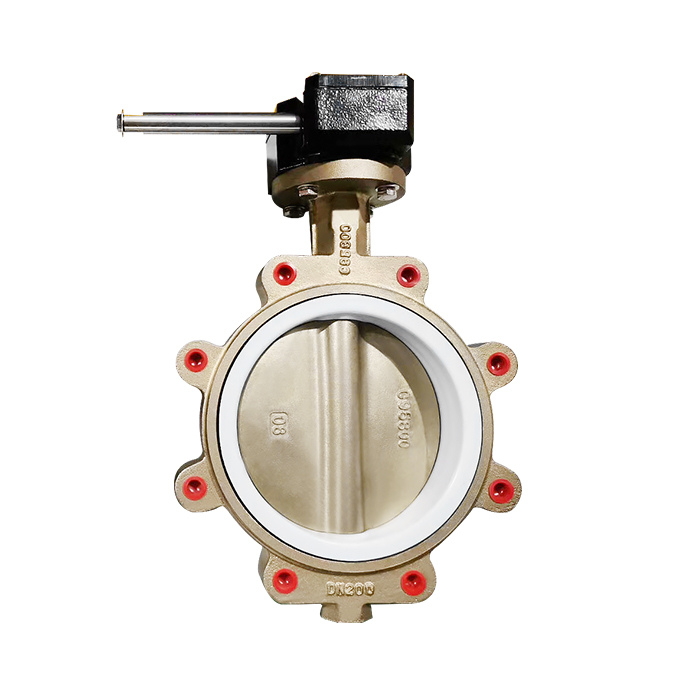
The defining characteristic of a concentric butterfly valve is its geometry: the shaft center of the valve stem, the center of the butterfly disc, and the center of the valve body are perfectly aligned. This concentric arrangement allows for smooth rotation of the disc within the valve body and ensures uniform contact with the valve seat during operation.
In most applications where a moderate sealing requirement is sufficient, concentric butterfly valves are preferred due to their simple construction and cost-effectiveness. Unlike more complex valve types, they do not require high-precision machining or elaborate sealing mechanisms, making them easier to manufacture, maintain, and repair.
One key aspect of concentric butterfly valve design is the valve seat. To achieve reliable sealing while avoiding excessive friction or wear, the seat is typically made from elastic materials such as EPDM, NBR, or PTFE. These soft sealing materials allow the disc to press firmly against the seat, forming a leak-proof seal without excessive torque.
However, the use of elastic seat materials introduces limitations in terms of temperature and pressure. High-temperature or highly abrasive media may compromise the seat, which is why concentric butterfly valves are often limited to applications where moderate operating conditions exist.
To address potential wear or "squeezing" between the disc and seat, engineers developed the single eccentric (or offset) butterfly valve. In this design, the valve stem is offset from the disc center, reducing friction, improving sealing life, and enabling the valve to handle higher temperatures or pressures. Nevertheless, concentric butterfly valves remain a highly practical choice for standard industrial applications.
Concentric butterfly valves can be categorized based on their connection type to the pipeline. Understanding these types is crucial for proper selection and installation.
The wafer style is the most common design and fits between two flanges using bolts.
It is lightweight, easy to install, and suitable for low-pressure systems.
The lug type features threaded inserts on both sides of the valve body.
This design allows the valve to be installed independently of the downstream flange, which simplifies maintenance or pipe removal without draining the system.
This valve type has flanges on both sides for bolting directly to the pipeline flanges.
It provides robust mechanical stability and is suitable for applications where higher pressures or larger diameters are involved.
Designed for permanent welding into a pipeline, this type provides a leak-proof connection for high-pressure or high-temperature applications.
Often used in petrochemical or industrial process systems.
The operation of a concentric butterfly valve is elegantly simple, relying on the rotational movement of the disc inside the valve body. The disc rotates around the valve stem through a 90-degree arc, allowing for precise flow regulation.
- Fully Open Position: When the disc is aligned parallel to the flow direction, it presents minimal obstruction, allowing fluid to pass through with very low pressure drop. This orientation is ideal for applications where energy efficiency is critical, such as water distribution or HVAC systems.
- Fully Closed Position: When the actuator rotates the stem by 90 degrees, the disc presses against the valve seat, creating a tight seal. This prevents backflow and isolates sections of the pipeline for maintenance or emergency shutdown.
- Intermediate Positions: Concentric butterfly valves can also operate in partially open states, enabling throttling of flow. Although not as precise as globe valves for fine flow control, they offer sufficient accuracy for many industrial processes.
The combination of simple rotation, low operating torque, and minimal mechanical components makes concentric butterfly valves highly reliable, easy to operate, and cost-effective for both small-scale and large-scale systems.
Concentric butterfly valves offer numerous advantages, making them a popular choice across multiple industries:
- Compact Design: The concentric arrangement allows for a smaller valve footprint, reducing space requirements in piping systems.
- Lightweight Construction: Typically lighter than gate or globe valves of the same diameter, they reduce structural load on pipelines and supports.
- Low Operating Torque: Minimal effort is needed to open or close the valve, which simplifies automation and reduces actuator requirements.
- Quick Operation: The 90-degree rotation mechanism enables rapid on/off operation, critical for emergency shutdowns or system control.
- Cost-Effectiveness: Simple design, fewer components, and low manufacturing costs make concentric butterfly valves an economical choice.
- Versatile Applications: Suitable for water, air, steam, oil, and non-abrasive chemical fluids under moderate pressure and temperature conditions.
- Ease of Maintenance: Fewer moving parts and straightforward construction allow for easy inspection, replacement, and repair.
While versatile, concentric butterfly valves do have inherent limitations due to their design:
- Limited Temperature Range: Elastic valve seats restrict operation at high temperatures or in applications with superheated steam.
- Moderate Sealing Performance: Soft sealing provides effective leak prevention for general industrial use, but may not meet requirements for ultra-high-pressure or vacuum applications.
- Not Suitable for Abrasive Media: Continuous exposure to abrasive fluids can erode the valve seat or disc, reducing operational life.
- Throttling Limitations: While suitable for general throttling, precise flow control is better achieved with globe or needle valves.
Concentric butterfly valves are widely adopted in industries where compact design, efficiency, and moderate sealing are sufficient. Key applications include:
Flow regulation in potable water, wastewater, and irrigation systems.
Temperature and flow control in heating, ventilation, and air conditioning pipelines.
Handling non-corrosive chemicals, cooling water, and low-pressure chemical streams.
Sanitary variants of concentric butterfly valves are used for fluid processing in breweries, dairies, and beverage production facilities.
Cooling water and auxiliary systems in thermal and hydroelectric plants.
Ballast water, freshwater, and bilge systems on vessels.
To ensure long-term performance, concentric butterfly valves require routine maintenance and proper installation practices:
- Periodic Inspection: Check for wear on the valve seat and disc, particularly in high-cycle applications.
- Lubrication: Ensure the stem and actuator components remain adequately lubricated to reduce torque and prevent corrosion.
- Avoid Over-Torque: Excessive actuator force can deform the seat or disc, compromising sealing performance.
- Proper Installation: Align the valve carefully in the pipeline to prevent uneven pressure on the disc or seat.
- Compatibility: Verify chemical compatibility of the seat material with the process fluid to prevent degradation or swelling.
The field of concentric butterfly valves continues to evolve with innovations aimed at improving durability, sealing, and automation:
- Enhanced Seat Materials: Development of reinforced PTFE, Viton, and other advanced polymers allows wider temperature ranges and improved chemical resistance.
- Automated Actuation: Integration with electric, pneumatic, or hydraulic actuators for precise remote operation and system automation.
- Smart Monitoring: Sensors embedded in the valve body or actuator can provide real-time feedback on position, leakage, and operational cycles.
- Hybrid Designs: Combination of concentric valves with eccentric features to enhance sealing without significantly increasing cost or complexity.
Concentric butterfly valves represent an ideal balance of simplicity, reliability, and cost-efficiency in industrial fluid control. With their compact design, low operating torque, and versatility, these valves are suited for a broad range of applications, from water treatment and HVAC systems to chemical processing and food manufacturing.
While their soft sealing design limits high-temperature and high-pressure applications, concentric butterfly valves remain an indispensable choice for general industrial use. Ongoing advancements in materials, automation, and smart technologies continue to expand their potential, making them a core component in modern pipeline systems.
For engineers and operators seeking a dependable, efficient, and affordable valve solution, concentric butterfly valves are a trusted option. Leading manufacturers like Weldon ensure precision engineering, consistent quality, and adherence to international standards, guaranteeing reliable performance across industries worldwide.