Butterfly valves are widely used in industrial fluid control systems due to their compact design, quick operation, and versatility in handling liquids, gases, and slurries. However, the performance of a butterfly valve is largely dependent on the actuator that drives it. Selecting the correct actuator ensures smooth operation, long service life, and optimal system efficiency. Butterfly control valve actuators convert control signals into mechanical motion to open, close, or modulate a valve. They can be manual, electric, pneumatic, or hydraulic, each offering unique advantages and limitations depending on the application requirements.
Proper actuator selection is crucial in industries ranging from water treatment and chemical processing to power generation and oil & gas. Factors such as valve size, frequency of operation, system pressure, response time, environment, and available power sources all influence which actuator type is most suitable. Understanding these factors can help engineers and system designers make informed choices, improve process efficiency, and reduce maintenance costs.
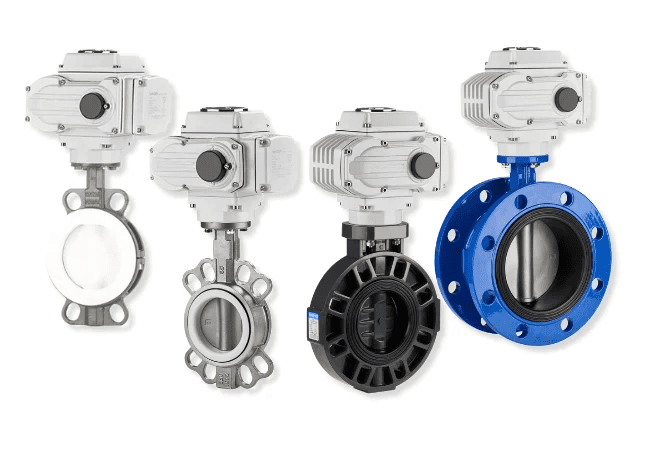
Choosing the right actuator for a butterfly valve is not a one-size-fits-all decision. Several parameters must be considered to ensure safe, reliable, and efficient operation.
The expected operational frequency of the valve greatly influences actuator selection:
- Manual actuators: Suitable for valves that open and close infrequently. They are ideal for small-diameter valves in systems with low operational demands. A gearbox can be added for larger valves to reduce manual effort.
- Electric, pneumatic, and hydraulic actuators: Recommended for frequently operated valves or automated systems where consistent, repeatable operation is required.
High-frequency operations benefit from actuators that offer precise control and durability to withstand repeated cycles without excessive wear.
The size of the butterfly valve directly affects actuator requirements. Larger valves demand greater torque to overcome fluid resistance and friction:
- Manual actuators: Feasible for small- to medium-sized valves. Larger valves require gearboxes or more powerful actuation.
- Hydraulic actuators: Essential for very large valves due to their ability to generate high torque, enabling smooth opening and closing of heavy discs.
- Electric and pneumatic actuators: Suitable for medium to large valves, depending on torque output and power availability.
Proper sizing ensures that the valve operates reliably under all conditions without overloading the actuator.
System pressure influences the torque needed to operate a butterfly valve:
High-pressure systems often require hydraulic actuators to provide sufficient force for opening and closing.
Pneumatic and electric actuators can handle medium pressures effectively, provided they are correctly sized.
Manual operation is generally limited to low-pressure systems unless augmented with mechanical assistance like gearboxes.
Failure to match actuator torque to system pressure can result in incomplete valve closure, leakage, or premature actuator failure.
Certain applications require rapid actuation to maintain process control:
- Pneumatic actuators: Known for extremely fast response times, ideal for processes where rapid valve operation is critical, such as emergency shutoffs, batch processing, or automated production lines.
- Electric actuators: Provide precise control but generally operate slower than pneumatic actuators. They are better suited for modulating and controlled flow applications.
- Manual actuators: Not suitable for rapid response scenarios.
Selecting an actuator with appropriate response time is key for maintaining process efficiency and safety.
The type of actuator is often influenced by available power sources:
- Manual actuators: Require no external power, making them simple, low-cost, and easy to install.
- Electric actuators: Depend on a stable electrical supply. They are advantageous where remote control or integration with automated systems is needed.
- Pneumatic actuators: Require compressed air, while hydraulic actuators need a pressurized hydraulic system. These dependencies can add complexity and cost to system design.
Availability, reliability, and cost of power sources must be carefully evaluated during actuator selection.
Environmental conditions can limit actuator choices:
- Moist, corrosive, or explosive environments: Electric actuators may be unsuitable unless specifically rated for hazardous areas.
- Extreme temperatures or wet conditions: Pneumatic and hydraulic actuators often perform more reliably due to their sealed designs.
- Cleanroom or sanitary applications: All actuator materials and housings must comply with industry hygiene standards.
Understanding environmental conditions ensures long-term reliability and compliance with safety regulations.
Cost is a critical factor, and actuators vary widely in price:
Manual actuators are the least expensive, with minimal installation costs.
Electric actuators are mid-range, offering automation without requiring additional utilities like compressed air.
Pneumatic actuators are costlier due to the need for air compressors and maintenance of the pneumatic system.
Hydraulic actuators are typically the most expensive but provide unmatched torque and reliability for heavy-duty applications.
Budget constraints must be balanced against performance, operational requirements, and long-term maintenance costs.
Actuators for butterfly valves fall into four primary categories, each with unique characteristics:
Manual actuators rely on handwheels, levers, or gearboxes to operate the valve.
Advantages:
- Simple design with minimal maintenance
- No external power source required
- Low initial cost
Limitations:
- Labor-intensive for large valves
- Not suitable for high-frequency operation
- Limited precision for throttling applications
Manual actuators remain ideal for small valves, low-pressure systems, or areas where automation is unnecessary.
Electric actuators use motors to drive valve rotation and can be integrated with control systems for automated operation.
Advantages:
- Precise positioning for modulating applications
- Compatible with remote control and process automation
- Lower labor costs over time
Limitations:
- Slower response compared to pneumatic actuators
- Sensitive to moisture, dust, and hazardous environments
- Requires stable electrical supply
Electric actuators are widely used in water treatment plants, HVAC systems, and industrial pipelines where automation is a priority.
Pneumatic actuators use compressed air to rotate the valve and are often used in high-speed or automated applications.
Advantages:
- Extremely fast response time
- Reliable in harsh or wet environments
- High cycle durability
Limitations:
- Requires a compressed air system
- Higher initial installation cost
- Noise from air exhaust may be a concern
Pneumatic actuators are ideal for industries such as chemical processing, food and beverage, and wastewater treatment where rapid valve operation is essential.
Hydraulic actuators use pressurized fluid to generate high torque, making them suitable for large or high-pressure valves.
Advantages:
- Exceptional torque output for heavy-duty valves
- Smooth and precise operation
- Can handle high-pressure systems
Limitations:
- Requires a hydraulic power unit
- Higher maintenance requirements
- More expensive than other types
Hydraulic actuators are commonly used in power plants, oil & gas pipelines, and industrial processes with oversized valves or extreme pressure conditions.
Choosing the correct actuator requires a careful analysis of system requirements. Key steps include:
- Assess Valve Size and Torque Requirements: Calculate the torque needed to operate the valve under all expected pressures and flow conditions.
- Determine Operational Frequency: Identify whether the valve will be operated manually, occasionally, or continuously.
- Evaluate Environmental Conditions: Consider temperature, moisture, corrosion, and hazardous areas to ensure actuator compatibility.
- Select Based on Response Time: Fast-acting applications often benefit from pneumatic actuators, while precise control is better suited to electric actuators.
- Consider Power Availability: Choose actuators compatible with the available utilities and energy sources.
- Factor in Maintenance and Lifecycle Costs: Evaluate the long-term costs of upkeep, reliability, and potential downtime.
Using this systematic approach ensures optimized performance, longevity, and safety of the butterfly valve system.
Proper installation and maintenance are essential for actuator performance:
Align the valve and actuator carefully to prevent stress on components.
Secure all fasteners evenly and avoid over-tightening.
Perform regular inspections of seals, actuators, and connections.
Lubricate moving parts as recommended by the manufacturer.
Test operation under controlled conditions before full deployment.
Following these guidelines minimizes downtime, enhances reliability, and prolongs the life of both the valve and actuator.
The field of valve actuation continues to evolve:
- Smart Actuators: Integration with IoT and predictive maintenance systems allows remote monitoring and diagnostics.
- Energy-Efficient Designs: Modern actuators consume less power while delivering the same performance.
- Sanitary and Chemical-Resistant Materials: New materials improve reliability in harsh or hygienic environments.
- Hybrid Systems: Combining electric and pneumatic technologies for optimal control and speed in critical processes.
These trends are driving more intelligent, efficient, and reliable valve control systems across industries worldwide.
Butterfly control valve actuators play a critical role in modern industrial fluid control systems. By understanding the types of actuators—manual, electric, pneumatic, and hydraulic—and considering key selection criteria such as valve size, system pressure, operational frequency, response time, environment, and power source, engineers can ensure optimal system performance. Proper actuator selection enhances process efficiency, reduces maintenance costs, and improves operational safety. With ongoing innovation in smart, energy-efficient, and hybrid actuator technologies, butterfly valves will continue to provide reliable and precise control in a wide range of industrial applications.