
As industries around the world continue investing in liquefied gas infrastructure, low-temperature processing plants, and clean energy systems, the demand for advanced cryogenic valves has increased significantly. Applications involving liquefied natural gas (LNG), liquid oxygen, nitrogen, argon, hydrogen, petrochemical refrigeration systems, marine fuel systems, and aerospace technology all require valves that can perform reliably under extreme subzero temperatures.
In these operating environments, standard industrial valves may fail due to material brittleness, thermal contraction, leakage, or premature wear. For this reason, specially engineered cryogenic valves are essential. Among the most advanced designs available today, the cryogenic triple offset butterfly valve has become a preferred solution for many operators and engineers.
This valve combines the compact efficiency of a butterfly valve with sophisticated sealing geometry that minimizes friction, extends service life, and delivers dependable shutoff in severe conditions. With excellent durability, lower operating torque, and reliable performance in temperatures as low as -196°C, cryogenic triple offset butterfly valves are increasingly used in critical industrial systems worldwide.
This article explores the structure, operating principle, materials, advantages, applications, maintenance requirements, and growing market importance of cryogenic triple offset butterfly valves.
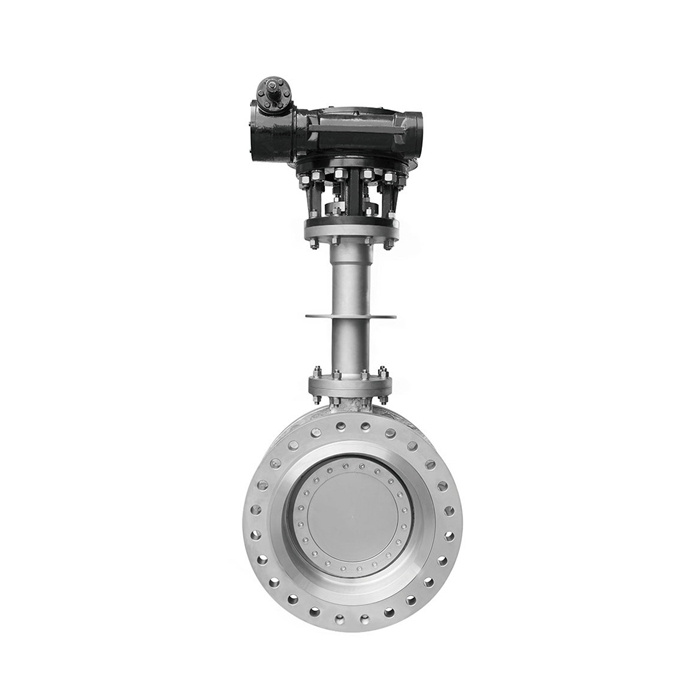
A cryogenic triple offset butterfly valve is a high-performance quarter-turn valve specifically designed for controlling or isolating the flow of cryogenic liquids and gases. It uses a rotating disc mounted on a shaft, which opens or closes the flow passage through a 90-degree rotation.
Unlike standard butterfly valves, the triple offset design uses three geometric offsets that eliminate friction between the disc and seat during operation. This creates a non-rubbing sealing action, which is especially valuable in cryogenic conditions where wear and leakage can quickly become serious problems.
These valves are engineered for use in extremely low temperatures such as:
- LNG systems: approximately -162°C
- Liquid nitrogen: approximately -196°C
- Liquid oxygen: approximately -183°C
- Liquid argon: approximately -186°C
- Ethylene systems: approximately -104°C
Cryogenic triple offset butterfly valves are typically manufactured from stainless steel, duplex stainless steel, or specialty alloys with excellent low-temperature toughness and corrosion resistance.
Operating at cryogenic temperatures creates unique mechanical and sealing challenges. Many ordinary valve materials become brittle when exposed to extreme cold. Elastomer seals may shrink, crack, or lose flexibility. Thermal contraction can also alter tolerances and compromise shutoff performance.
Cryogenic valves must therefore be designed to manage:
- Extreme temperature differentials
- Material contraction and expansion
- Tight shutoff requirements
- Safe handling of volatile gases
- Frequent thermal cycling
- Long-term structural integrity
Any leakage in cryogenic systems may result in product loss, safety hazards, environmental concerns, or expensive downtime. This is why high-performance valve solutions are essential.
The term "triple offset" refers to three separate geometric design offsets built into the valve structure. These offsets work together to create a torque-seated, friction-free sealing action.
The first offset positions the shaft slightly behind the centerline of the sealing surface.
Benefits:
- Disc lifts away from seat immediately during opening
- Reduces friction
- Minimizes wear
- Improves service life
The second offset places the shaft away from the valve bore centerline.
Benefits:
- Allows smoother disc rotation
- Improves opening geometry
- Reduces torque requirements
- Third Offset – Conical Sealing Axis
The third offset creates a conical sealing surface rather than a flat circular seat.
Benefits:
- Uniform seat loading
- Tight metal-to-metal sealing
- No rubbing during operation
- Higher shutoff reliability
This third offset is what distinguishes triple offset valves from double offset and standard butterfly valves.
The valve controls flow through quarter-turn rotation.
Closed Position
When fully closed, the disc contacts the seat at a precision angle, forming a tight seal capable of handling cryogenic service pressures.
Opening Process
When actuated:
- The disc rotates away from the seat immediately
- No scraping occurs
- Minimal friction is generated
This is important because friction can rapidly damage sealing surfaces in low-temperature environments.
Fully Open Position
At 90 degrees open:
- The disc aligns with flow direction
- Pressure loss is minimized
- Full flow capacity is available
This makes the valve efficient for large-diameter pipelines.
Material selection is one of the most critical design factors.
Body Materials
Common materials include:
- ASTM A351 CF8M stainless steel
- ASTM A351 CF8 stainless steel
- ASTM A352 LCB for moderate low-temperature ranges
- Duplex stainless steel
- Nickel-based alloys
These materials maintain toughness and strength at low temperatures.
Disc Materials
Discs are commonly produced from:
- Stainless steel
- Duplex stainless steel
- Inconel alloys
- High-strength corrosion-resistant metals
Stem Materials
The shaft must resist torsional stress and remain ductile.
Typical materials:
- 17-4PH stainless steel
- Austenitic stainless steel
- Inconel
- Seat Materials
Cryogenic triple offset valves usually use metal seats such as:
- Stellite hardfaced surfaces
- Tungsten carbide overlays
- Stainless laminated seal rings
- Graphite layered structures
These provide durability and dependable shutoff.
Most cryogenic valves are equipped with an extended bonnet.
Why It Is Necessary
The bonnet extends the distance between the cryogenic fluid zone and the stem packing area.
Advantages:
- Protects packing from freezing temperatures
- Reduces leakage risk
- Improves seal life
- Minimizes ice buildup near actuator components
- Simplifies maintenance access
Extended bonnet design is common in LNG and industrial gas applications.
Precision metal seating enables dependable leakage control in critical systems.
The non-rubbing design greatly reduces wear compared with conventional seated valves.
Quarter-turn action and optimized geometry reduce actuator size requirements.
Compared with gate or globe valves, butterfly valves are often:
- Smaller
- Lighter
- Easier to install
- Less expensive in large sizes
Reduced wear and durable materials extend maintenance intervals.
Metal-seated designs can meet many industrial fire-safe standards.
Quarter-turn rotation allows rapid open/close cycling.
Advantages:
- Straight flow path
- Reliable isolation
Limitations:
- Larger size
- Higher weight
- Slower multi-turn operation
Advantages:
- Good throttling control
Limitations:
- Higher pressure drop
Larger actuator force often required
Advantages:
- Tight shutoff
- Fast operation
Limitations:
- Higher cost in larger sizes
- Heavier body design possible
For many large pipelines needing compact structure, rapid operation, and low maintenance, triple offset butterfly valves offer an ideal balance.
LNG Industry
Widely used in:
- Liquefaction plants
- Storage tanks
- Loading terminals
- Transfer pipelines
- Regasification systems
Industrial Gas Production
Suitable for:
- Liquid nitrogen plants
- Oxygen separation units
- Argon storage systems
Petrochemical Industry
Used in:
- Ethylene service
- Refrigerated hydrocarbon lines
- Low-temperature process units
Marine Fuel Systems
LNG-powered vessels require reliable cryogenic valves for fuel storage and bunkering.
Aerospace Industry
Cryogenic propellant systems often require advanced sealing valve solutions.
Hydrogen Energy
Growing hydrogen markets are increasing demand for low-temperature valve technology.
When choosing a cryogenic triple offset butterfly valve, engineers should evaluate:
Temperature Range
Confirm minimum service temperature.
Pressure Rating
Typical classes include:
- Class 150
- Class 300
- Class 600
- Higher custom ratings
Size Requirements
Available from small process sizes to very large pipeline diameters.
Actuation Type
Options include:
- Manual gear operation
- Pneumatic actuators
- Electric actuators
- Hydraulic actuators
Leakage Standard
Select according to plant shutoff requirements.
Media Compatibility
Materials must resist corrosion or chemical attack.
Proper installation improves reliability.
Recommended Procedures
- Clean pipeline thoroughly before installation
- Remove welding debris and scale
- Verify correct valve orientation
- Use proper flange bolt tightening sequence
- Support pipe loads separately
- Test actuator movement before startup
- Protect insulation where required
Poor installation may damage the valve seat or distort the body.
Although designed for long service, routine maintenance is still important.
Check Regularly:
- Stem packing condition
- External leakage
- Seat shutoff performance
- Fastener tightness
- Actuator response time
- Signs of icing or corrosion
Preventive Maintenance Benefits
- Reduced downtime
- Improved safety
- Longer valve life
- Lower operating cost
Thermal Shock
Rapid cooling may stress components.
Ice Accumulation
External condensation can freeze around exposed parts.
Seat Damage from Debris
Particles may scratch precision sealing surfaces.
Fugitive Emissions
Packing wear may cause gas leakage.
Wrong Material Selection
Low-grade metals may crack or lose toughness.
Correct engineering and quality manufacturing are essential.
Global demand for cryogenic valves continues rising due to:
- LNG trade expansion
- Industrial gas consumption growth
- Clean energy transition
- Marine decarbonization projects
- Hydrogen infrastructure development
- Semiconductor manufacturing demand
As more countries build low-temperature energy and storage systems, advanced valves are becoming increasingly important.
Many plant owners choose these valves because they reduce total ownership cost.
Key savings include:
- Longer maintenance intervals
- Lower actuator power needs
- Reduced spare parts usage
- Faster shutdown capability
- Better lifecycle value
- Improved operational reliability
For many large-scale facilities, long-term savings outweigh higher initial purchase costs.
The cryogenic triple offset butterfly valve is one of the most advanced valve technologies available for extreme low-temperature applications. Its precision three-offset geometry delivers friction-free operation, tight shutoff, lower torque, and long service life.
Widely used in LNG, industrial gas, petrochemical, marine, hydrogen, and aerospace sectors, it offers major advantages over traditional gate, globe, and standard butterfly valves in many cryogenic systems.
As global investment in clean energy, liquefied gases, and cold-process industries continues to expand, the cryogenic triple offset butterfly valve will remain a critical component for safe, efficient, and reliable flow control worldwide.
