
In the ever-evolving landscape of industrial automation and process control, pneumatic diverting control valves have emerged as essential components in optimizing material flow, enhancing efficiency, and improving operational safety across multiple sectors. As industries continue to pursue higher automation, precision, and reliability, these versatile control valves are gaining renewed attention for their ability to direct flow paths with pneumatic actuation, robust performance, and minimal maintenance requirements.
This comprehensive report examines the latest trends, technological advancements, applications, and market dynamics surrounding pneumatic diverting control valves. It highlights how these devices are shaping modern manufacturing, energy, wastewater treatment, chemical processing, food & beverage, and pharmaceutical industries. The article also explores future outlooks and strategic recommendations for engineers and decision-makers navigating a competitive industrial environment.
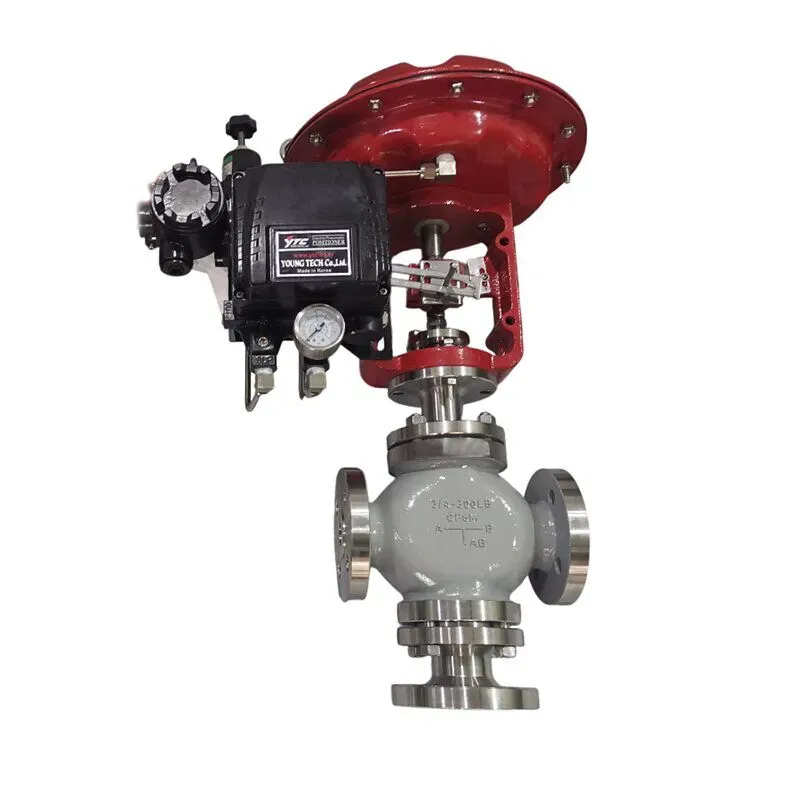
Pneumatic diverting control valves are specialized flow control devices designed to direct media from one inlet to multiple outlets or vice versa. Unlike simple on/off valves, diverting control valves allow fluid streams to be rerouted between predefined channels based on control signals. They operate using compressed air (pneumatic actuation) to move internal mechanisms—often a plug, ball, or wedge—between flow paths.
- Key characteristics of pneumatic diverting control valves include:
- Multi-path flow control: Ability to switch media between two or more directions.
- Pneumatic actuation: Uses compressed air for responsive, reliable actuation without electrical components in hazardous environments.
- Precision control: Fine modulation of flow paths based on control system inputs.
- High durability: Designed for extensive duty cycles in demanding industrial conditions.
These capabilities make pneumatic diverting control valves indispensable where complex routing and automated process logic are required.
Several converging industrial trends are driving a surge in demand for pneumatic diverting control valves:
Industries are shifting toward higher degrees of automation to maximize production throughput, reduce variability, and support digital transformation initiatives. Pneumatic diverting control valves align with this trend by integrating seamlessly with distributed control systems (DCS), programmable logic controllers (PLC), and industrial networking protocols such as Fieldbus or ProfiNet.
By enabling automated flow routing, diverting control valves eliminate manual interventions, reduce human error, and increase overall process reliability.
Pneumatic actuation is inherently safer than electrical systems in explosive or corrosive environments. In sectors like petrochemical plants, offshore facilities, and mining operations, pneumatic diverting valves are often preferred due to:
- Immunity to sparks or electrical faults
- Compliance with intrinsic safety standards
- Lower risk of ignition in volatile atmospheres
As safety regulations tighten globally, pneumatic diverting control valves support compliance with industry standards and help companies maintain safer operations.
Manufacturers are placing renewed focus on minimizing downtime to enhance profitability. Diverting control valves help reduce unplanned stoppages by allowing controlled rerouting around maintenance or repair zones. This results in:
- Continuous production lines
- Efficient use of backup systems
- Better operational planning
The result is reduced financial impact from production interruptions.
The latest generation of pneumatic diverting control valves incorporates innovations that enhance performance and digital connectivity. These include:
Modern pneumatic actuators are now equipped with smart sensors and position feedback capabilities. These features enable real-time diagnostics, predictive maintenance, and improved control accuracy.
Benefits include:
- Early detection of leaks or performance degradation
- Continuous position monitoring
- Integration with asset management software
Smart actuation expands the role of diverting control valves from simple flow devices to intelligent elements within the Industrial Internet of Things (IIoT) ecosystem.
Improved sealing materials and seat designs have extended valve life and reduced maintenance frequency. Engineered elastomers, PTFE composites, and metal-to-metal sealing options now support harsher media and higher temperatures without compromising performance.
This evolution enhances longevity and reduces lifecycle costs for facility operators.
Manufacturers are increasingly focusing on modular valve architectures that streamline installation and customization. Compact designs reduce footprint requirements, enabling valves to fit tighter spaces and simplifying retrofits in existing plants.
In addition, modular air preparation units (FRLs), solenoid manifolds, and pneumatic tubing are now often supplied as integrated systems, accelerating commissioning timelines.
In power plants, diverting control valves manage steam, cooling water, and fuel flows to optimize efficiency and safety. Pneumatic actuation ensures rapid switching during load changes and emergency conditions.
Critical applications include:
- Steam extraction control
- Redirection of cooling water paths
- Fuel gas routing in turbine systems
As energy systems continue incorporating renewables and demand flexibility, diverting valves will play a vital role in enabling dynamic flow control strategies.
Refineries and petrochemical facilities rely heavily on diverting control valves for blending, separation, and distribution processes. Pneumatic valves maintain safety and control where flammable hydrocarbons and volatile gases are present.
Applications include:
- Fractionation overhead routing
- Feedstock diversion to alternative reactors
- Product blending streams
Here, rugged valve construction and pneumatic actuation are essential for safe and reliable long-term operations.
Municipal and industrial water treatment plants use diverting control valves to manage filtration trains, chemical dosing, and discharge lines. Pneumatic systems are preferred due to simplicity, reliability, and ease of integration with automation systems.
Typical uses include:
- Routing influent between processing stages
- Managing backwash cycles
- Diverting treated water to storage or distribution
These valves help facilities meet stringent water quality and environmental standards.
In sanitary processing environments, diverting control valves support product routing between production lines and packaging areas. Pneumatic actuation ensures compliance with hygiene requirements and reduces contamination risk.
Examples include:
- Diverting product flows in bottling plants
- Switching CIP (clean-in-place) cycles
- Routing ingredients between mixers
The combination of sanitary valve design and pneumatic control enhances product quality and regulatory compliance.
Industry analysts forecast sustained growth in the global market for pneumatic diverting control valves, supported by expanding industrial automation, investments in infrastructure, and modernization of aging facilities. Some key insights include:
Rapid industrialization and infrastructure projects in Asia Pacific—particularly in China, India, and Southeast Asia—are driving demand for advanced process control technologies. Manufacturing, energy, and water treatment sectors in the region are investing in valve automation to enhance productivity and environmental compliance.
In North America, aging processing facilities are undergoing digital upgrades. The push toward decarbonization and energy efficiency is leading companies to retrofit pneumatic diverting control valves for tighter control and improved performance.
European firms are emphasizing IIoT and Industry 4.0 frameworks, integrating intelligent pneumatic diverting control valves into digital process control platforms. This trend supports remote monitoring, predictive analytics, and energy optimization.
Collectively, these regional drivers reinforce market expansion and technological adoption.
In a mid-size chemical processing facility, engineers faced frequent bottlenecks due to manual switching between production streams. By implementing pneumatically actuated diverting control valves integrated with PLC controls, the plant achieved:
- 25% reduction in cycle changeover time
- Elimination of manual valve operations
- Improved repeatability and quality consistency
The new valve system enabled automated sequencing, minimized human intervention, and accelerated production throughput without additional staffing.
A municipal wastewater facility struggling with variable influent quality adopted pneumatic diverting control valves for dynamic routing of flow through treatment trains. With automated valve actuation responding to sensor data, the utility realized:
- 18% decrease in energy consumption
- Reduced chemical usage due to optimized flow paths
- Improved effluent quality compliance
Operators were able to reallocate resources to core monitoring tasks, supported by valve performance data.
A high-volume beverage manufacturer deployed diverting control valves to automate product routing between filling lines. Key achievements included:
- 30% reduction in downtime between production campaigns
- Enhanced hygiene through reduced human contact
- Faster product switching in multi-SKU lines
The pneumatic valves' ability to integrate with CIP systems further improved sanitation cycles and reduced cleaning time.
While pneumatic diverting control valves offer significant advantages, there are challenges that engineers and plant managers must consider when specifying and deploying them:
Pneumatic systems rely on clean, dry compressed air. Poor air quality can shorten actuator life and cause performance degradation. Effective filtration, regulators, and maintenance of air preparation units are critical.
Ensuring seamless communication between diverting valves and control systems requires careful engineering. Compatibility with PLCs, sensors, and networks must be evaluated early in project planning.
Valve body and internal materials must be selected based on process media characteristics, temperatures, and corrosive environments. Incorrect material choices can lead to premature wear or contamination.
Through proper specification and design review, these challenges can be mitigated to deliver long-term operational success.
Pneumatic diverting control valves must meet a range of industry standards and regulatory requirements to ensure safety, reliability, and performance:
- ANSI/ISA valve standards for control valve performance and sizing
- ATEX and IECEx where applicable in explosive atmospheres
- ISO 8573-1 for compressed air quality
- API and ASME standards in oil & gas sectors
Meeting these standards supports global interoperability, facilitates maintenance planning, and ensures regulatory compliance.
The future of pneumatic diverting control valves is likely to be shaped by digitalization, sustainability, and advanced materials science. Key trends to watch include:
Manufacturers are increasingly using digital twin technology to simulate valve behavior under real-world conditions. This enables better design optimization, predictive maintenance modeling, and reduction of commissioning time.
Integration of multiple sensor types (pressure, position, vibration) with AI-driven analytics will allow earlier detection of performance issues and smarter maintenance scheduling, reducing unscheduled downtime.
Efforts to reduce compressed air energy waste are prompting innovations in pneumatic actuator efficiency. Lower air consumption designs and energy-saving actuation strategies will support sustainability goals.
Automation Engineering Leader
"Pneumatic diverting control valves are foundational to flexible and responsive process automation. Their integration with modern control architectures means they’re no longer simple flow devices — they are smart, connected assets that contribute directly to operational intelligence."
Plant Operations Manager
"In high-throughput environments, the ability to reroute process flows automatically has cut cycle times and reduced manual errors. The reliability of pneumatic actuation continues to impress, especially in challenging service conditions."
In an era where operational efficiency, safety, and digital transformation are paramount, pneumatic diverting control valves are proving to be strategic assets across diverse industrial sectors. Their combination of precision, reliability, and compatibility with automation systems positions them at the heart of process innovation.
From energy and petrochemical to water treatment, food processing, and beyond, pneumatic diverting control valves enable smarter flow control, reduced downtime, and better quality outcomes. As technological advancements continue — particularly in digital integration and predictive diagnostics — these valves are set to deliver even greater value.
For engineers, plant managers, and industry stakeholders evaluating flow control solutions, pneumatic diverting control valves represent a compelling choice that aligns performance with future-ready automation strategies.
