
Trunnion mounted DBB (Double Block & Bleed) ball valves have become essential in modern industrial piping systems, particularly in instrumentation and high-pressure applications. Designed to provide efficient isolation and reliable bleed-off capability, these valves combine functionality, safety, and cost-effectiveness in a single compact unit. Traditionally, achieving similar results required installing multiple valves in-line, which increased system complexity, installation time, and potential leakage points.
With trunnion mounted DBB ball valves, operators can achieve double block isolation with an integrated bleed function, reducing pipework, minimizing leakage risks, and lowering overall system costs. These valves are suitable for a wide range of pressure classes and can be supplied in either trunnion or floating designs, ensuring long-lasting performance and operational reliability.
This comprehensive guide explores the design, operation, benefits, applications, selection criteria, and maintenance of trunnion mounted DBB ball valves, providing industrial operators and engineers with the knowledge needed to optimize their piping systems.
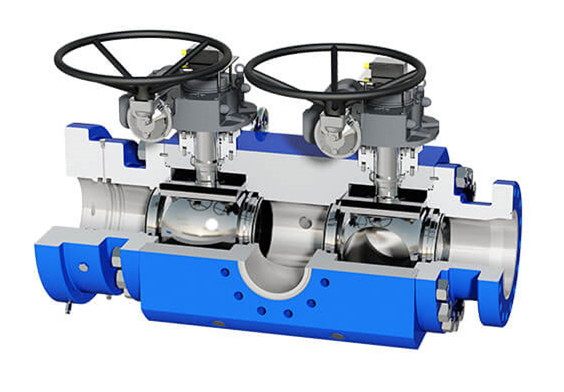
The term DBB stands for Double Block & Bleed, a type of valve designed to provide superior isolation and safe venting of pressurized systems. In a trunnion mounted DBB ball valve, the ball is supported by a trunnion, which reduces operational torque and enhances stability, particularly in large-diameter or high-pressure systems.
A typical trunnion mounted DBB ball valve consists of:
- Two Ball Valves – Each ball provides independent blocking of the medium, ensuring complete isolation.
- One or Two Needle Valves – These are used to safely discharge pressure from the cavity between the two balls, allowing controlled bleed-off.
This design allows the DBB valve to replace a complex assembly of multiple valves traditionally used in instrumentation lines. By consolidating functions into a single valve, DBB systems reduce the number of potential leak points, simplify installation, and improve maintenance efficiency.
Trunnion mounted ball valves are engineered so the ball is anchored at the top and bottom by trunnion bearings. This reduces the friction between the ball and seat, allowing smoother operation even in high-pressure or large-diameter applications. Trunnion designs are particularly suitable for:
- High-pressure pipelines
- Large-diameter applications
- Systems where reduced operating torque is critical
The double block function allows the valve to completely isolate the upstream and downstream sides of the system. Both balls can be closed independently, preventing fluid flow and providing a secure barrier for maintenance, inspection, or repair.
The integrated bleed function safely discharges trapped pressure between the two ball valves. This feature ensures:
- Safe operation during maintenance
- Controlled pressure release for instrumentation
- Prevention of unexpected fluid leakage
DBB valves often feature advanced seat materials such as RPTFE, PEEK, or metal-to-metal options, providing excellent sealing performance under high temperature, pressure, or corrosive conditions. These seals ensure:
- Long-lasting performance
- Minimal leakage over extended operational cycles
- Compatibility with a wide range of media
The adoption of trunnion mounted DBB ball valves offers several operational, safety, and economic advantages.
By replacing a series of valves traditionally installed in-line, DBB ball valves reduce:
- Piping connections
- Flange assemblies
- Installation time and labor costs
Fewer valves and joints mean fewer opportunities for leaks. The double block design ensures that both upstream and downstream flow can be fully isolated, reducing environmental risk and process downtime.
While a single DBB valve may have a higher upfront cost than a standard ball valve, the overall savings are significant due to:
- Reduced pipework and fittings
- Lower maintenance requirements
- Decreased downtime and labor costs
The integrated bleed valve allows operators to discharge trapped pressure safely, minimizing the risk of accidents during maintenance or system shutdown. This feature is critical in high-pressure and hazardous media applications.
Trunnion mounted DBB ball valves allow easy access to the internal components for inspection and replacement. The simplified design reduces maintenance time and ensures operational continuity.
Trunnion mounted DBB ball valves are versatile and used across multiple industries, including:
In upstream and downstream processes, DBB valves are essential for isolating pipelines, controlling pressure, and protecting instrumentation. Applications include:
- Pipeline isolation
- Pressure relief systems
- Flow control in high-pressure environments
For handling corrosive or toxic fluids, DBB valves provide reliable double block isolation and safe venting, ensuring compliance with safety regulations and process efficiency.
Trunnion mounted DBB ball valves are used in power plants to manage high-pressure steam, water, and other critical media. Their reliable sealing minimizes leakage and supports safe maintenance operations.
Sanitary DBB designs are suitable for clean-in-place systems, preventing contamination while allowing controlled cleaning and maintenance.
DBB valves are widely used in instrumentation lines to protect sensitive instruments, allowing safe calibration, maintenance, and system shutdown without disrupting the main flow.
Choosing the right DBB valve is critical for safety, performance, and operational efficiency. Consider the following factors:
Ensure the valve is rated for the maximum operating pressure and temperature of your system. Trunnion designs are particularly effective for high-pressure applications.
Body Materials: Carbon steel, stainless steel, or alloy steels depending on media and environmental conditions
Seat Materials: RPTFE, PEEK, or metal-to-metal for high-temperature or corrosive media
Determine the nominal diameter (DN) required for your system
Choose suitable flange types (RTJ, RF) for compatibility with your piping
Trunnion mounted DBB valves can be manually operated, gear-operated, or automated with pneumatic or electric actuators. Consider:
- Ease of operation
- Torque requirements
- Remote control capabilities
Evaluate the valve's maintainability, expected service life, and availability of spare parts. High-quality trunnion DBB valves offer long-lasting performance with minimal maintenance requirements.
While floating DBB ball valves are lighter and simpler, trunnion mounted designs provide superior performance in high-pressure or large-diameter systems. Advantages include:
- Lower operating torque regardless of pressure
- Reduced wear on seats and seals
- Improved stability and safety in critical applications
Reputable manufacturers produce trunnion mounted DBB ball valves in accordance with international standards such as:
- API 6D: Pipeline and process valve standard
- BS 5351: Specification for steel ball valves
- ISO 9001: Quality management system certification
Compliance ensures the valve meets global safety, reliability, and performance expectations.
Proper installation is essential for optimal performance:
- Orientation: Install the valve in the correct flow direction for the process medium.
- Alignment: Ensure flanges and piping are aligned to prevent stress on the valve body.
- Torque Checks: Confirm proper tightening of bolts to maintain leak-proof sealing.
- Bleed Valve Testing: Verify the needle valves function correctly to safely discharge pressure.
Regular maintenance is essential to ensure the long-term performance, safety, and reliability of trunnion mounted DBB ball valves. Routine inspections should be conducted to identify any signs of leaks, corrosion, or wear on critical components such as seals, seats, and the valve body. Early detection of these issues helps prevent unexpected failures and ensures continuous operation in high-pressure systems.
Lubrication is another key aspect of maintenance. Applying the manufacturer-recommended lubricants to moving parts, including the ball, stem, and actuator components, reduces friction and wear, enhancing the smooth operation of the valve. For high-cycle or high-pressure applications, periodic seat replacement is advised to maintain a tight seal and prevent leakage.
Actuator and gear mechanisms also require regular checks to confirm smooth operation and correct torque function. Any irregularities in gear operation or actuator response should be addressed promptly to avoid operational delays.
By following a systematic maintenance schedule, including inspection, lubrication, seat replacement, and actuator servicing, downtime can be minimized, and the valve’s service life extended. Proper maintenance ensures that trunnion mounted DBB ball valves continue to provide safe, efficient, and reliable performance in critical industrial applications.
While trunnion mounted DBB valves can have higher upfront costs compared to traditional multiple-valve assemblies, total lifecycle costs are often lower due to:
- Reduced piping and installation requirements
- Minimized maintenance and downtime
- Enhanced operational safety
- Longer service life with durable materials and designs
Trunnion mounted DBB ball valves are critical components in modern industrial systems, offering double block isolation and integrated bleed functions for safe, reliable, and efficient operation. They reduce installation complexity, minimize leakage risks, and simplify maintenance compared to traditional multi-valve setups. Suitable for a wide range of industries, including oil & gas, chemical, power generation, and instrumentation, these valves combine durability, safety, and cost efficiency. When selecting a DBB valve, consider pressure ratings, material selection, operation type, and manufacturer quality. With proper design, installation, and maintenance, trunnion mounted DBB ball valves ensure long-term reliability, safety, and performance in demanding industrial applications.
