As global demand for clean energy, advanced manufacturing, and aerospace innovation escalates, cryogenic technology has become a critical component in numerous industrial sectors. At the heart of these systems lie cryogenic valves—precision-engineered devices designed to safely control extremely low-temperature liquids and gases. Often referred to as low-temperature valves, cryogenic valves are built to operate at temperatures far below those encountered in conventional fluid systems, frequently reaching levels as low as –196°C (–320°F).
These valves are essential for the regulation, isolation, and directional control of cryogenic fluids including liquid nitrogen, liquid oxygen, liquid helium, liquefied natural gas (LNG), and even liquid hydrogen. Their reliability and durability ensure the safe management of high-value and hazardous cryogenic media across sectors such as aerospace, medical technology, chemical processing, energy production, and transportation.
Cryogenic globe valves play a particularly important role within this equipment category. Engineered to provide precise throttling and shut-off capabilities, they are indispensable in applications where accurate control and safe isolation of cryogenic fluids are required. From LNG terminals to space launch systems, these valves help ensure stability, safety, and operational efficiency at the lowest temperatures encountered in industrial processes.
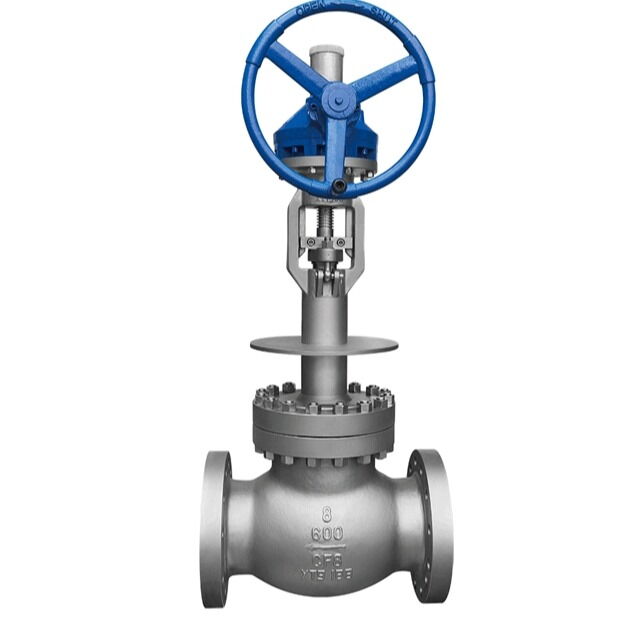
A cryogenic globe valve is a type of shut-off or flow regulation valve specifically engineered to operate in ultra-low-temperature environments. While standard globe valves are commonly used for flow throttling in many fluid systems, cryogenic versions incorporate specialized materials, extended bonnet designs, and enhanced sealing technology to withstand the mechanical stresses caused by thermal contraction at cryogenic temperatures.
Unlike normal fluids, cryogenic liquids evaporate rapidly when exposed to temperature changes. This evaporation can cause gas expansion, pressure surges, and material embrittlement if not properly controlled. Cryogenic globe valves are engineered to manage these challenges by ensuring smooth operation despite extreme cold, abrupt temperature gradients, and the unique behavior of cryogenic media.
Cryogenic globe valves operate by raising or lowering a disc or plug against a stationary valve seat. Their design allows for both fine throttling and full shut-off. The valve can be controlled manually through a handwheel or operated automatically using pneumatic, electric, or hydraulic actuators.
In cryogenic service, several design features enhance functionality:
Extended Bonnet: The stem and packing are positioned away from the cold fluid, reducing the risk of freezing and maintaining sealing integrity.
Low-Temperature Materials: Stainless steels and nickel-based alloys resist embrittlement and deformation caused by cryogenic exposure.
Precision Machining: Tight tolerances ensure leak-tight performance even at extremely low temperatures.
During operation, the valve opens to allow cryogenic fluid to enter the body cavity. Because of the extreme cold, the internal components quickly cool to cryogenic temperatures. The carefully designed flow path ensures smooth fluid movement, preventing turbulence and minimizing heat transfer.
This controlled flow protects the system from thermal shock, ensures accurate fluid handling, and prevents vapor lock—a common issue in cryogenic applications where trapped gases can expand rapidly.
Cryogenic globe valves are distinguished by several vital features that enable them to operate safely and efficiently under extreme conditions:
These valves are engineered to function reliably at temperatures below –150°C and in some cases down to –269°C, depending on the application and fluid used. Their design ensures that both metallic and non-metallic components maintain structural integrity without becoming brittle or losing elasticity.
Material selection is essential in cryogenic valve engineering. Common materials include:
Stainless Steel (304, 316, CF8, CF8M): Offers durability and corrosion resistance.
Nickel-Based Alloys (Inconel, Monel): Used for more demanding applications requiring exceptional strength at low temperatures.
PTFE, PCTFE, and other Cryogenic Polymers: Provide reliable sealing even during thermal contraction.
These materials help avoid issues such as cracking, warping, and leakage.
One of the signature features of a cryogenic valve is its extended bonnet. This elongated chamber creates distance between the packing area and the cryogenic media, ensuring that the stem seals remain above the frost line. This prevents icing and maintains smooth valve operation.
Many cryogenic valves incorporate insulation components to reduce heat transfer. This helps minimize the formation of ice, prevents freeze-locking of the stem assembly, and ensures consistent operation during rapid temperature fluctuations.
Globe valves are well known for their throttling capabilities. Cryogenic models preserve this functionality with meticulously machined discs and seat rings that allow for accurate, adjustable flow management—crucial in processes where even minor deviations can cause pressure instability.
Cryogenic globe valves support a wide range of industries that depend on ultra-low-temperature operations. Their precise control capabilities make them indispensable in systems handling volatile and liquefied gases.
Cryogenic globe valves play a major role in controlling the flow of liquid nitrogen, oxygen, argon, and carbon dioxide stored in large cryogenic tanks. These valves regulate filling, discharge, venting, and safety systems to ensure stable and safe storage operations.
LNG facilities rely on cryogenic valves throughout production, transportation, and storage. Globe valves in particular are used for metering and throttling tasks within:
LNG liquefaction plants
Marine loading terminals
LNG carriers
Regasification terminals
They help maintain controlled flow rates, adjust cooling cycles, and manage boil-off gases.
The aerospace sector depends heavily on cryogenic fuels such as liquid oxygen (LOX) and liquid hydrogen (LH2). Cryogenic globe valves are integrated into:
Rocket propulsion systems
Launch pad fueling infrastructure
Satellite cryogenic storage systems
Their ability to withstand severe temperature shifts and vibration makes them ideal for mission-critical operations.
Cryogenic globe valves control low-temperature reactions, manage stored gases, and provide safe flow regulation in production lines handling ethylene, ammonia, and other cryogenic chemicals.
Large-scale refrigeration systems such as cold warehouses, freeze-drying plants, and cryogenic food processing lines depend on reliable cryogenic valves for safe and efficient operation.
Many medical technologies, including MRI systems, cryotherapy devices, and liquid nitrogen storage tanks, require precise flow control using cryogenic globe valves.
Cryogenic globe valves offer numerous benefits that make them particularly suitable for low-temperature applications:
Their linear motion design provides more accurate throttling than other valves, such as gate or ball valves, making them indispensable in fine-control applications.
When fully closed, the valve’s plug sits flush against the seat, ensuring tight isolation and preventing leakage even under rapid temperature changes.
Cryogenic systems require strict safety measures. Globe valves offer robust sealing and dependable performance to prevent uncontrolled gas expansion and pressure surges.
Materials and designs are optimized to handle swift transitions between ambient and cryogenic temperatures without fracturing.
These valves can be configured with different actuators and end connections, enabling them to fit into diverse application environments.
Producing a cryogenic globe valve requires adherence to strict engineering and quality standards. Key manufacturing considerations include:
Even minimal imperfections can lead to leaks or performance issues in cryogenic service. Manufacturers use CNC machining and strict tolerance controls.
Cryogenic valves often require oxygen-clean assembly, ensuring that no contaminants or oils ignite when exposed to oxygen-rich environments.
Cryogenic valves undergo rigorous testing such as:
Helium leak detection
Cryogenic proof testing
Seat tightness tests
High-pressure endurance cycles
Common standards include:
API 598 – Valve inspection and testing
BS 6364 – Cryogenic valve requirements
ISO 28921 – Cryogenic valve performance classification
API 6D & ASME standards for pressure equipment
High compliance ensures safety, reliability, and long-term durability.
Cryogenic technology is evolving rapidly, and cryogenic globe valves are increasingly sophisticated. Key trends include:
With natural gas becoming a major global energy source, LNG infrastructure expansion will increase demand for high-quality cryogenic valves.
As green hydrogen gains momentum, valves capable of handling liquid hydrogen will become essential due to LH2’s extremely low boiling point (−253°C).
Valve manufacturers are integrating sensors for:
Remote monitoring
Predictive maintenance
Flow optimization
Real-time leak detection
New alloys and composite materials are being developed to further enhance durability and reduce heat loss.
Cryogenic globe valves are indispensable components in the modern industrial landscape. Designed to operate at some of the lowest temperatures encountered in manufacturing and energy systems, these valves ensure safe, precise, and reliable flow control for cryogenic liquids and gases.
From LNG processing to aerospace fueling, from industrial refrigeration to medical applications, cryogenic globe valves provide the stability, performance, and safety required in mission-critical cryogenic systems. With advancements in material science, automation, and valve engineering, the future of cryogenic globe valve technology promises even greater efficiency, durability, and operational intelligence.