
In an era where efficiency, safety, and precision have become more critical than ever in industrial operations, soft seated trunnion ball valves are emerging as key enabling components across oil & gas, petrochemical, power generation, water infrastructure, and more. With growing global demand for advanced flow control solutions that combine high performance, reduced maintenance, and lower total cost of ownership, these valves are attracting attention from engineers, project managers, and procurement specialists worldwide.
Soft seated trunnion ball valves are engineered to handle a wide range of pressures and media while delivering tight shutoff, reliable operation, and reduced torque requirements. As end users increasingly prioritize asset longevity and process optimization, the sector is witnessing not only rising adoption, but also innovation in materials, design standards, and automation compatibility.
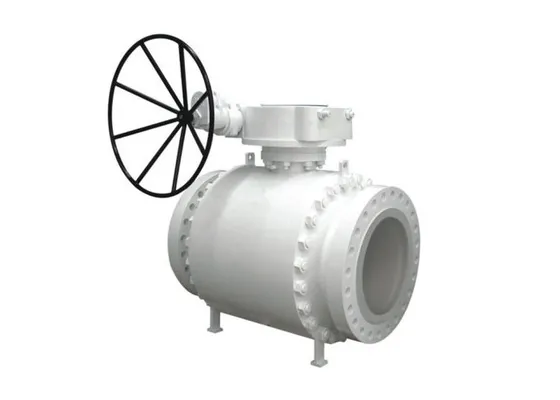
At their core, soft seated trunnion ball valves are a type of quarter-turn valve used to control the flow of liquid or gas through a pipeline. The "trunnion" refers to the fixed pivot supports that hold the ball in place, enabling stable operation even under high pressure. The "soft seat" indicates that the ball seals against elastomeric or thermoplastic seats — typically PTFE, reinforced PTFE, or U-cup style seals — which provide superior leak tightness compared to metal seats.
Unlike floating ball valves, where the ball rotates and shifts into the seats, the trunnion design secures the ball with upstream and downstream bearings. This structural distinction reduces the torque needed to operate the valve, making it suitable for larger sizes and higher pressure ratings.
Soft seats deliver reliable bubble-tight shutoff across a wide range of operating conditions. Their flexibility allows them to conform to the ball surface more precisely than rigid metal seats, reducing leakage paths. This is particularly important in applications where fluid containment and environmental compliance are critical.
The trunnion design decouples the ball from line pressure in operation, minimizing the force required to turn the valve. This enables the use of lighter actuators, which lowers capital expenditure and energy usage in automated systems.
Modern soft seated trunnion ball valves are engineered to meet demanding ANSI, API, and ISO specifications, with pressure ratings ranging from Class 150 up to 2500 and beyond. While elastomer seats have temperature limitations compared to metal seats, advanced polymers extend usable ranges and improve chemical compatibility without sacrificing sealing integrity.
Trunnion support bearings absorb radial and axial loads, protecting the seats from excessive stress and wear. This enhances service life, particularly in high-cycle applications with frequent opening and closing.
The oil and gas sector remains a primary driver of demand for soft seated trunnion ball valves. From upstream wellheads to midstream pipeline systems and downstream refineries, these valves are indispensable for:
- Crude oil and natural gas transportation
- Refining process control
- Liquefied natural gas (LNG) facilities
- Gas processing plants
In these environments, reliable shutoff and leak prevention are essential for safety, environmental compliance, and operational continuity.
Chemical plants handle aggressive fluids, frequent stop-start operations, and precise flow requirements. Advanced soft seats with enhanced chemical resistance — such as PTFE with fillers or specialty polymers — help valves withstand corrosive media while maintaining tight shutoff.
In power plants — especially combined-cycle, nuclear, and thermal facilities — trunnion ball valves manage cooling water, fuel supply, steam extraction, and auxiliary systems. Their low torque and automation readiness make them ideal for integration with control systems.
Municipal and industrial water systems benefit from the tight shutoff and long service intervals offered by soft seated trunnion ball valves. Their performance helps utilities reduce maintenance downtime and ensure consistent service delivery.
Until recently, soft seats were largely limited by temperature and chemical compatibility. However, advancements in polymer science are expanding performance envelopes:
Standard PTFE provides excellent chemical resistance, but suffers from cold flow and creep under high pressure. Reinforced PTFE — blended with glass fibers, carbon, or other fillers — improves mechanical strength and reduces deformation, making it suitable for higher-pressure environments.
New elastomer blends achieve improved resistance to hydrocarbons, ozone, and high temperatures. When used in combination with U-cup energized seals, these materials enhance both static and dynamic sealing performance.
Soft seats with antistatic devices address safety concerns in hydrocarbon services. By dissipating static charge buildup, these designs minimize the risk of ignition in explosive atmospheres.
As digital transformation accelerates across industrial sectors, ball valve automation has become standard rather than optional. Soft seated trunnion ball valves — with their low torque requirements — are especially well suited for electric and pneumatic actuators, positioners, and digital feedback systems.
Integration with plant control systems enables real-time valve status monitoring, predictive maintenance, and event logging. These capabilities improve safety and reduce unplanned downtime.
Sensors embedded in actuators provide data on torque trends, cycle counts, and valve health. Analytics platforms leverage this data to forecast maintenance needs, optimize spare parts inventory, and support asset reliability programs.
Producing high-performance soft seated trunnion ball valves requires precision engineering, rigorous material selection, and stringent quality control.
Valve bodies, balls, and trunnion components must be machined to exact tolerances to ensure proper seat contact and alignment. Even slight deviations can compromise sealing or add torque.
Traceability of materials — from raw forgings to final elastomers — is essential for certifications and compliance with API, MSS, and ISO standards. Manufacturers implement robust testing and documentation systems to support traceability throughout the production lifecycle.
Factory acceptance testing (FAT) often includes:
- Shell and seat leakage tests
- Cycle endurance testing
- Hydrostatic pressure tests
- Fire-safe certification
- Flame test verification
Third-party certifications from organizations like API or ISO lend further credibility and facilitate specification compliance for major projects.
Industry analysts project continued growth in the valve market, with soft seated trunnion ball valves representing a significant segment due to:
- Expanding energy infrastructure investments
- Emphasis on automation and digitalization
- Aging infrastructure requiring upgrades and replacements
- Stricter environmental and safety regulations
Emerging markets in Asia-Pacific, the Middle East, and Latin America are expected to see notable increases in demand as industrialization and energy projects continue to proliferate.
In a recent major refinery modernization project, engineers specified soft seated trunnion ball valves for multiple critical service points, including feedstock isolation, product distribution, and utility control systems.
Challenges
- High operating pressures exceeding 1500 psi
- Varied fluid media ranging from crude blends to finished fuels
- Integration with automated control systems
Solution Highlights
- Valves outfitted with reinforced PTFE seats to extend service life
- Pneumatic actuators with integrated position feedback for process control
- Compliance with API 6D and NACE MR0175 standards for sour gas applications
Outcome
- The installation delivered:
- Improved process stability
- Reduced torque requirements, lowering actuator sizing and costs
- Enhanced leak prevention, supporting environmental compliance efforts
Soft seated trunnion ball valves play a role in reducing fugitive emissions — an increasingly important metric under global regulatory frameworks. Tight sealing reduces emissions of volatile organic compounds (VOCs) and hazardous air pollutants (HAPs), helping facilities meet industry standards such as EPA guidelines, OSFM requirements, and international equivalents.
Additionally, design features such as fire-safe seats and antistatic components enhance safety in hydrocarbon processing environments.
While initial purchase price is a factor, lifecycle costs — including installation, maintenance, downtime, and energy usage — often carry more weight in capital planning decisions.
Soft seated trunnion ball valves deliver:
- Lower maintenance costs due to reduced seat wear and fewer replacements
- Energy savings through optimized actuator sizing and automation
- Longer service intervals, reducing labor and spare inventory needs
These economic advantages contribute to a lower total cost of ownership (TCO) compared with other valve types in many applications.
Manufacturers of soft seated trunnion ball valves adhere to a suite of international standards, including but not limited to:
- API 6D – Specification for Pipeline and Piping Valves
- API 607 / ISO 10497 – Fire Test for Quarter Turn Valves
- ASME B16.34 – Valves – Flanged, Threaded and Welding End
- MSS SP-72 – Ball Valves with Flanged or Butt-Welding Ends
Compliance ensures valve performance under rated conditions and facilitates acceptance by engineering firms and project owners.
The next frontier for soft seated trunnion ball valves lies in ever-smarter, more resilient designs:
- Advanced composite materials for extended temperature and chemical resistance
- Integrated self-diagnostics embedded at the component level
- Improved sealing geometries to further reduce torque and enhance longevity
- Green manufacturing practices to minimize environmental footprint
As industrial sectors evolve under pressures of sustainability and digital transformation, valve technology will adapt in parallel.
Soft seated trunnion ball valves have matured from specialized components to essential assets in modern fluid control systems. Their combination of tight shutoff, low operating torque, automation readiness, and broad applicability makes them well suited to the demands of today’s industrial landscape.
From oil & gas and petrochemical ventures to water utilities and power generation plants, these valves support critical processes where reliability, safety, and performance cannot be compromised. With ongoing innovations in materials, design, and digital integration, the role of soft seated trunnion ball valves is poised to expand further — delivering value across global industries for years to come.
