The circulating water system of a 1250 MW nuclear power plant employs a once-through seawater cooling configuration. Each circulating water pump outlet is equipped with a hydraulically operated butterfly valve. During normal operation, the drive-end pin assembly connecting the valve shaft and valve disc fractured, causing actuator idling and preventing normal startup of the circulating water pump. Physical and chemical analyses, together with a structural design evaluation, were performed on the failed drive pin assembly. The butterfly valve was also disassembled and inspected. Results showed that the clearance between the locking drive pin sleeve and pin shaft did not meet installation specifications and that the original design lacked sufficient reliability redundancy. Based on the failure analysis, an optimized solid drive pin assembly is proposed. The redesigned structure effectively prevents leakage and corrosion and provides a practical reference for mitigating similar defects in butterfly valves used in other nuclear power plants.
The nuclear power plant uses a once-through seawater cooling system for condenser cooling. Each unit is equipped with three circulating water pumps, and each pump outlet features a hydraulically operated butterfly valve arranged in parallel. These butterfly valves provide both shut-off and check functions and are automatically interlocked with the circulating pumps to control their opening and closing. During normal operation, the actuator of the hydraulically operated butterfly valve in Line B idled, causing the valve disc to remain stuck in the closed position and fail to operate properly. As a result, the circulating water pump in Line B stalled and could not start normally. After disassembly and inspection, the failure was determined to be caused by a fractured drive pin assembly connecting the valve shaft and valve disc. The fracture interrupted torque transmission to the valve disc, causing the actuator to idle.
The plant uses double-eccentric, accumulator-type, hydraulically operated butterfly valves with a nominal diameter of DN3000 mm and a nominal pressure of 0.6 MPa. The design flow rate ranges from 21.37 to 24.92 m³/s, with a flow velocity of 3.067 to 3.527 m/s. Each butterfly valve measures 4200 mm × 3400 mm × 1150 mm, weighs approximately 20 tons, and is installed separately from the actuator. The valve shaft consists of two sections: the drive end and the free end. The drive end connects to the actuator, converting hydraulic force into opening torque, while the free end attaches to the valve body, providing support and positioning. The valve shaft and valve disc are linked via a drive-end transmission pin assembly, whose configuration is illustrated in Figure 1.
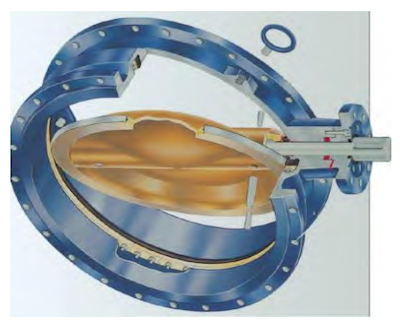
Figure 1. Butterfly valve assembly drawing
The hydraulically operated butterfly valve is equipped with a transmission pin assembly at both the drive end and the free end, connecting the valve disc and valve shaft to ensure proper positioning and torque transmission. Each transmission assembly consists of a single pin sleeve and two solid pin shafts, with a total length of 570 mm and a centrally symmetrical design for balanced torque transfer. The pin sleeve has a maximum inner diameter of 87 mm at the outer end, with a tapered bore that gradually narrows to approximately 76 mm at the sleeve’s center. The assembly contains two tapered solid pins, each 210 mm in length, with a larger end diameter of 83 mm and a smaller end diameter of 79 mm.
During installation, adhesive is first applied to the outer surface of the pin sleeve, which is then carefully inserted into the through-hole. Adhesive is subsequently applied to the smaller ends of the two solid pins, which are inserted into their respective pin sleeves. After installation, the alignment deviation between the larger end of each pin and the edge of the pin sleeve must not exceed ±10 mm. In this configuration, the solid pins transmit the primary torque, while the hollow pin sleeve provides proper positioning, containment, and anti-slip protection. The pin sleeve is made of X5CrNiMo17-12-2, and the pin X2CrNiMoN22-5-3. After disassembling the hydraulic butterfly valve, it was observed that at the fracture location on the drive end, the upper transmission pin along with its pin sleeve had shifted approximately 210 mm. The relative displacement between the transmission pin and the pin sleeve was about 6 mm, remaining within the ±10 mm tolerance specified by the standard. However, following the drive-end fracture, the lower transmission pin and its pin sleeve shifted together by approximately 30 mm, while the relative displacement between the pin and sleeve reached 22 mm, exceeding the ±10 mm specification. Figure 2 shows the overall morphology and a schematic diagram of the fractured drive pin assembly.
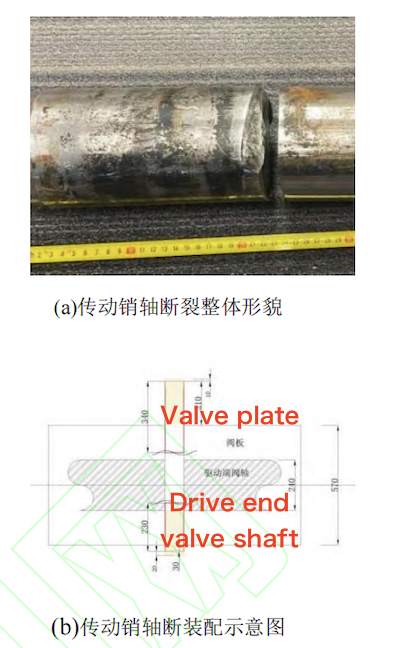
Figure 2. Overall morphology and schematic diagram of the fractured drive pin assembly
(a) Overall morphology of the fractured drive pin (b) Schematic diagram of the fractured drive pin assembly
Figure 3 shows the overall macroscopic morphology of the drive-end transmission pin assembly. The pin sleeve fracture is primarily located between the lower pin shaft and the mating interface. The outer surface of the pin sleeve at the fracture site exhibits pronounced extrusion deformation and bright wear marks, whereas the opposite side shows no similar deformation or wear. The fracture surface is partially coated with black deposits. While the overall fracture cross-section is relatively flat, localized serrated features are clearly visible. Based on these characteristics, this region is identified as the final fracture zone. A subtle radial texture within this zone indicates the likely crack propagation direction. The inner wall of the sleeve shows distinct step-like features with an uneven surface. These steps vary in height and are irregularly distributed, with some areas lacking clearly defined markings. It is inferred that these inner-wall steps were caused by compressive contact with the pin end face, and the crack initiation zone is likely located near these compression-induced features. No abnormal features are observed on the outer surface of the sleeve, and there is no significant evidence of general matrix corrosion.
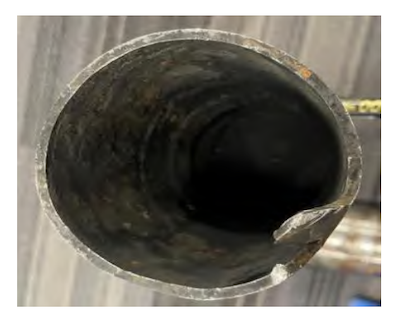
Figure 3. Overall macroscopic morphology of the fractured sleeve
The remaining exposed length of the upper pin outside the sleeve is approximately 6 mm, while the lower pin extends about 22 mm. The lower pin, corresponding to the deformation region, exhibits clear compressive deformation marks. As shown in Figure 4, distinct compression-induced steps are visible on the inner wall of the lower sleeve. Similar steps, caused by pin loading, are also observed on the inner wall of the upper sleeve.
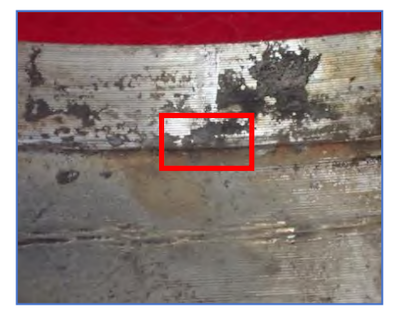
Figure 4. Macroscopic morphology of the stepped inner wall of the upper pin sleeve
The chemical composition of the pin sleeve was analyzed using an ARL3460 optical emission spectrometer in accordance with the ASTM E415 standard test method. The analysis results are summarized in Table 1. According to the EN 10088-3 standard for X5CrNiMo17-12-2 stainless steel, the measured chromium (Cr) and molybdenum (Mo) contents are slightly below the lower limits specified by the standard.
Table 1. Chemical Composition of the Pin Sleeve (Mass Fraction, %)
Element | C | Si | Mn | S | P | Cr | Ni | Mo |
Test value | 0.018 | 0.43 | 1.17 | ≤0.010 | 0.034 | 16.26 | 10.35 | 1.97 |
Standard value | ≤0.07 | ≤1.00 | ≤2.00 | ≤0.030 | ≤0.045 | 16.50–18.50 | 10.00–13.00 | 2.00-2.50 |
The microstructure of the base material at both ends of the pin sleeve was examined using an OLYMPUS GX71 optical microscope. Additionally, non-metallic inclusions were assessed on longitudinal sections. Figure 5 shows the microstructures at both ends of the pin sleeve. The matrix is composed of austenite with minor corrosion products (limonite), and the average grain size is approximately Grade 7. The morphology and ratings of non-metallic inclusions are shown in Figure 6. The inclusions are rated D1.5 and D0.5e, with no significant abnormalities observed in the inclusion content.
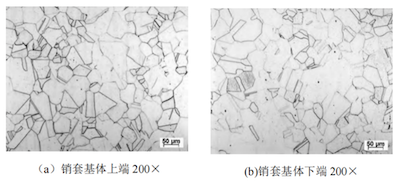
(a) Upper end of the sleeve base material (200×) (b) Lower end of the sleeve base material (200×)
Figure 5. Microstructures at both ends of the sleeve
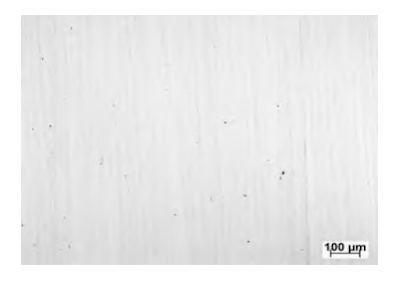
Figure 6. Evaluation of non-metallic inclusions
The Vickers hardness of the sleeve material was measured using a 430MVA Vickers hardness tester in accordance with ASTM E92, the Standard Test Method for Vickers Hardness of Metallic Materials. A test load of 1 kg (HV1) was applied for the surface hardness measurement. The hardness results are presented in Table 2. The relevant standard does not prescribe specific hardness requirements for the grade X5CrNiMo17-12-2. The measured values are relatively uniform, and no anomalies were observed.
Table 2. Hardness test results of the base material
Test Value (HV1) | 171 | 165 | 158 |
Average (HV1) | 164 | ||
Microscopic examination of the pin sleeve fracture surface revealed partial wear and surface deposits, coupled with distinct fatigue striations across the entire area, characterized by a consistent propagation pattern. Crack propagation originated from the inner side, where the fatigue striations converged, and progressed outward toward the outer surface of the pin sleeve. The fracture region was examined metallographically on a longitudinal section, as shown in Figure 7. The presence of microcracks extending from the outer surface toward the inner surface along the fracture cross-section further confirms that crack initiation occurred at the outer wall of the pin sleeve.
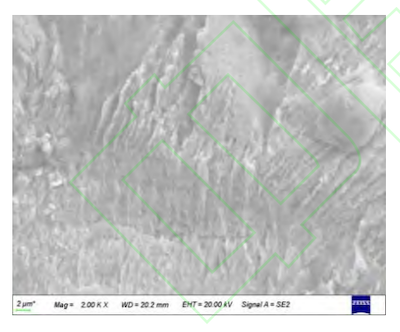
Figure 7. Cross-sectional features at the inner-wall step of the sleeve
Longitudinal compressive deformation resulted in a substantial accumulation of material on the inner wall of the pin sleeve. After longitudinal sectioning, metallographic examination was performed on the regions with relatively large compression steps at both the upper and lower ends of the sleeve. The resulting microstructure is shown in Figure 8. Significant localized plastic deformation in this area is evidenced by compression steps measuring approximately 110 μm or greater in height and the presence of pronounced deformation structures in the adjacent microstructure.
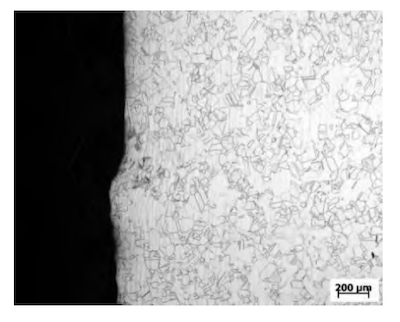
Figure 8. Microstructure at the inner-wall compression step of the sleeve
Macroscopic and microscopic examination of the fracture surface of the hydraulic butterfly valve pin sleeve revealed that most of the fracture surface was relatively smooth. The crack initiation region exhibits faint radial markings, while distinct fatigue striations are observed microscopically in both the initiation and propagation regions. The final fracture region exhibits a serrated macroscopic morphology with severe plastic deformation and wear, accounting for approximately one-eighth of the total fracture area. No significant matrix corrosion was detected. Comprehensive analysis indicates that the pin sleeve fracture is attributable to low-stress, high-cycle fatigue. Cracks initiated at the outer wall of the sleeve and propagated both inward and laterally, culminating in the final fracture region. Pronounced macroscopic compressive deformation is observed on one side of the fracture surface and on the corresponding outer surface of the sleeve, whereas no comparable deformation is observed on the opposite side. Additionally, no compressive deformation is observed on the upper pin or on the corresponding outer surface of the sleeve. These deformation features suggest that the compressive deformation developed subsequent to fracture of the sleeve. During failure, compressive contact between the lower end of the transmission assembly and the valve shaft led to additional relative displacement during valve operation. Uneven step features on the inner wall resulted from partial material accumulation under end-face compression. These steps may have hindered installation and prevented full sleeve insertion. Inspection confirmed that the corresponding positions at the upper and lower ends showed no evidence of displacement during service. However, the residual exposed length at the lower end measured 22 mm, exceeding the allowable tolerance by 12 mm. This excessive deviation may have prevented full engagement of the tapered connection, thereby compromising the effective fixation of the lower portion of the transmission assembly. Oscillatory motion of the valve disc during operation was likely induced by flow excitation. Under conditions of insufficient fastening or excessive clearance, oscillation of the transmission assembly would have intensified, leading to progressive wear on the sleeve outer wall and cumulative fatigue damage at geometric discontinuities near the end region. Ultimately, this led to fatigue fracture. Furthermore, the compression-induced steps on the inner wall may have acted as stress concentrators, thereby accelerating fatigue crack initiation and propagation.
Based on the above analysis, the following conclusions are drawn:
(1) The chemical composition of the butterfly valve drive pin sleeve conforms, in general, to the X5CrNiMo17-12-2 standard. However, the chromium (Cr) and molybdenum (Mo) contents are slightly below the specified lower limits. The microstructure is typical of austenitic stainless steel, with a small amount of non-metallic inclusions observed. The hardness of the pin sleeve was measured at approximately 164 HV, with no notable deviations observed in its material properties.
(2) The clearance and relative alignment between the pin shaft and pin sleeve are inconsistent with installation specifications. According to the circulating water butterfly valve operation and maintenance manual, the pin should be flush with the final end-face edge during installation, with a maximum deviation of ±10 mm to ensure correct expansion and locking performance. However, post-failure inspection revealed that the lower section of the pin sleeve and the pin shaft had a relative displacement of approximately 22 mm, exceeding the allowable deviation by 12 mm. This deviation may have resulted from improper initial assembly or gradual displacement during long-term operation. The excessive relative displacement likely caused insufficient expansion at the tapered end, thereby reducing the restraining and locking effectiveness. In addition, the residual exposed length at the lower end reached 22 mm, which may have prevented full engagement of the tapered connection, resulting in ineffective fixation of the transmission assembly. During valve operation, flow-induced excitation caused oscillation of the valve components, which was further amplified by the loosened transmission connection, accelerating fatigue damage.
(3) The design of the transmission pin assembly lacks adequate reliability redundancy. Structural analysis indicates that the total length of the pin sleeve is 570 mm, with the lower fractured section measuring approximately 230 mm and the upper section approximately 340 mm. Each section houses a solid pin shaft measuring 210 mm, whereas the central hollow portion of the sleeve is only 150 mm long. Considering a valve shaft diameter of 240 mm, the effective torque transmission height on one side is limited to roughly 45 mm when engaging the solid pin shaft. This relatively short contact length results in high local stress concentration. When axial displacement of the transmission pin assembly occurs, contact between the edge of the valve shaft and the lower portion of the hollow pin sleeve generates shear forces that act directly on the hollow sleeve. Under these conditions, the hollow sleeve is susceptible to shear failure, allowing the two solid pins inside to continue moving outward. As a result, the actuator completely loses its torque transmission capability and begins to idle, ultimately impairing normal valve operation.
The failure of the hydraulic butterfly valve drive pin assembly led to the complete loss of valve actuation. Based on macroscopic examination and comprehensive testing of the fractured pin sleeve, the root cause of the failure was determined to be non-compliance of the pin-to-sleeve alignment with installation tolerances. In addition, the hollow section of the pin sleeve created a structural weak point after installation, highlighting insufficient reliability in the overall drive pin assembly design. To mitigate the risk of drive pin assembly fracture, a redesigned solid drive pin configuration was developed and implemented, as illustrated in Figure 9. The improved design effectively prevents pin ejection and mitigates corrosion, providing a practical reference for addressing similar drive pin failures in comparable valve applications. Alongside the structural redesign, verification of the clearance of butterfly valve drive pins should be conducted during construction, installation, and after commissioning, following relevant maintenance standards. The inclusion of dedicated inspection requirements in relevant procedures can further mitigate the risk of drive pin assembly failure.
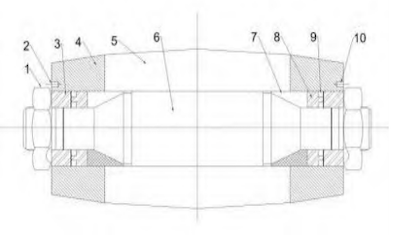
Figure 9. Solid drive pin assembly
Nut
External-tab lock washer
Compression sleeve / bushing
Valve disc (A)
Valve shaft
Expansion pin
Expansion sleeve
Gasket / sealing pad
O-ring
Compression sleeve (B)