In an era defined by rapid energy transition and heightened industrial demand for ultra-low temperature processing, stainless steel cryogenic gate valves are emerging as indispensable components across global infrastructure. From liquefied natural gas (LNG) export terminals to industrial gas plants supporting semiconductors and healthcare, these specialized valves deliver reliable flow control under extreme conditions. Industry stakeholders report accelerating uptake and technological advances that are reshaping performance standards and supply chains.
Cryogenic gate valves — specifically engineered for temperatures down to –196 °C (–321 °F) — are critical for isolating fluid streams where conventional valve designs would fail due to material embrittlement or seal leakage. When fabricated from high-grade stainless steels, they combine structural integrity with resistance to corrosion in challenging environments.
This comprehensive news report explores the technical fundamentals, market dynamics, application sectors, manufacturing innovations, quality standards, supply chain challenges, and future growth pathways for stainless steel cryogenic gate valves.
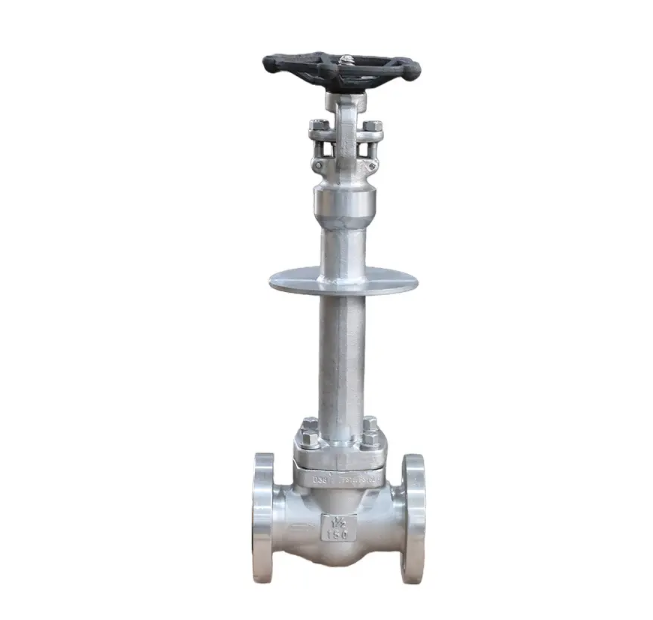
Cryogenic gate valves are a specialized subset of linear motion valves, primarily designed to start or stop fluid flow in pipelines within extremely low temperature service environments. Unlike globe or ball valves that may not seal effectively at cryogenic temperatures, gate valves are optimized for minimal pressure drop and tight shut-off.
Stainless steels — including grades like 304L, 316L, and duplex stainless steels — maintain toughness and ductility at cryogenic temperatures. This minimizes the risk of brittle fracture that can occur with carbon steels or lower-grade alloys.
Many cryogenic gate valves use a rising or non-rising stem with a wedge or slab type gate that snugly seats against hardened sealing surfaces, ensuring reliable shut-off even after repeated cycling.
Advanced packing materials and bellows seals prevent leakage of cryogenic fluids — such as LNG, liquid helium, or liquid oxygen — into the environment. This is critical for safety and efficiency.
Despite heavy duty construction, optimized stem threads and gear mechanisms reduce torque requirements, enabling easier actuation by handwheel, electric, or pneumatic actuators.
The stainless steel cryogenic gate valve market is being driven by several converging forces:
Global LNG trade has entered a phase of capacity build-out, especially in North America, the Middle East, and Asia Pacific. New liquefaction plants, import terminals, and midstream storage facilities require large inventories of cryogenic valves for pipelines, tanks, and vaporizers.
According to industry analysts, LNG consumption continues to grow — not only for power generation but also for industrial fuel switching and maritime bunkering — which in turn fuels valve demand.
Cryogenic gases such as liquid nitrogen, argon, oxygen, and helium are essential for semiconductor fabrication, aerospace, and medical applications. Gate valves that can withstand frequent cycling and maintain leak-free operation are critical for maintaining purity and safety in these sectors.
As hydrogen becomes a key energy carrier in decarbonization strategies, cryogenic technologies for liquid hydrogen storage and distribution are gaining traction. Stainless steel valves compatible with hydrogen's unique properties — low temperature and small molecule size — are already under evaluation for future facilities.
Many existing cryogenic facilities built decades ago are undergoing modernization to meet regulatory standards or to increase throughput. This wave of refurbishments presents opportunities for advanced valve replacements with improved sealing performance and longer service life.
At LNG plants, cryogenic gate valves control the flow of natural gas during liquefaction, storage, and loading operations. They are installed on:
- Main cryogenic transfer lines
- Storage tank inlet/outlet connections
- Vapor return systems
- Boil-off gas (BOG) piping
Operators demand valves that can handle thermal cycling, high differential pressures, and frequent actuation without performance degradation.
Manufacturers of industrial gases rely on cryogenic valves to manage flows of:
- Liquid oxygen (LOX) for steelmaking and medical supply
- Liquid nitrogen (LIN) for inerting and refrigeration
- Liquid argon (LAR) for welding and specialty gases
- Liquid helium for cooling superconducting magnets
In these environments, contamination from valve leakage can compromise gas purity and equipment efficiency, making high-integrity stainless steel designs essential.
Semiconductor fabs require ultra-high purity gases under cryogenic conditions. Valves for these facilities often incorporate specialized surface finishes and sealing technologies to mitigate contamination and ensure chemical compatibility.
Cryogenic propellants such as liquid oxygen and liquid hydrogen are used in rocket engines and test stands. Valves in space systems must endure extreme conditions while ensuring absolute reliability due to the critical nature of aerospace operations.
Manufacturers are innovating to meet tighter performance demands, longer service life, and easier maintenance.
While standard austenitic grades like 304/304L and 316/316L remain common, newer valve designs increasingly use:
- Duplex stainless steels (e.g., 2205): Enhanced strength and corrosion resistance.
- Super-austenitic grades: Superior chloride stress corrosion cracking resistance for coastal and chemical environments.
- Low-temperature low carbon variants: Minimized carbide precipitation for enhanced toughness.
These materials are often subjected to stringent heat treatment and cryogenic testing to validate performance.
Cryogenic valves demand seals that maintain integrity without excessive torque. Recent innovations include:
- Metal-to-metal sealing surfaces with precision machining
- Bellows sealed designs that eliminate stem packing leakage
- Flexible graphite and PTFE composite packings optimized for thermal contraction
These enhancements reduce fugitive emissions and improve long-term reliability.
Actuator technologies are increasingly integrated with cryogenic valves to support remote control and process automation:
- Electric actuators for precise positioning
- Pneumatic actuators for quick cycling
- Position feedback sensors for digital monitoring
Advanced control systems allow operators to reduce human intervention in hazardous areas.
Some manufacturers now embed sensors for:
- Temperature and pressure monitoring
- Vibration detection
- Cycle count logging
When connected to plant analytics platforms, these sensors help predict maintenance needs before failures occur, reducing downtime.
Producing stainless steel cryogenic gate valves involves rigorous processes to ensure safety and compliance with industry standards.
Valve bodies and bonnets are typically forged or cast from high integrity stainless steel billets to ensure structural uniformity. Forging improves grain flow and mechanical strength, which is vital at cryogenic temperatures.
Critical sealing surfaces, seat rings, and stem threads are machined using high-precision CNC tools. Surface roughness and dimensional accuracy directly impact sealing performance and torque requirements.
Manufacturers perform a battery of NDT methods, including:
- Radiographic Inspection (RT)
- Ultrasonic Testing (UT)
- Dye Penetrant (PT)
- Magnetic Particle (MT)
These tests detect internal defects that could compromise cryogenic performance.
Completed valves undergo cryogenic cycle testing in controlled facilities. During these tests, valves are submerged or exposed to liquid nitrogen to simulate real service conditions, validating:
- Expansion and contraction behavior
- Seal integrity at low temperature
- Operating torque across temperature ranges
Industry standard certifying bodies — including API (American Petroleum Institute), ASME (American Society of Mechanical Engineers), and EN (European Norms) — verify compliance with design and performance standards.
Certificates of compliance provide assurance to end-users and are often contractually required for major projects.
Despite strong demand and engineering progress, several challenges persist.
High-grade stainless steels and specialty alloys experience market price volatility due to global supply disruptions and raw material constraints. These fluctuations can affect project budgeting and lead times.
Precision valve manufacturing demands skilled machinists, welders, and technicians. Many regions are experiencing talent shortages, prompting companies to invest in training programs and automation.
Large cryogenic valves — particularly bespoke designs — can have extended lead times due to complex fabrication and testing cycles. Project planners often struggle to align valve delivery with tight construction schedules.
Global projects must navigate differing regional standards and certification requirements. Ensuring seamless compliance adds complexity to international supply chains.
As industrial emissions regulations tighten, manufacturers must demonstrate reduced leakage and low fugitive emissions, especially for valves used in LNG and hydrogen applications.
Adherence to standards ensures performance consistency and safety. Key standards include:
- API 6A — Wellhead and Christmas tree equipment, often referenced for cryogenic gate valve frameworks
- API 600 — Steel gate valves for refinery and general service, adapted for cryogenic designs
- ASME B16.34 — Valves flanged, threaded, and welded construction
- EN 12570 — Cryogenic vessels and accessories standards impacting valve design parameters
Certifications from ISO (International Organization for Standardization) and approvals from classification societies like DNV (Det Norske Veritas) further validate product readiness for global projects.
Several trends are shaping the future of stainless steel cryogenic gate valves.
As hydrogen adoption accelerates, cryogenic liquid hydrogen applications will require valves that can handle even lower temperatures and mitigate permeation concerns. Existing stainless steel cryogenic gate designs are being evaluated for hydrogen compatibility, with research underway to optimize alloys and seals for this emerging market.
The rise of Industrial Internet of Things (IIoT) technologies is enabling valves with built-in sensors and data analytics capabilities. Predictive maintenance and remote diagnostics are reducing unplanned outages and optimizing life-cycle costs.
While still nascent in valve body production due to certification hurdles, additive manufacturing (3D printing) offers opportunities for complex internal geometries and material savings — particularly for prototypes and specialized components.
Industries are placing greater emphasis on valves that are easier to maintain, refurbish, and recycle at end-of-life — aligning with corporate sustainability strategies.
Stainless steel cryogenic gate valves are not simply another process control component — they are mission-critical enablers of modern energy, manufacturing, and high-tech ecosystems. With their remarkable ability to operate under extreme cold, handle aggressive fluids, and maintain safety and reliability, these valves are foundational to infrastructure that powers global trade, industry, and innovation.
Market demand is poised for continued growth, driven by LNG expansion, industrial gas production, hydrogen readiness, and retrofit projects worldwide. Challenges remain in material costs, skilled labor, and regulatory complexities, but ongoing technological progress and strategic investments are positioning manufacturers and end-users to thrive.
As industries evolve toward cleaner fuels and smarter operations, stainless steel cryogenic gate valves will undoubtedly remain at the forefront — quietly but indispensably controlling flows where few other engineered devices can.