Abstract: As a critical component in diesel hydrocracking units, the emergency shut-off ball valve used in thermal high-pressure separation plays a decisive role in ensuring safe and stable process operation. This study investigates leakage occurring at the center body seam of emergency shut-off ball valves operating under thermal high-pressure separation conditions. The valve structure, operating principles, and potential causes of external leakage are systematically analyzed. Three optimization schemes for the valve body sealing structure are proposed, and through a detailed analysis of the valve’s structural features combined with a comprehensive evaluation of sealing material performance, a practical and reliable solution is developed. The successful implementation of this solution delivers robust technical support and ensures the long-term stable operation of diesel hydrocracking units. In diesel hydrocracking units, the emergency shut-off ball valve used in thermal high-pressure separation is a critical safety component, designed to prevent high-pressure media from entering low-pressure systems and thereby ensure the safe and stable operation of the entire high-pressure reaction process. Consequently, this valve serves as a key element in the unit’s overall safety protection system. After nearly one year of continuous operation, a diesel hydrocracking unit at a petrochemical plant using the AXENS process experienced abnormal leakage at the valve body seams of two emergency shut-off ball valves in the thermal high-pressure separation system. As the unit continued to operate and production loads were dynamically adjusted, the leakage gradually worsened, posing a significant threat to the safe and stable operation of the unit. To address this issue, a thorough analysis of the valve’s structural design was performed, along with a systematic evaluation of the materials used in its sealing components. Based on these investigations, a practical and effective solution was developed, offering robust technical support for the stable, long-term, full-capacity, and high-quality operation of the diesel hydrocracking unit.
In diesel hydrocracking processes, the thermal high-pressure emergency shut-off ball valve is primarily installed in the hydrocracking reaction unit to address the specific operational requirements of this service. The process medium is highly corrosive, and operations are continuously carried out under harsh conditions, including high temperatures, high pressures, hydrogen-rich environments, and significant pressure differentials. The primary function of the thermal high-pressure hydrocracking emergency shut-off ball valve is to prevent the accidental entry of high-pressure media into low-pressure sections of the system during operation. This function is crucial for maintaining the overall safety and stable operation of the process. During hydrocracking, insufficient control of high-pressure media can cause severe damage to equipment and present direct safety risks to personnel. Accordingly, the thermal high-pressure hydrocracking emergency shut-off ball valve must be highly reliable, allowing for rapid and dependable isolation of high-pressure media in emergency situations, thereby effectively minimizing potential operational risks.
The thermal high-pressure hydrocracking emergency shut-off ball valve in this diesel hydrocracking unit features a full-bore design with dual-flow, bidirectional sealing, and a double-seat configuration. The valve utilizes a fixed-ball, split-body design, with the valve body produced through integral forging to ensure high mechanical strength and structural integrity. Both the valve ball and seats are surface-hardened with tungsten carbide to improve wear resistance. The coating is applied via a spraying process that ensures a strong metallurgical bond between the hardfacing layer and the substrate, effectively preventing delamination during service. Additionally, the valve ball is intentionally designed to be harder than the valve seat, minimizing the risk of galling or seizure between the sealing surfaces.
Inspection of the failed valve revealed that the sealing gasket provided by the original manufacturer could not meet the long-term sealing performance requirements under high-temperature conditions, showing evident degradation over time. A review of the valve assembly drawings and the component list provided by the manufacturer revealed that the valve’s central body seam was sealed with a Kalrez® O-ring elastomer. Published technical literature indicates that this type of elastomer possesses generally excellent material properties, with compatibility for hydrogen sulfide, hydrogen, and diesel media that meets the nominal design operating requirements. The compatibility of different elastomer materials with various media is summarized in Table 1.
Table 1. Compatibility Ratings of Different Elastomer Materials for Various Media
Medium | Kalrez® (FFKM) | NBR | EPDM | VMQ | FKM |
Hydrogen sulfide | A | A | C | U | A |
Hydrogen | A | A | U | U | A |
Diesel | A | A | U | U | A |
Notes:
A: The elastomer is minimally affected by the medium, with typical volumetric expansion of less than 10%. Minor swelling or slight performance degradation may occur under severe conditions, but overall functionality is generally not impaired.
C: The elastomer has limited chemical resistance and is not recommended for continuous service in this medium.
U: The elastomer is significantly affected by the medium, and its suitability must be verified through specific testing.
In addition, the performance characteristics of various elastomer materials are summarized in Table 2. Elastomeric O-rings are critical components in high-pressure sealing systems. However, a detailed review of key performance parameters—such as tear resistance, compression set, and resistance to flexural cracking—revealed that these properties are not comprehensively documented in the available technical literature. Moreover, the valve manufacturer was unable to provide corresponding experimental data to support validation. As a result, it cannot be conclusively demonstrated that the elastomer materials listed in Table 2 are suitable for long-term service under high-temperature, high-pressure hydrogenation conditions. The selection of elastomer materials for control and shut-off valves should be grounded in a comprehensive understanding of the service conditions and the inherent properties of the materials. Key factors include the operating temperature and pressure, pressure differentials, flow characteristics, valve actuation mode, and the chemical composition of the process medium. Accordingly, the compatibility data presented in Table 2 should be treated only as general guidance, because variations in formulation and additives can markedly impact the actual performance and long-term reliability of elastomer materials.
Performance | Kalrez® (FFKM) | NBR | EPDM | VMQ | FKM |
Tear resistance | Average | Poor | Poor–Average | Poor | Average |
Corrosion resistance | Good | Good | Poor | Poor | Good |
Resistance to flexural cracking | Good | Average | Poor | Poor | Average |
A review of relevant domestic and international literature highlights a significant inherent limitation of this type of O-ring elastomer seal. Under long-term exposure to high temperatures, its key mechanical properties—particularly tensile strength at break and elongation at break—gradually deteriorate, eventually resulting in complete failure of the O-ring seal. The long-term thermal aging performance of perfluoroelastomers, shown in Table 3, is further validated by operational data from the valves in the field. In actual service, leakage at the valve body center seam typically developed within 6–12 months of operation, progressing from initial trace seepage to severe oil leakage. This observation provides direct evidence of elastomer performance degradation under prolonged high-temperature conditions, demonstrating that such O-ring seals are unsuitable for long-term service in this application. Extensive comparisons with shut-off and control valves operating under similar conditions indicate that, in high-temperature, high-pressure services involving wax oil and residual oil, the MOGAS CA-1AS series, VELAN R series, and AST HB-1 series shut-off valves all utilize metal gaskets for sealing the valve body center seam. Similarly, Masoneilan 21, 41, 77, and 78 series control valves universally employ metal–graphite spiral-wound gaskets at the valve body seams. Notably, none of these valves have exhibited center seam sealing failures or external leakage during long-term operation. These observations further confirm that the sealing material currently used for the valve body center seam in high-temperature emergency shut-off ball valves is inappropriate for the actual operating conditions of this unit.
Performance Parameter | Original | 232 °C, 84 days | 260 °C, 112 days | 288 °C, 28 days | 316 °C, 7 days |
100% elongation modulus (N/mm²) | 18.27 | 21.37 | 16.89 | 11.20 | 10.60 |
Tensile strength at break (N/mm²) | 10.60 | 7.47 | 5.47 | 3.98 | 0.13 |
Elongation at break (%) | 120 | 175 | 235 | 320 | 230 |
During a major unit turnaround, an emergency shut-off ball valve exhibiting external leakage was dismantled for inspection. The examination revealed that the O-ring sealing element at the valve body center seam had fractured at intervals of approximately 30 cm, with multiple ruptures observed along the seal circumference. This finding further validates the preceding analysis, conclusively identifying the root cause of the center seam leakage and providing a clear direction for subsequent technical optimization. Currently, emergency shut-off ball valves used in diesel hydrocracking units generally employ a sealing structure designed to prevent O-ring tearing or extrusion resulting from excessive sealing force. Specifically, a flange-like mating structure is formed between the main valve body and the auxiliary valve body, as shown in Figure 1. However, practical operation indicates that this design provides virtually no allowance for online tightening or adjustment. As a result, its applicability under high-temperature, high-pressure hydrocracking conditions—particularly during start-up, shutdown, or load fluctuations—is severely limited, and it does not meet actual operating requirements.
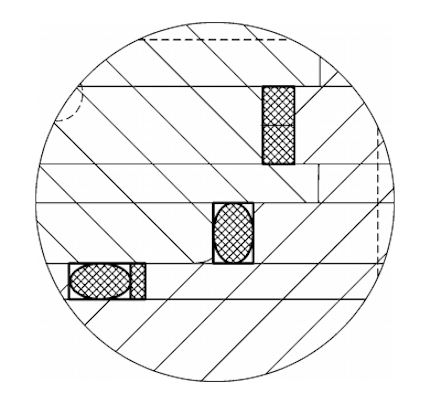
Figure 1. Schematic diagram of the valve body center seam sealing structure
Based on the operating characteristics of the diesel hydrocracking unit—specifically high temperature, high pressure, and severe service conditions—three alternative improvement schemes for the valve body center seam sealing structure are proposed, as described below.
Considering the high-temperature and high-pressure conditions of the diesel hydrocracking process, it is recommended that valve manufacturers adopt BX-type octagonal metal gaskets in accordance with API Spec 6A. The BX-type gasket and its associated sealing configuration are shown in Figure 2. This gasket provides excellent resistance to high pressure, suitable for pressures up to 42 MPa and a temperature range of −196 to 1000 °C. The BX-type gasket increases the contact stress at the seating surface, and the internal system pressure further generates a pressure-energized self-sealing effect, ensuring safe and stable valve operation. In the event of minor leakage during service, the clearance between the flange and gasket allows the leak to be effectively eliminated through online tightening at a constant torque. BX-type octagonal gaskets are extensively applied in API-standard pressure equipment, particularly for large-diameter flanges, and consistently provide reliable sealing across a range of allowable pressure conditions.

Figure 2. Schematic diagram of BX-type octagonal gasket and corresponding sealing structure
The second solution uses a double-cone triangular annular pressure self-sealing gasket, as shown in Figure 3. This sealing structure features a relatively simple design, excellent resistance to high temperature and high pressure, and a lower initial bolt preload compared with conventional flat gasket seals. With a pressure range of 1–42 MPa and an operating temperature of 0–1000 °C, the double-cone triangular annular gasket provides reliable sealing through its pressure-activated mechanism, even under variable operating conditions.
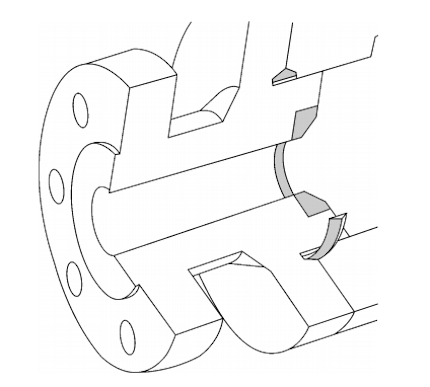
Figure 3. Schematic diagram of double-cone triangular annular pressure self-sealing gasket
The third solution utilizes metal lens gasket sealing technology, as shown in Figure 4. The gasket has a lens-shaped geometry with two spherical surfaces, creating a line-contact sealing interface between the spherical gasket surface and the conical seating surface. It produces a high specific sealing pressure for excellent reliability and can automatically adapt to minor surface irregularities at the mating faces, offering good self-alignment. The metal lens gasket also provides self-centering properties and a semi-pressure self-tightening effect. With a maximum temperature of 800 °C and allowable pressure of 42 MPa, this sealing structure is well suited for high-temperature, high-pressure hydrocracking service.
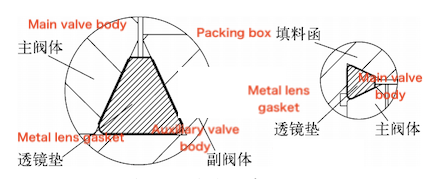
Figure 4. Schematic diagram of metal lens gasket sealing structure
Under high-temperature and high-pressure conditions, metal gaskets demonstrate clear advantages as sealing materials. They retain structural integrity and reliable sealing performance under the extreme temperature and pressure fluctuations typical of unit opening and closing. Metal gaskets are therefore ideally suited for harsh service environments involving high temperatures and pressures, where non-metallic sealing materials cannot perform reliably. In addition, metal gaskets provide long-term operational stability without aging, degradation, or loss of sealing performance. For material selection, stainless steel is recommended as the minimum requirement to ensure sufficient mechanical strength and corrosion resistance. For more demanding service conditions, Inconel 718 (In718) or Inconel 750 (In750) can be used, with In718 particularly preferred for its excellent resistance to high temperature, high pressure, and mechanical stress. For applications demanding even higher performance, Inconel 750 (In750) with a gold-plated surface can be used to further enhance corrosion and wear resistance, thereby extending service life and improving sealing reliability under extreme operating conditions.
Following the valve leakage incident, technical personnel conducted a comprehensive review of relevant domestic and international literature and compared the findings with the original manufacturer’s data for the O-ring seal. This analysis identified a critical defect in the O-ring model originally used in the valve body center seam. Specifically, during long-term high-temperature service, key performance parameters—such as tensile strength and elongation at break—gradually deteriorate, eventually resulting in complete seal failure. Simply replacing the failed seal with a new O-ring of the same specification would be a temporary and high-risk solution, as leakage at the valve body seam is likely to recur. To validate this conclusion, an identical O-ring was installed during the 2023 overhaul of the No. 1 diesel hydrocracking unit. However, just three months after the valve returned to service, leakage at the valve body center seam reoccurred, fully confirming the accuracy of the failure mechanism analysis. After evaluating the three proposed improvement schemes, the octagonal metal gasket solution was ultimately selected. A valve retrofitted with this solution during the 2024 major overhaul was taken as a representative case. As the unit’s operating time increased and production loads were dynamically adjusted, the valve body center seam consistently maintained reliable sealing performance, with no recurrence of leakage. The optimization removed the safety hazard entirely, ensuring a reliable technical basis for the diesel hydrocracking unit’s long-term stable and safe operation.
Through close collaboration between the operating company and the valve manufacturer’s technical team, a systematic investigation and targeted optimizations were conducted to address the critical leakage issue of the emergency shut-off ball valve. The following key conclusions and engineering insights were obtained:
Root Cause of Valve Body Center Seam Leakage
The failure mechanism of the valve body center seam was clearly identified. The O-ring elastomer used in this application has inherent deficiencies under long-term high-temperature service. Key mechanical properties—particularly tensile strength and elongation at break—gradually deteriorate during prolonged exposure to elevated temperatures, ultimately leading to complete seal failure and external leakage.
Guidance for Valve Selection in High-Temperature, High-Pressure Hydrogenation Units
The results provide key guidance for selecting and applying emergency shut-off ball valves in high-temperature, high-pressure hydrogenation service. During the construction of new projects or technical retrofits, it is essential to ensure that the valve body and internal forgings comply with all applicable quality and performance standards. Based on this, the selection of sealing components must be conducted with a comprehensive and conservative evaluation. In particular, under extreme conditions of high temperature, high pressure, and hydrogen service, non-metallic and non-graphite sealing materials should be strictly avoided to ensure long-term sealing reliability, operational safety, and unit stability.
Effectiveness of Sealing Structure and Material Optimization
Optimizing the center seam sealing structure and replacing elastomer seals with a metal gasket enabled long-term stable operation of the emergency shut-off ball valve in the AXENS-process diesel hydrocracking unit. Field operations have demonstrated reliable sealing performance under variable load conditions, with no recurrence of leakage. Overall, this study offers practical technical guidance and valuable engineering experience for the selection, design, and optimization of emergency shut-off ball valves operating under harsh conditions, providing a reliable reference for similar applications in the refining and petrochemical industries.