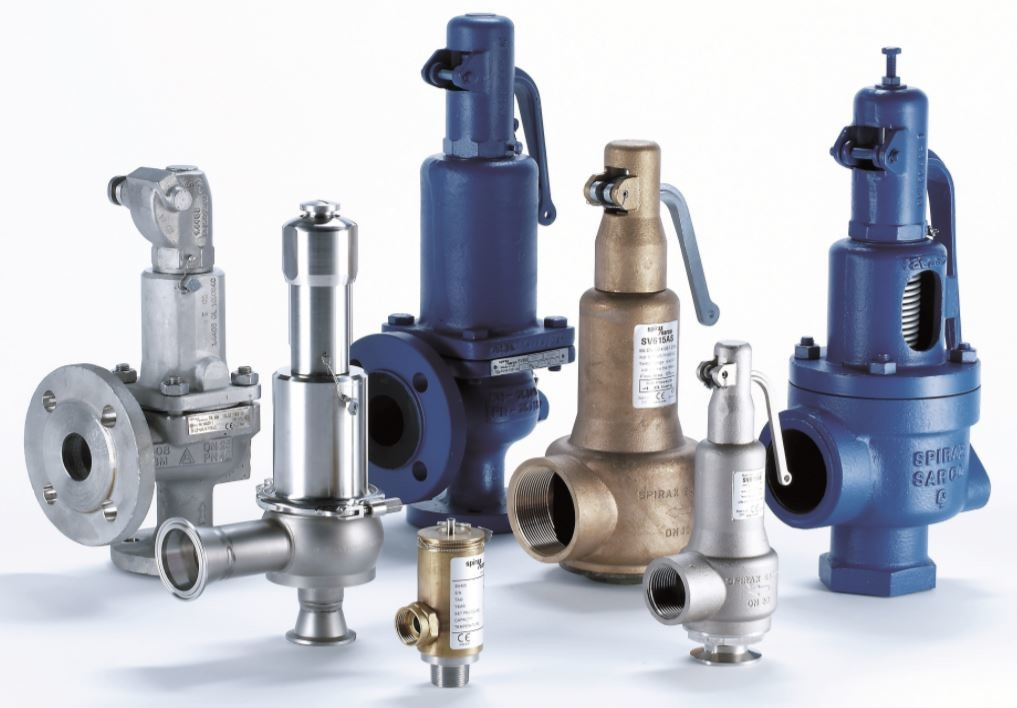
A safety valve is one of the most critical protective devices used across modern industrial systems. It is specifically designed to prevent equipment failure caused by excessive internal pressure. Acting as an automatic fail-safe mechanism, the safety valve ensures that pressure, temperature, or flow conditions within a system never exceed safe operating limits.
In practical industrial applications, safety valves are widely installed on boilers, pressure vessels, pipelines, compressors, heat exchangers, storage tanks, reactors, and other pressurized equipment. Their main function is simple yet vital: when system pressure rises beyond a pre-set threshold, the valve opens automatically to release excess pressure and restore safe operating conditions.
Without safety valves, even minor system malfunctions—such as thermal expansion, blocked discharge lines, or control system failures—could lead to catastrophic consequences including equipment rupture, explosions, environmental hazards, and serious safety risks to operators.
Because of this, safety valves are not optional components but mandatory safety devices governed by strict international engineering standards and industrial codes.
Modern industrial plants operate under increasingly complex and high-pressure conditions. With growing demands for efficiency, productivity, and energy output, equipment is often pushed closer to its operational limits. This makes pressure control more important than ever.
Safety valves function as the final line of defense in a layered safety system. Typically, industrial systems include:
- Process control systems (for normal operation)
- Pressure regulators and control valves
- Monitoring and alarm systems
- Emergency shutdown systems
- Safety relief and safety valves
Among these, the safety valve is the only device that operates independently of external power or control signals. It reacts purely to pressure conditions, making it highly reliable even in emergency scenarios such as power failure or instrumentation malfunction.
The fundamental working principle of a safety valve is based on force equilibrium. Under normal operating conditions, the force keeping the valve closed is greater than the system pressure force acting to open it.
When pressure increases:
- The process fluid exerts upward force on the valve disc
- Once this force exceeds the preset spring or mechanical load
- The valve begins to lift and open
- Excess pressure or fluid is discharged safely
- System pressure drops back to a safe level
- The valve reseats automatically once conditions normalize
The responsiveness and accuracy of this mechanism are what make safety valves essential in preventing overpressure incidents.
Safety valves are available in multiple designs depending on application requirements, pressure levels, fluid types, and operational environments. Each design offers specific advantages in terms of response time, discharge capacity, and durability.
The weighted lever safety valve is one of the earliest and most traditional designs still in use today. It operates using a mechanical lever system with adjustable weights that counterbalance system pressure.
By moving the weight along the lever arm or changing its mass, operators can adjust the opening pressure of the valve.
Working Characteristics:
- Mechanical balance between lever weight and system pressure
- Direct adjustment of set pressure
- Simple and visible operating mechanism
Advantages:
- Very simple mechanical structure
- Easy to adjust and maintain
- Reliable in stable pressure systems
- Suitable for high-temperature environments
Limitations:
- Large and bulky design
- Sensitive to vibration and external disturbance
- Slow reseating after pressure drop
- Not suitable for compact installations
Applications:
- Industrial boilers
- Steam systems
- Older generation pressure vessels
Although largely replaced by modern designs, it is still used in specific industries where simplicity and mechanical reliability are prioritized.
The spring-loaded micro-opening safety valve is one of the most widely used modern safety valve types. It uses a calibrated compression spring to maintain sealing force on the valve disc.
The set pressure is adjusted by tightening or loosening a spring adjustment nut.
Working Characteristics:
- Spring compression controls valve closure force
- Valve opens proportionally as pressure increases
- Designed for small to medium discharge volumes
Advantages:
- Compact and lightweight design
- High sensitivity to pressure changes
- Fast response time
- Resistant to vibration
- Suitable for mobile and compact systems
Limitations:
- Spring fatigue under high temperature
- Reduced performance in extreme heat conditions
- Requires periodic calibration
Applications:
- Air compressors
- Hydraulic systems
- Industrial gas systems
- Mobile pressure equipment
This type is considered the standard choice in modern industrial installations due to its balance of performance and cost efficiency.
The spring-loaded full-opening safety valve is designed for high-capacity discharge applications where rapid pressure relief is required.
Unlike micro-opening designs, this valve opens fully once the set pressure is reached, allowing maximum flow.
Working Characteristics:
- Rapid full-lift opening mechanism
- Discharge area equals or exceeds valve seat throat
- Designed for sudden pressure surges
Advantages:
- High discharge capacity
- Fast pressure relief response
- Ideal for gas and steam systems
- Reliable under emergency conditions
Limitations:
- More complex internal structure
- Higher manufacturing cost
- Requires precise calibration
Applications:
- Steam boilers
- Gas transmission systems
- Petrochemical plants
- High-pressure pipelines
This valve is essential in systems where rapid pressure spikes may occur unexpectedly.
The pulse-type safety valve consists of a main valve and an auxiliary pilot valve. The pilot valve generates a pulse signal that triggers the main valve to open.
Working Characteristics:
- Pilot valve detects pressure conditions
- Sends control signal to main valve
- Main valve opens for high-capacity discharge
Advantages:
- Suitable for large-scale systems
- High discharge efficiency
- Stable operation in boiler systems
Limitations:
- Complex system design
- Higher maintenance requirements
- Dependent on pilot valve performance
Applications:
- Large industrial boilers
- Power generation systems
- High-capacity pressure vessels
This design is widely used in heavy industry where large pressure relief capacity is required.
Pilot-operated safety valves use system pressure controlled by a pilot valve to regulate the main valve. This design is especially suitable for high-pressure and large-diameter applications.
Working Characteristics:
- Pilot valve senses system pressure
- Controls main valve opening and closing
- Uses system pressure for sealing assistance
Advantages:
- Excellent sealing performance
- Minimal influence from back pressure
- Suitable for high-pressure systems
- High precision operation
Limitations:
- Complex structure
- Higher dependency on pilot system
- Slower response than direct-acting valves
Applications:
- Oil and gas pipelines
- Refineries
- Offshore platforms
- High-pressure chemical systems
This type is highly valued in critical infrastructure where reliability and sealing integrity are essential.
The direct-acting safety valve is the simplest and fastest-responding type. It relies directly on system pressure acting on the valve disc to overcome spring force.
Working Characteristics:
- Direct pressure-to-force operation
- No auxiliary components required
- Immediate response to pressure changes
Advantages:
- Very fast response time
- Simple and robust design
- Easy maintenance
- High operational reliability
Limitations:
- Limited pressure capacity
- Not suitable for large-scale systems
- Lower flow capacity
Applications:
- Small industrial systems
- Pneumatic equipment
- Low to medium pressure applications
Despite its limitations, it remains widely used due to its simplicity and reliability.
Material selection is one of the most important aspects of safety valve design. Since safety valves are exposed to extreme pressure, temperature, and corrosive environments, material performance directly affects reliability and service life.
Common Materials:
Brass / Bronze:
Used in water, steam, and non-corrosive gas systems. Offers good machinability and corrosion resistance.
Carbon Steel:
Widely used in industrial applications due to high strength and cost efficiency.
Stainless Steel:
Preferred in corrosive environments, chemical processing, food, and pharmaceutical industries.
Special Alloys:
Used in extreme conditions such as offshore drilling, high-temperature reactors, and chemical plants.
PVC and Polymer Materials:
Used in low-pressure corrosive applications where metal corrosion is a concern.
Proper material selection ensures durability, safety compliance, and long-term operational stability.
Correct installation is essential for proper valve performance. Even a high-quality safety valve can fail if installed incorrectly.
Key Installation Guidelines:
- Must be installed in vertical position
- Bonnet must face upward
- No isolation valves allowed between system and safety valve
- Installed as close as possible to protected equipment
Installation Mistakes to Avoid:
- Long piping between system and valve
- Excessive bends or fittings before inlet
- Improper outlet orientation
- Back pressure accumulation due to poor piping design
Improper installation can lead to delayed response, leakage, or complete failure of the safety mechanism.
Safety valves require regular inspection and maintenance to ensure reliable performance.
Maintenance Practices:
- Periodic testing of opening pressure
- Cleaning of internal components
- Inspection for corrosion or wear
- Replacement of worn springs or seals
- Calibration of set pressure
Testing Methods:
- Hydrostatic testing
- Air or gas pressure testing
- In-service functional testing
- Bench calibration testing
Routine maintenance ensures compliance with safety regulations and prevents unexpected system failures.
Despite their reliability, safety valves may experience failures due to:
- Spring fatigue or deformation
- Corrosion of internal components
- Blockage of inlet or outlet
- Incorrect calibration
- Vibration-induced leakage
- Improper installation
Understanding these failure modes helps industries implement preventive maintenance strategies.
Safety valves are used across nearly all industrial sectors, including:
- Oil and gas production and refining
- Petrochemical processing
- Power generation plants
- Marine and offshore systems
- Chemical manufacturing
- Food and pharmaceutical production
- HVAC and refrigeration systems
Each application requires specific valve design, material selection, and performance characteristics.
The safety valve industry is evolving with advancements in automation, materials, and digital monitoring systems.
Key trends include:
- Smart safety valves with sensor integration
- Remote monitoring and predictive maintenance
- High-performance alloys for extreme environments
- Compact designs for modular systems
- Improved sealing technology for zero-leakage performance
As industries move toward higher efficiency and stricter safety standards, safety valves will continue to evolve as intelligent, highly reliable safety components.
Safety valves remain one of the most essential components in modern industrial engineering. Their role in preventing overpressure incidents, protecting equipment, and ensuring human safety cannot be overstated.
From simple weighted lever designs to advanced pilot-operated systems, safety valves have evolved significantly to meet the demands of modern industry. Their effectiveness depends not only on design but also on proper material selection, installation, and maintenance.
As industrial systems become more complex and operate under higher pressures, safety valves will continue to serve as the ultimate safeguard—ensuring that when everything else fails, safety is still guaranteed.