As global industries continue to modernize, the demand for accurate, reliable, and durable flow control equipment has never been greater. From power generation and petrochemical processing to water treatment and manufacturing, valves play a critical role in ensuring operational stability, safety, and efficiency. Among the many valve types available today, the cast steel globe valve stands out as one of the most trusted solutions for precise flow regulation and dependable shutoff.
Unlike isolation-focused valves such as gate or ball valves, globe valves are specifically designed for throttling, modulation, and fine flow control. When combined with the mechanical strength of cast steel, this design becomes ideally suited for demanding applications involving high pressure, elevated temperature, and corrosive or abrasive media. As industries seek long-lasting components that minimize maintenance while maximizing performance, cast steel globe valves continue to be widely adopted across critical infrastructure.
This article explores the design, working principle, features, applications, advantages, and future development of cast steel globe valves, highlighting why they remain essential in modern flow-control systems.
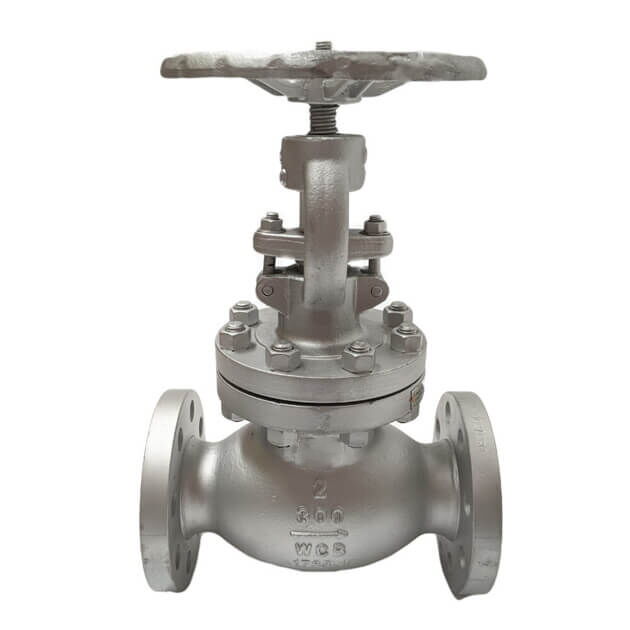
A globe valve is a linear motion valve primarily used to start, stop, and regulate fluid flow. The name “globe” originates from the original spherical shape of its body, although modern designs may vary in geometry.
The valve operates by moving a disc or plug against a stationary seat. As the disc is raised, flow increases; as it is lowered, flow is restricted or completely shut off. This direct, controlled movement enables precise regulation of flow rate, making globe valves ideal for applications where throttling is required.
The use of cast steel in valve construction offers significant benefits:
High mechanical strength to withstand pressure surges and mechanical stress
Excellent temperature resistance, suitable for steam, hot oil, and thermal processes
Improved toughness and durability in comparison with cast iron or carbon steel alternatives
Compatibility with international pressure class ratings such as ANSI, ASME, and DIN
Cast steel globe valves are particularly valuable in industrial systems where both structural integrity and accurate control are critical.
In a globe valve, fluid enters the valve body and is directed upward to the seat area. The disc (or plug) moves vertically, either seating against the valve seat to stop flow or lifting to allow fluid to pass through. The change in flow area between the disc and seat provides a predictable relationship between stem movement and flow rate.
This design allows for:
- Fine throttling control
- Stable flow characteristics
- Minimal vibration during operation
While the flow path is more restrictive than that of gate or ball valves, this is a deliberate design feature that enhances regulation accuracy.
When fully closed, the disc presses firmly against the seat, creating a tight seal. Properly machined seating surfaces and high-quality materials ensure:
- Low leakage rates
- Reliable isolation under pressure
- Consistent long-term performance
In many industrial systems, this combination of precise throttling and dependable shutoff makes the globe valve an indispensable control element.
The cast steel body provides a strong pressure boundary capable of handling demanding service conditions. It resists:
- Internal pressure fluctuations
- Mechanical shock
- Thermal cycling
This strength makes cast steel globe valves suitable for high-pressure steam lines, chemical processing pipelines, and oil and gas facilities.
Cast steel globe valves are available with different bonnet configurations to suit various applications:
Bolted Bonnet: Common in industrial service, easy to maintain and inspect
Welded Bonnet: Provides enhanced leak resistance for high-pressure or high-temperature applications
Pressure Seal Bonnet: Designed for extremely high-pressure systems where sealing improves as internal pressure increases
Each bonnet type ensures structural integrity and sealing performance under specific operating conditions.
The disc and seat are the heart of the globe valve. Depending on service requirements, they may be manufactured from:
- Hardened carbon steel
- Stainless steel
- Alloy steel with hardfacing (e.g., Stellite)
These materials enhance resistance to wear, corrosion, and erosion, particularly in applications involving steam, chemicals, or particulate-laden fluids.
The stem transmits motion from the actuator or handwheel to the disc. High-quality stem design ensures:
- Smooth, low-friction movement
- Accurate positioning for throttling
- Long service life
Advanced packing systems, such as graphite or PTFE-based packing, provide effective sealing around the stem, preventing external leakage.
The primary advantage of a globe valve is its exceptional throttling capability. Unlike gate or ball valves, which are best suited for on/off service, globe valves allow operators to adjust flow rates with high precision. This makes them ideal for:
Pressure regulation
Temperature control loops
Process flow balancing
Cast steel construction enables globe valves to perform reliably in environments involving:
High-pressure steam
Hot oil and thermal fluids
Superheated water and aggressive media
Their mechanical integrity ensures consistent performance even under extreme conditions.
When fully closed, the disc-to-seat contact provides effective isolation. This is particularly important in safety-critical systems where leakage must be minimized.
With proper material selection and maintenance, cast steel globe valves offer extended operational life. Their robust structure and wear-resistant components reduce the frequency of replacement and maintenance.
Cast steel globe valves can be easily equipped with:
Pneumatic actuators
Electric actuators
Hydraulic systems
Smart positioners
This makes them suitable for automated process control and integration into modern plant management systems.
In power plants, precise control of steam, feedwater, and condensate is essential for efficiency and safety. Cast steel globe valves are commonly used for:
- Boiler feedwater regulation
- Steam flow control
- Turbine bypass systems
- Cooling and auxiliary services
Their ability to withstand high temperature and pressure while providing accurate throttling makes them a core component of power generation infrastructure.
In upstream, midstream, and downstream operations, flow control reliability directly impacts productivity and safety. Cast steel globe valves are applied in:
- Refinery process lines
- Pipeline pressure regulation
- Fuel handling systems
- Gas distribution networks
Their rugged construction and reliable sealing support continuous operation in harsh environments.
Chemical plants require valves that can handle corrosive media, temperature extremes, and precise process control. Cast steel globe valves, with appropriate material selection, are used in:
- Reactor feed and discharge lines
- Heat exchanger circuits
- Chemical dosing systems
- Safety isolation applications
Their controlled flow characteristics ensure stable reactions and consistent product quality.
In water treatment facilities, accurate regulation of flow and pressure is critical. Globe valves are used in:
- Pump discharge lines
- Chemical injection systems
- Pressure control stations
- Industrial water distribution networks
Their dependable operation contributes to efficient treatment processes and infrastructure longevity.
From pulp and paper to food processing and heavy manufacturing, cast steel globe valves are used wherever controlled fluid movement is required. They help maintain:
- Stable production conditions
- Accurate temperature and pressure profiles
- Reduced waste and energy consumption
Gate valves are designed primarily for full open or full close operation.
Globe valves excel in throttling and flow regulation.
While gate valves offer lower pressure drop when fully open, they cannot match the precise control of globe valves.
Ball valves provide quick shutoff and minimal flow resistance but are not suitable for throttling in most cases.
Globe valves allow fine adjustment of flow, making them ideal for control applications.
Butterfly valves are compact and cost-effective for large-diameter pipes but offer limited control accuracy.
Globe valves deliver superior control, especially in high-pressure or temperature environments.
Because of their internal flow path, globe valves introduce a higher pressure drop than gate or ball valves. However, in applications where control accuracy is more important than minimizing pressure loss, this trade-off is acceptable.
Most globe valves are designed for unidirectional flow, and proper installation is essential to ensure optimal performance and seat longevity.
Globe valves are generally easy to maintain. Their internal components—disc, seat, and stem—can be accessed for inspection or replacement without removing the entire valve from the pipeline.
High-quality packing systems and precision-machined seats minimize both internal and external leakage, enhancing operational safety and environmental protection.
Cast steel construction provides resistance to mechanical shock, vibration, and pressure fluctuations, ensuring stable performance in demanding industrial environments.
When equipped with actuators, globe valves can be configured for fail-open or fail-close operation, enhancing system safety during power or air supply failures.
Reliable performance and ease of maintenance minimize unplanned shutdowns, supporting continuous production.
Although cast steel globe valves may have higher initial costs compared to lighter-duty alternatives, their long service life and reduced maintenance requirements result in lower total cost of ownership.
Accurate flow control enables:
Optimized energy use
Stable process conditions
Consistent product quality
These benefits translate directly into improved operational efficiency and profitability.
Modern cast steel globe valves are increasingly equipped with digital positioners, sensors, and communication interfaces that enable:
Real-time monitoring
Predictive maintenance
Integration with distributed control systems (DCS) and Industrial Internet of Things (IIoT) platforms
Ongoing developments in alloy composition and surface treatments are improving resistance to:
Corrosion
Erosion
High-temperature oxidation
These innovations extend valve life and expand suitability for more aggressive service conditions.
By enabling precise control and minimizing leakage, globe valves contribute to:
Reduced energy consumption
Lower emissions
Improved resource utilization
As industries pursue sustainability goals, reliable control valves play an increasingly important role.
Proper Sizing
Correct valve sizing ensures optimal performance. Oversized valves may suffer from poor control at low flow rates, while undersized valves may restrict system capacity.
Orientation and Piping
Globe valves should be installed in the correct flow direction and supported properly to prevent stress on the body and flanges.
Routine Inspection
Regular inspection of packing, seats, and actuators helps identify wear early and prevents unexpected failures.
The cast steel globe valve remains one of the most dependable and versatile components in industrial flow control. By combining the inherent strength of cast steel with the precise throttling characteristics of the globe valve design, it delivers reliable performance in applications where accuracy, safety, and durability are essential.
From power plants and refineries to chemical processing facilities and water treatment systems, cast steel globe valves continue to support critical operations worldwide. Their ability to handle high pressure and temperature, integrate with automation systems, and maintain long-term reliability makes them a preferred choice for engineers and operators alike.
As industries advance toward smarter, more efficient, and more sustainable operations, the cast steel globe valve stands ready to meet evolving demands—proving that even in an era of rapid technological change, well-engineered mechanical solutions remain indispensable.