Cryogenic control valves are highly specialized devices designed to manage and regulate the flow of liquids and gases at extremely low temperatures, often below -100°C. Commonly referred to as "cryo valves," they are critical components in modern industries that handle cryogenic fluids such as liquefied natural gas (LNG), compressed natural gas (CNG), liquid nitrogen, oxygen, argon, and helium.
These valves are engineered to provide precise flow and pressure control, maintaining operational stability and safety in pipelines, storage tanks, and processing systems. Unlike conventional valves, cryogenic control valves must withstand material brittleness, thermal contraction, and extreme pressure differentials associated with ultra-low temperatures. While installation is generally straightforward and cost-effective, proper handling is essential to prevent risks such as rapid expansion of liquid gases, frostbite, or environmental hazards.
Modern cryogenic valves are used extensively across energy, chemical, aerospace, medical, and industrial sectors. They ensure that critical processes operate efficiently, reliably, and safely, even under the most challenging low-temperature conditions.
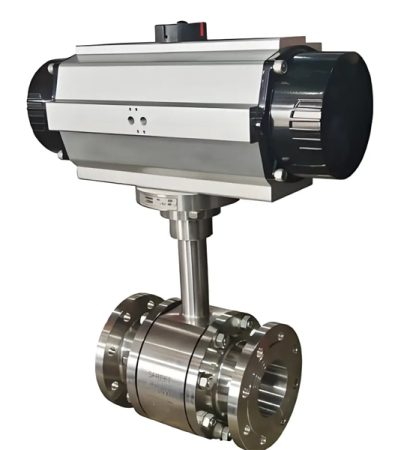
A cryogenic control valve is a type of mechanical valve specifically designed to operate at extremely low temperatures, often below -100°C. These valves are used to regulate flow, maintain system pressure, and isolate critical sections of pipelines or equipment in cryogenic applications. The term “cryo” reflects their ability to perform reliably in environments where conventional valves would fail due to embrittlement or seal damage.
Cryogenic control valves are essential in applications where temperature-sensitive fluids must be handled with precision, such as LNG fueling stations, industrial gas supply systems, and aerospace fuel distribution. Their primary functions include:
- Flow control: Adjusting the rate of cryogenic fluids with high precision.
- Pressure regulation: Maintaining safe operating pressures in pipelines and tanks.
- Isolation: Providing leak-proof shut-off for maintenance or emergencies.
By combining robust materials, precision design, and advanced engineering, cryogenic control valves offer a reliable and safe solution for ultra-low temperature operations.
Cryogenic control valves are available in several types, each suited to specific operational needs:
Cryogenic ball valves use a rotating ball with a bore to control fluid flow. They offer:
- Low-torque operation, reducing actuator wear.
- Tight shut-off, ensuring minimal leakage in extreme temperatures.
- Quick operation, making them suitable for emergency isolation or fast flow changes.
They are widely applied in LNG and CNG pipelines, fuel transfer systems, and storage tanks, where reliability and durability are critical.
Cryogenic butterfly valves feature a rotating disc to regulate fluid flow. Their key advantages include:
- Compact design, ideal for limited space installations.
- Lightweight construction, reducing system load.
- Fast operation, allowing rapid flow adjustments.
Butterfly valves are particularly useful in large-diameter piping systems, where weight, space, and cost considerations are critical.
Cryogenic gate valves utilize a sliding gate mechanism to control flow, offering:
- Tight sealing for effective leak prevention.
- Low-pressure drop, ensuring energy-efficient operation.
- Robust construction, suitable for continuous operation at ultra-low temperatures.
Gate valves are commonly installed for pipeline isolation and storage tank systems, providing reliable shut-off in critical applications.
Cryogenic globe valves use a perpendicular-moving disc for precise throttling of fluids. They are characterized by:
- Accurate flow control, ideal for process regulation.
- Throttling capability, enabling fine adjustments in flow rate.
- Durable design, capable of withstanding thermal stress and repeated operation.
These valves are often applied in chemical plants, LNG processing facilities, and industrial gas distribution networks, where precise flow and pressure regulation are crucial.
Cryogenic relief valves are designed to protect systems from overpressure, automatically releasing excess pressure to prevent:
- Equipment failure, due to rapid pressure buildup.
- Safety hazards, including potential explosions or leaks.
- Environmental impact, by controlling accidental cryogenic fluid releases.
They are essential for cryogenic storage tanks, pipelines, and industrial gas distribution, providing safety compliance and operational reliability.
The performance and reliability of cryogenic control valves depend heavily on material selection and construction. Common materials include:
- Stainless steel (ASTM A182 F316, F51, F55): Offers excellent corrosion resistance, high strength, and toughness at low temperatures.
- Carbon steel with cryogenic treatment: Provides durability and low-temperature performance for pressure applications.
- Nickel alloys: Enhance structural integrity and resistance to embrittlement.
- Advanced polymers (PTFE, PEEK): Used for seals and seats, ensuring leak-proof operation under ultra-low temperatures.
The construction of cryogenic valves also accounts for:
- Thermal contraction and expansion, preventing leaks due to temperature fluctuations.
- Actuator compatibility, enabling manual, pneumatic, or electric actuation.
- Vibration and pressure shock resistance, ensuring reliable operation in dynamic industrial systems.
These materials and design considerations are critical to prevent cracking, seal failure, or leakage in cryogenic systems, ensuring both safety and performance.
Cryogenic control valves serve diverse industries where ultra-low temperature fluid handling is essential.
- LNG pipelines: Cryogenic valves regulate flow and pressure in natural gas liquefaction and distribution.
- CNG fueling stations: Ensure precise fuel delivery and safety compliance.
- Fuel storage and transfer systems: Enable leak-proof isolation and flow control of alternative fuels.
Liquid oxygen, nitrogen, and argon distribution: Ensure precise control for manufacturing, welding, and industrial processes.
- Cryogenic refrigeration systems: Maintain extremely low temperatures in chemical or pharmaceutical processes.
- Gas liquefaction and storage: Cryogenic valves provide reliable throttling and isolation in complex systems.
- Rocket fuel management: Cryogenic valves control liquid hydrogen or oxygen in aerospace applications.
- Test chambers and cryogenic research: Maintain ultra-low temperatures for materials testing and scientific research.
- Controlled experiments: Ensure precise flow and pressure control in laboratory cryogenic systems.
- Cryogenic storage of biological samples: Valves provide leak-proof isolation for long-term preservation.
- Medical gas delivery: Ensure safe handling of liquid oxygen or nitrogen in hospitals.
- Pharmaceutical manufacturing: Enable precise control of cryogenic fluids in sensitive processes.
When selecting a cryogenic valve, several factors must be considered to ensure reliable performance:
- Temperature range: Materials and seals must withstand operating temperatures without failure.
- Pressure rating: The valve must meet system pressure requirements without leakage.
- Flow characteristics: Determine whether throttling or full isolation is required.
- Actuation method: Manual, pneumatic, or electric actuators for precise control.
- Safety compliance: Adherence to ASME, API, and other regulatory standards.
Advanced designs also incorporate thermal compensation, vibration resistance, low-torque operation, and intelligent diagnostic capabilities, allowing safe, precise, and efficient control even in challenging cryogenic environments.
Cryogenic fluids are inherently hazardous. Cryogenic control valves are designed to:
- Prevent rapid fluid expansion, which could lead to pressure spikes.
- Maintain structural integrity under extreme cold.
- Reduce frostbite risk by minimizing external exposure.
- Ensure leak-free operation, protecting both personnel and the environment.
Proper installation, monitoring, and operator training are essential for safe operation. Valves must be regularly inspected for seal integrity, corrosion, and actuator performance to prevent accidents and system failures.
Cryogenic control valves are designed for long-term operation with minimal maintenance, but routine care improves reliability:
- Inspection of seals and actuators to ensure proper function.
- Lubrication of moving components with low-temperature-compatible lubricants.
- Functional testing to verify flow control and pressure relief capabilities.
- Periodic calibration of automated actuation systems.
High-quality cryogenic valves can operate reliably for decades when installed and maintained correctly, offering consistent performance in energy, chemical, aerospace, and medical applications.
The cryogenic control valve industry is evolving due to increasing demand for alternative fuels and industrial gas applications:
- LNG infrastructure growth: Expanding natural gas networks drive demand for robust cryogenic valves.
- Material innovations: Nickel alloys, treated stainless steels, and advanced polymers improve low-temperature performance.
- Smart valve integration: Sensors, diagnostics, and remote monitoring enhance operational efficiency and predictive maintenance.
- Sustainability focus: Energy-efficient valve designs and leak prevention technologies reduce environmental impact.
- Customized solutions: Manufacturers now provide tailored valve designs to meet unique industrial requirements.
As industries adopt clean energy technologies and alternative fuels, the role of cryogenic control valves will continue to expand, combining precision, safety, and durability in critical systems.
Cryogenic control valves are indispensable for ultra-low temperature applications, offering precise flow regulation, reliable pressure control, and operational safety. With applications in energy, chemical, aerospace, medical, and industrial sectors, these valves are engineered to perform in extreme cold while maintaining long-term reliability and minimal maintenance requirements. Modern cryogenic valves combine advanced materials, innovative designs, and smart technologies to meet the growing demands of critical cryogenic systems.
As a leading Cryogenic Control Valve Manufacturer in China, we provide high-quality, durable, and reliable valves designed for precision, safety, and efficiency in the most demanding cryogenic applications worldwide.