In modern pipeline engineering, reliability is not optional—it is a fundamental requirement. Pipelines transporting oil, natural gas, steam, hot water, chemicals, or other critical media often operate under high pressure, elevated temperatures, and harsh environmental conditions. Any failure in these systems can result in serious safety hazards, environmental damage, and significant financial losses. As a result, the selection of pipeline components, especially valves, plays a decisive role in overall system integrity.
Among the many valve designs available today, fully welded ball valves have become a preferred solution for high-demand applications. Their unique construction eliminates common leakage points, minimizes maintenance requirements, and delivers exceptional durability over decades of service. These valves are widely adopted in oil and gas transmission pipelines, district heating systems, underground installations, and other critical infrastructure projects where long-term reliability is essential.
This article provides a comprehensive and in-depth overview of fully welded ball valves, including their construction principles, design features, materials, advantages over conventional valves, operational performance, and typical applications. By examining these aspects in detail, engineers and decision-makers can better understand why fully welded ball valves are increasingly specified in modern pipeline projects.
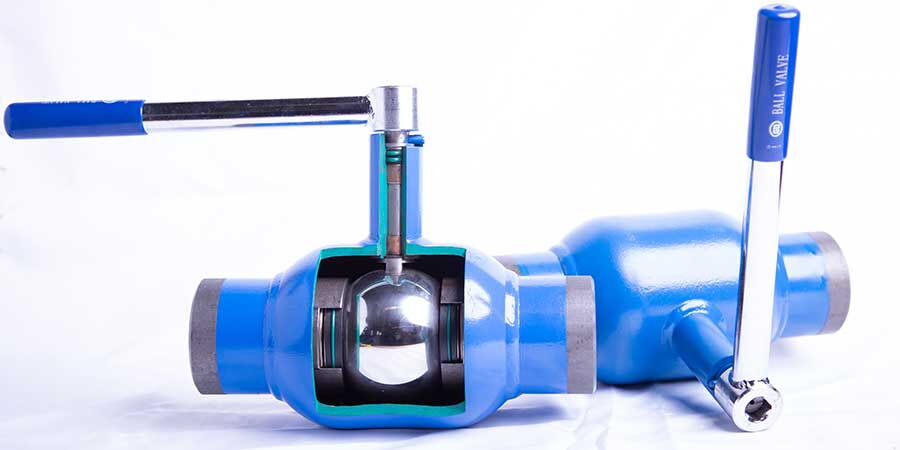
Fully welded ball valves are quarter-turn shut-off valves that use a spherical ball to control the flow of liquids or gases. The ball contains a central bore, which allows fluid to pass through when aligned with the pipeline and blocks flow completely when rotated 90 degrees.
What sets fully welded ball valves apart from traditional ball valves is their one-piece welded body construction. Instead of being assembled with bolts, flanges, or split bodies, fully welded ball valves are fabricated by welding forged components together into a single, sealed pressure-containing structure. Once assembled, the valve body cannot be disassembled, resulting in a hermetically sealed unit.
This design eliminates external body joints and significantly reduces the risk of leakage. It also enhances the valve’s ability to withstand pressure fluctuations, thermal expansion, soil movement, and mechanical stress—factors commonly encountered in buried or long-distance pipeline systems.
Fully welded ball valves are most commonly manufactured from forged steel, which provides superior mechanical strength and uniform material properties. Thanks to this robust construction, these valves can achieve a service life of 30 years or more with minimal maintenance, making them a long-term investment rather than a short-term component.
The fully welded body is the defining feature of this valve type. All pressure-retaining components are permanently joined through qualified welding procedures, creating a seamless pressure boundary. This approach removes the need for body gaskets, bolts, and flange connections, which are often the weakest points in conventional valve designs.
By eliminating these potential failure points, fully welded ball valves:
Greatly reduce the risk of external leakage
Improve resistance to vibration and fatigue
Maintain structural integrity under high internal pressure
Perform reliably in buried or inaccessible locations
This construction is especially valuable in applications where valves cannot be easily inspected or serviced after installation.
The seamless welded body ensures that pressure is evenly distributed across the valve structure. Unlike flanged or bolted designs, there are no stress concentrations around fasteners or gasket surfaces. This uniform stress distribution enhances fatigue resistance and prolongs valve life.
Safety is a critical consideration in high-pressure systems. Fully welded ball valves are equipped with an anti-blowout stem, which is installed from inside the valve body. This internal retention design ensures that the stem cannot be ejected by internal pressure, even in abnormal operating conditions.
This feature protects personnel, equipment, and surrounding infrastructure from accidental stem failure.
Fully welded ball valves are available in two primary ball configurations:
Used mainly for smaller valve sizes and moderate pressure ratings. The ball is held in place by the valve seats and allowed to “float” slightly to ensure tight sealing.
Used for larger diameters and high-pressure applications. The ball is mechanically supported by trunnions at both the top and bottom, preventing movement under pressure.
The trunnion-mounted design significantly reduces operating torque, improves seat life, and ensures consistent sealing performance even under extreme pressure conditions.
Fully welded ball valves are frequently used in underground pipelines. For such applications, valves can be supplied with extended stems, allowing operation from ground level without excavation.
Extended stems can be combined with:
Manual gear operators
Electric actuators
Pneumatic or hydraulic actuators
This flexibility makes fully welded ball valves suitable for both manual and automated pipeline systems.
To ensure long-term durability, fully welded ball valves are typically coated with advanced corrosion-resistant systems, such as:
Fusion bonded epoxy (FBE)
Multi-layer polyethylene (3LPE)
Polyurethane or epoxy-based coatings
These coatings protect the valve body from soil corrosion, moisture, and chemical exposure, which is especially important for buried and offshore installations.
Forged steel is the material of choice for fully welded ball valves due to its superior mechanical properties. The forging process refines the metal’s grain structure, eliminating internal voids and enhancing strength, toughness, and fatigue resistance.
Forged valves offer:
Higher pressure ratings
Better impact resistance
Improved performance under cyclic loading
Longer service life compared to cast valves
This makes them ideal for critical pipeline systems operating under demanding conditions.
Fully welded ball valves are commonly supplied with butt welded ends, allowing them to be welded directly into the pipeline. This creates a continuous, leak-free joint that matches the strength of the pipe itself.
Benefits of butt welded connections include:
Elimination of flange gaskets
Reduced system weight
Improved structural integrity
Lower maintenance requirements
In underground and high-pressure applications, butt welded connections are often preferred over flanged joints.
Leak prevention is one of the most important advantages of fully welded ball valves. With no external body joints, the number of potential leak paths is drastically reduced.
This is particularly critical in applications involving:
Natural gas and hydrogen
Hazardous or toxic chemicals
High-temperature steam
Environmentally sensitive areas
By maintaining a sealed pressure boundary, fully welded ball valves enhance operational safety and environmental protection.
In addition to the valve body, critical internal parts such as the ball, stem, and trunnions are often forged and precision-machined. This ensures:
Tight dimensional tolerances
Smooth operation
Improved wear resistance
Long-term sealing reliability
High-quality internal components are essential for maintaining consistent performance throughout the valve’s service life.
Fully welded ball valves are manufactured in accordance with ASME Section IX, which governs welding procedure qualification, welder performance, and quality control. Compliance with this standard ensures that all welds meet strict safety and reliability requirements.
In addition, these valves often comply with international standards such as:
API 6D
ISO 14313
EN standards for district heating
This ensures global acceptance and suitability for critical infrastructure projects.
Thanks to the trunnion-mounted design and precision machining, fully welded ball valves require lower operating torque than many conventional valves. This allows for:
Smaller actuators
Reduced energy consumption
Smoother operation
Lower torque also reduces mechanical stress on valve components, contributing to extended service life.
Compared to split-body or flanged ball valves, fully welded ball valves offer numerous advantages:
No need for periodic bolt tightening
No gasket replacement
Superior resistance to vibration and thermal cycling
Ideal for buried and inaccessible installations
Lower total cost of ownership over the valve lifecycle
These benefits make fully welded ball valves a strategic choice for long-term pipeline projects.
Fully welded ball valves are widely used in:
Oil and gas transmission pipelines
Natural gas distribution networks
District heating and cooling systems
Chemical and petrochemical plants
Power generation facilities
Underground and subsea pipelines
Their ability to operate reliably for decades without maintenance makes them especially suitable for remote and buried applications.
Fully welded ball valves represent one of the most robust and reliable valve solutions available for modern pipeline systems. Their one-piece welded construction, forged steel materials, and advanced engineering features provide exceptional strength, leak prevention, and long-term performance.
By eliminating flanges, gaskets, and bolted joints, fully welded ball valves significantly reduce maintenance requirements and enhance system safety. Whether used in high-pressure oil and gas pipelines, district heating networks, or underground installations, they deliver consistent and dependable performance over decades of service.
For engineers, operators, and project owners seeking maximum reliability and minimum lifecycle cost, fully welded ball valves remain a proven and trusted choice in critical industrial applications.